
Can You Put a Glass Teapot on an Electric or Gas Stove Safely?
Safety guide to heating borosilicate glass teapots on gas, electric coil, glass-ceramic, and induction cooktops—avoiding thermal shock and shatter risks.
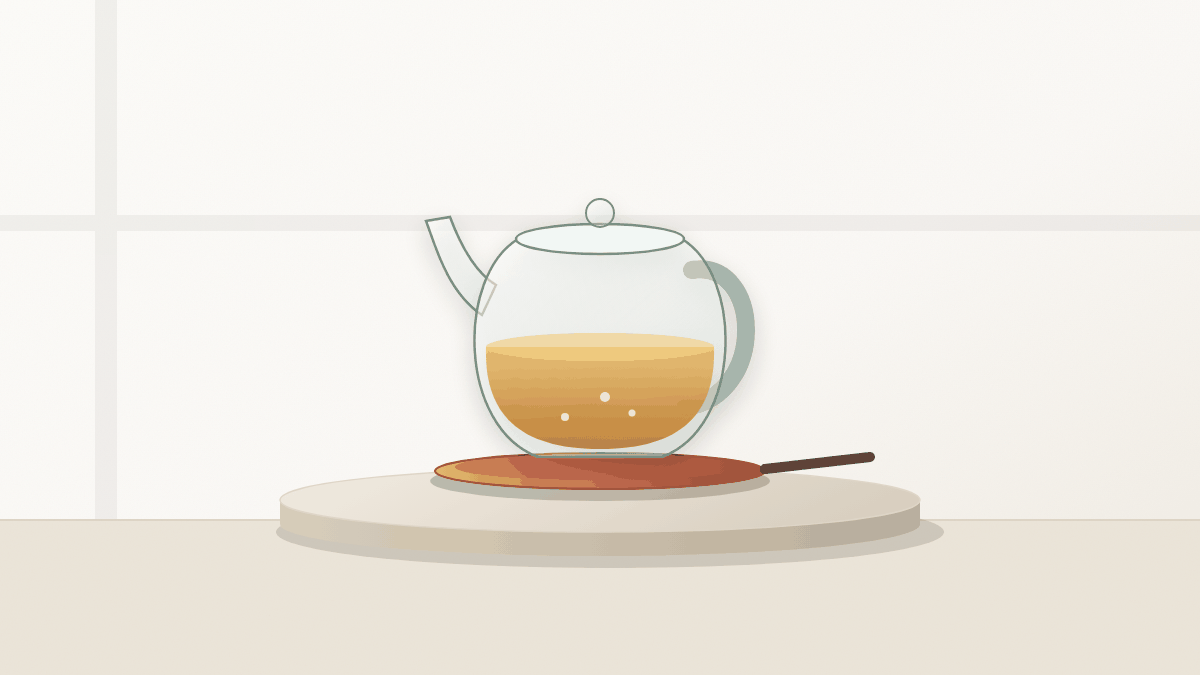
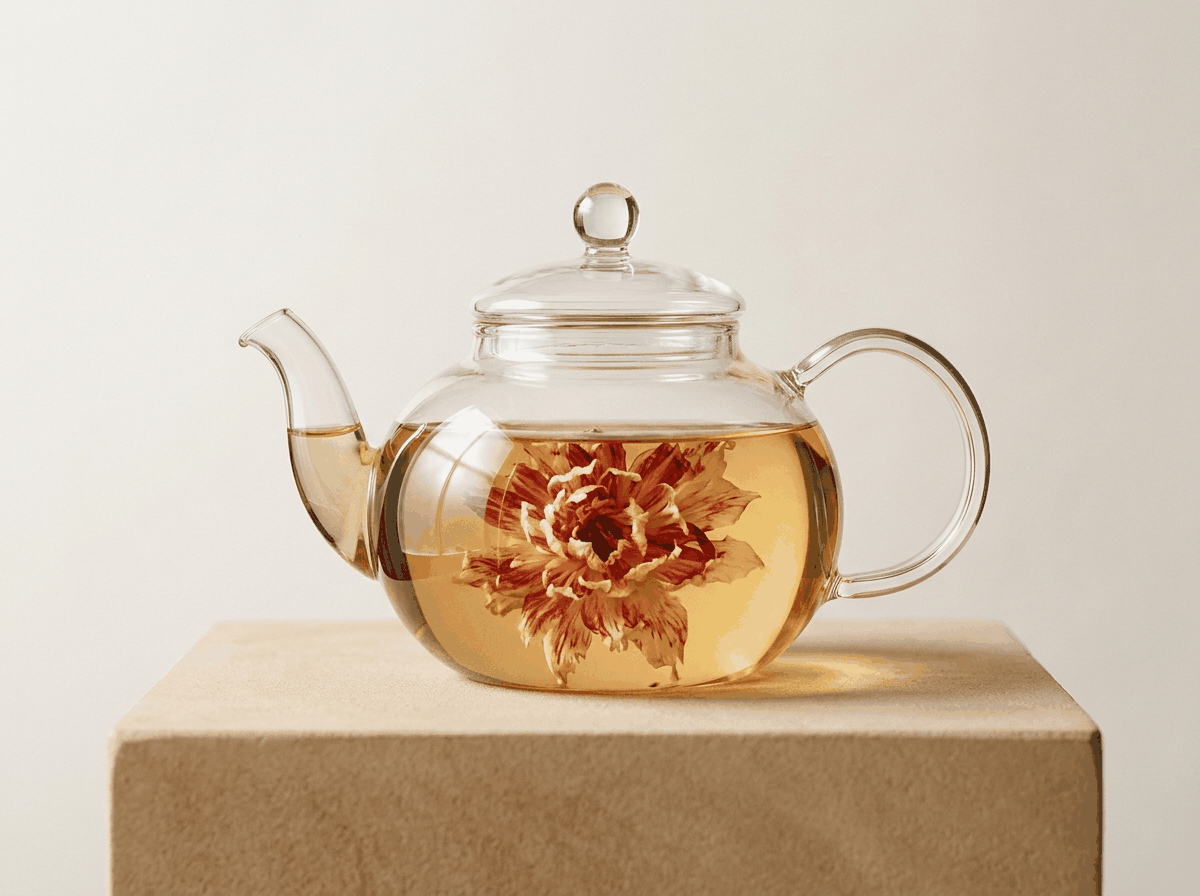
Teabloom Celebration Stovetop Glass Teapot
Best for:Stovetop-safe blooming tea service, iced tea batching, and large four-to-six-cup hosting
Borosilicate Glass · 1,200 ml (40 oz)
- Annealed stovetop-rated borosilicate body tolerates gentle low-to-medium gas or electric coil diffuser warming
- Wide 1,200ml chamber frames hand-tied flowering tea blossoms without optical distortion
- Ergonomic flared D-handle keeps knuckles safely away from heated glass walls
Watching water shimmer into pearl bubbles inside a crystal-clear vessel right on the stove feels wonderfully elemental—until you picture a favorite pitcher exploding across your kitchen floor. No single maintenance question lands in my inbox more often than “can you put glass teapot on stove” burners, and the confusion makes complete sense. Walk down any tea aisle or browse online listings and you will see two virtually identical clear glass pots sitting side by side: one proudly rated for open flame and electric heat, and another bearing a stern warning against touching any burner at all.
The honest answer is sometimes—but only when the glass chemistry, the vessel’s wall construction, the burner type, and your filling habits all line up. Putting the wrong glass carafe on a stove invites violent thermal shock, while putting even a certified stovetop safe teapot onto an incompatible cooktop like bare induction simply refuses to heat—or worse, cracks the base when forced with makeshift hacks. Let’s separate marketing guesswork from hard glass physics so you know exactly when stovetop heating works safely and when a dedicated kettle plus warmer is far smarter.
Soda-Lime vs. 3.3 Borosilicate Glass: Why Most Glass Pots Shatter on Burners
Not all transparent teaware shares the same molecular recipe. Before any glass vessel gets within ten feet of a kitchen burner, you need to know which glass family sits in your hands—and why even genuine lab-grade glass still has strict engineering boundaries.
Why Standard Soda-Lime Glass Fails Immediately
Everyday juice pitchers, cheap decorative carafes, and budget department-store glassware are typically molded from soda-lime-silica glass. Soda-lime glass carries a high linear coefficient of thermal expansion—around 9 × 10⁻⁶ per Kelvin. When heat strikes the exterior bottom wall over a burner while cooler water rests inside, the heated outer surface attempts to expand rapidly while the cooler inner face stays rigid. That microscopic tug-of-war generates fierce tensile stress across the glass thickness, snapping the vessel abruptly—often right where a handle or spout joins the main chamber.
How 3.3 Borosilicate Glass Resists Thermal Shock
A true borosilicate glass teapot replaces a large share of soda flux with roughly 12% to 15% boron trioxide (B₂O₃). That chemical architecture slashes thermal expansion down to 3.3 × 10⁻⁶ per Kelvin—roughly one-third the expansion rate of ordinary glass. Because borosilicate barely stretches or contracts across steep temperature swings (typically tolerating acute differentials around 150°C / 300°F when properly annealed), pouring boiling water straight into a room-temperature borosilicate pot rarely phases it.
Crucial Distinction: “Kettle-Fill Heatproof” vs. “Stovetop-Safe” Borosilicate
Here is the trap that catches careful tea drinkers off guard: all stovetop glass teapots are borosilicate, but NOT all borosilicate teapots are stovetop safe.
- Kettle-Fill Borosilicate Servers: Vessels like the refined Hario Chacha Kyusu Maru (700ml) are blown with thin, responsive walls (often 1.5mm to 2mm) optimized for lightweight hand pouring, crystal clarity, and receiving water boiled in a separate kettle. Direct contact against concentrated burner flames or glowing metal coils exceeds their localized thermal gradient margin—even though the same glass handles microwave warming safely (with metal baskets removed).
- Stovetop-Rated Borosilicate Pots: True stovetop safe teapot models—such as the Teabloom Celebration Stovetop Glass Teapot—combine slightly thicker, uniform base walls (around 2.5mm to 3.5mm) with meticulous kiln annealing to relieve internal glass tension around the flat bottom curve and spout weld. Only choose direct stovetop heating when the maker explicitly specifies stovetop compatibility in writing.
Burner-by-Burner Safety Matrix: Gas, Electric Coil, Glass-Ceramic & Induction
Even an explicitly certified stovetop borosilicate vessel behaves completely differently depending on which cooktop sits in your kitchen. Match your stove hardware carefully against this safety breakdown before turning a dial:
| Heat Source | Stovetop Safe for Rated Glass? | Heat Transfer Mechanism | Diffuser Plate Needed? | Max Recommended Setting | Primary Safety Risk |
|---|---|---|---|---|---|
| Gas Open Flame | Yes (with strict flame size control) | Radiant flame + convective hot exhaust gas | Recommended on wide grates | Low to Medium-Low | Flames licking past base onto curved sides or handle join |
| Electric Coil Stove | Yes, with diffuser (avoid bare glowing coil) | Direct conductive contact + intense IR radiation | Strongly Recommended | Low to Medium | Pinpoint hot spots along spiral coil contact lines |
| Glass-Ceramic Smooth-Top | Cautiously Yes (low heat + clean base) | Intense cyclical infrared + flat conduction | Helpful (stainless/iron disk) | Low to Medium | Cycling full-wattage pulses scorching dry or mineral-crusted bases |
| Induction Cooktop | No (physically incompatible alone) | Electromagnetic eddy currents in ferrous metal | Mandatory ferromagnetic disk | Low (with full water inside) | Dry-heating adapter disk or warping glass via trapped hotspot |
| Tea-Light Candle Warmer | Yes (universally safe for borosilicate) | Gentle convective air plume below base | Built-in candle stand | Single standard tea light | Evaporating a near-empty pot dry if forgotten for hours |
Gas Stoves: Flame Diameter and Grate Support Rules
Gas ranges offer surprisingly responsive control for a stovetop safe teapot, provided you control flame width relentlessly. Keep the burner on low to medium-low so the blue flame ring stays cleanly inside the flat bottom circle of your teapot. The instant orange-blue flame tongues lick outward past the base curvature, dry heat spikes against thin vertical side walls above the waterline—creating catastrophic stress where water convection cannot cool the glass. If your burner grates leave wide gaps or your smallest simmer ring still looks broad, set a simple perforated steel flame tamer or wire mesh trivet beneath the pot to disperse heat into a soft upward glow.
Glass Teapot on Electric Stove (Coil & Glass-Ceramic Radiant)
Using a glass teapot on electric stove hardware requires extra vigilance because electric resistance elements cycle aggressively at peak temperature even on medium-low dials.
- Exposed Spiral Coil Burners: Never set glass directly atop bare red-hot metal coils unless the manufacturer specifically clears direct coil contact—and even then, a metal heat-diffuser plate (a flat cast-iron or dual-layer stainless simmer disk) costs very little and dramatically reduces breakage risk. Bare coils touch only narrow curved ribbons of the teapot floor, baking tiny lines far hotter than adjacent glass millimeters away.
- Smooth Glass-Ceramic Radiant Tops: Wipe both the cooktop surface and the exterior base of your teapot spotless before heating. Grit, sugar specks, or hard-water crust trapped between two glass surfaces scratches smooth cooktops and concentrates extreme radiant heat onto dirty spots. Keep the dial strictly at low to medium (setting 2 to 4 out of 10), and remove the pot promptly once water begins steaming rather than leaving it boiling furiously while radiant lamps cycle.
Induction Cooktops: Why Pure Glass Will Never Heat Directly
Modern induction ranges look sleek and calm, leading many owners to assume glass pots sit cleanly on top. In physics, bare borosilicate glass cannot work on induction at all. Induction coils generate high-frequency alternating magnetic fields that induce resistive electrical currents (eddy currents) inside ferromagnetic materials such as carbon steel or cast iron. Glass is an electrical insulator with zero magnetic permeability—so an induction stove either shuts down with a “no cookware” alert or ignores the pot entirely.
Can you cheat induction using a ferromagnetic stainless steel induction adapter disk underneath? Technically yes, only with a stovetop-rated teapot filled at least halfway with water and kept strictly on low heat—yet in practice, boiling water inside an electric kettle and pouring into your glass teapot takes half the time with zero risk of overheating a metal interface plate.
Tea-Light Candle Warmers: The Zero-Stress Tabletop Alternative
Want the cozy theater of glowing tea on your dining table without risking stove mishaps? Boil water separately in a kettle, steep in your borosilicate glass teapot, and set the filled vessel over a single unscented tea-light candle warmer. A tea light produces gentle convective warmth sufficient to keep a 700ml to 1,200ml pot comfortably hot for an hour while staying miles below thermal shock thresholds—an ideal match for delicate flowering and blooming teas.
Seven Non-Negotiable Rules for Stovetop Glass Brewing
Whenever you place a certified stovetop glass teapot over any active burner, follow these seven studio safety habits without exception:
- Never Dry-Heat an Empty Pot: Even fifteen seconds over an active burner without liquid inside sends localized floor temperatures soaring unevenly. Always fill with cold or room-temperature water before igniting gas or switching on the element.
- Maintain Minimum Liquid Volume: Keep the pot at least one-third to one-half full at all times over heat so internal convection currents carry thermal energy swiftly away from the bottom plate.
- Inspect for Micro-Chips and Scratches First: Hold the empty pot up to daylight before every stove session. Tiny star cracks near the base heel, utensil scratches inside the floor, or hairline chips around the spout weld concentrate thermal stress like perforations in tearing paper. Retire chipped glass from burner duty immediately.
- Ramp Temperature Gradually: Never drop a refrigerator-chilled glass pitcher onto a preheated electric coil. Start from cool or lukewarm water on low heat and step gently upward to medium-low.
- Remove Lid During Active Boiling or Loosen Steam Seals: Sealed glass lids with tight silicone gaskets can rattle or trap pressurized steam during vigorous simmering; rest lids slightly ajar or leave off until removing from heat.
- Guard Against Post-Boil Countertop Shock: Lifting a 100°C glass base directly off a diffuser onto cold marble, wet granite, or stainless sink steel triggers reverse thermal shock just as quickly as an open flame. Always set hot glass onto a dry wood, cork, or silicone trivet.
- Keep the Base Free of Mineral Crust & Burnt Tannins: Calcified hard-water scale inside the floor acts as a thermal insulator, overheating the glass layer trapped beneath the scale. Follow our complete teapot care guide and natural tea stain removal guide using citric acid and sodium percarbonate whenever cloudy rings appear.
Stovetop Warming vs. Leaf Brewing: Protecting Tea Flavor
Just because a stovetop safe teapot can bring water to a rolling boil on the stove does not mean tea leaves should sit inside while it boils. Simmering Camellia sinensis leaves continuously over an active burner extracts excessive bitter polyphenols and drives off delicate aromatic esters, turning tender Japanese sencha flat and astringent or scorching floral oolongs.
Use stovetop capability for two intentional jobs only: heating plain filtered water gently to temperature before dropping in leaves off the heat, or slowly simmering hardy roots and barks (like roasted chicory, ginger root, cinnamon bark, or dried chrysanthemum herbal tisanes) at a whisper-low simmer. Whenever brewing true green, white, oolong, or black loose leaves, pull the pot off the burner right as steam rises, insert your infuser, and track exact extraction seconds with our interactive tea steeping timer.
Want to understand how glass heat-loss curves compare against heat-retaining cast iron and stoneware? Check our full teapot materials comparison before setting up your daily brewing station.
Comparing Stovetop-Rated vs. Kettle-Fill Borosilicate Glass Teapots
Choosing the right transparent pot starts with matching your actual workflow—whether you genuinely heat water on a burner or prefer kettle pouring plus crystal visibility. Two benchmark glass vessels in our curated teapot gallery illustrate this critical divide clearly:
1. Teabloom Celebration Stovetop Glass Teapot (1,200ml) — True Stovetop Engineering
Built explicitly as a multi-purpose stovetop safe teapot, the Teabloom Celebration Stovetop Glass Teapot uses thickened, kiln-annealed 3.3 borosilicate glass rated for low-to-medium gas flames and electric burners with a diffuser (never bare induction). Its generous 1,200ml belly accommodates dramatic hand-sewn flower blossoms or batched iced tea concentrates effortlessly, while a wide ergonomic D-handle keeps your hand well clear of warm glass sides. Paired with a removable slotted borosilicate infuser sleeve and a matching glass lid, it bridges stovetop water prep and luminous table presentation smoothly.
2. Hario Chacha Kyusu Maru (700ml) — The Kettle-Fill Daily Benchmark
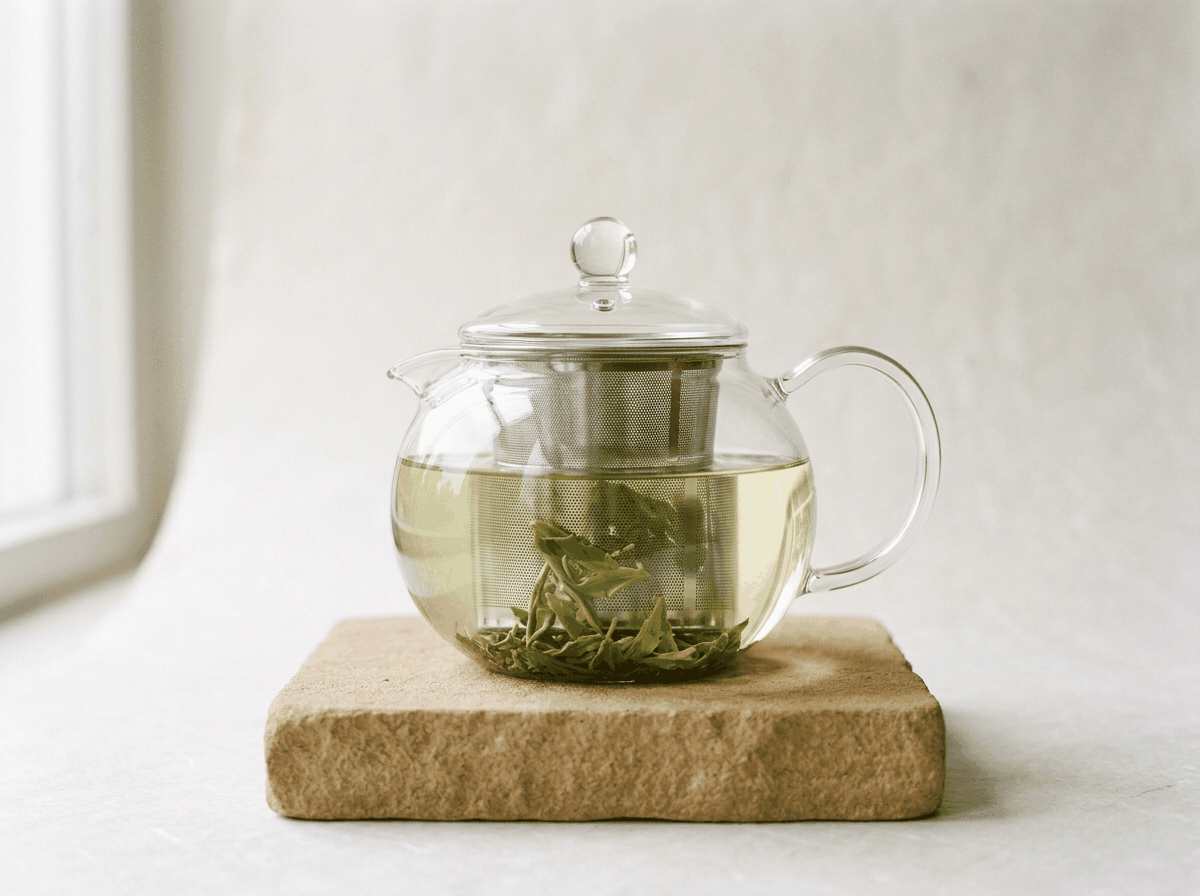
By contrast, the beloved Hario Chacha Kyusu Maru (700ml) highlights why checking manufacturer specs prevents costly accidents. Crafted from ultra-pure Japanese borosilicate glass, it delivers a crisp 9/10 pour score and houses an unusually deep 18-8 stainless steel mesh basket reaching millimeters from the floor so even small solo steeps submerge completely. However, Hario engineers the Chacha Kyusu Maru strictly as a kettle-fill pouring vessel (and microwave-safe reheat pot once the metal basket is removed)—not for direct gas flames or electric coils. Respect that boundary, pour water from your gooseneck or electric kettle, and it will serve crystal-clear green and oolong infusions flawlessly for years. Explore both models alongside additional flowering designs in our best glass flowering teapots guide.
Hands-On Benchmarks
Tested Picks & Recommendations
Teabloom Celebration Stovetop Glass Teapot
Borosilicate Glass · 1,200 ml (40 oz)
Best ForStovetop-safe blooming tea service, iced tea batching, and large four-to-six-cup hosting
What We Loved
- Annealed stovetop-rated borosilicate body tolerates gentle low-to-medium gas or electric coil diffuser warming
- Wide 1,200ml chamber frames hand-tied flowering tea blossoms without optical distortion
- Ergonomic flared D-handle keeps knuckles safely away from heated glass walls
Trade-offs
- Slotted glass infuser passes finely broken fannings compared to steel micro-mesh
- Wide top opening loses heat noticeably once removed from a burner or candle warmer
Hario Chacha Kyusu Maru (700ml)
Borosilicate Glass · 700 ml (23.7 oz)
Best ForKettle-filled daily loose-leaf infusions with deep full-height stainless steel basket immersion
What We Loved
- Heatproof Japanese borosilicate glass handles rapid boiling kettle pours without clouding
- Deep 18-8 stainless steel basket reaches near the floor for small solo batches
- Crisp, flared spout cuts off cleanly with 9/10 pour accuracy
Trade-offs
- Kettle-fill and microwave safe only (without steel basket)—not built for direct stovetop burners
- Single-wall glass cools faster than dense stoneware or cast iron vessels
Frequently Asked Questions
Can a borosilicate glass teapot work on an induction cooktop?
No—not directly. Induction burners heat cookware by inducing electromagnetic eddy currents inside ferromagnetic metals such as magnetic stainless steel or cast iron. Because borosilicate glass is electrically non-conductive and non-magnetic, an induction stove will not recognize the teapot and will flash an error code unless you place a flat ferromagnetic induction diffuser plate underneath, filled with liquid and strictly set on low-to-medium heat.
Do I really need a heat diffuser for a glass teapot on an electric coil stove?
Yes. Exposed electric coil elements concentrate fierce radiant and conductive heat along narrow glowing spirals directly beneath the glass floor while neighboring millimeters remain cooler. Placing a thin cast-iron or perforated stainless steel heat-diffuser disk over the coil spreads thermal energy evenly across the base, dramatically lowering localized thermal stress.
Why does 3.3 borosilicate glass survive stoves while regular soda-lime glass shatters?
Regular soda-lime glass expands roughly three times faster under heat than lab-grade 3.3 borosilicate glass, which contains 12 to 15 percent boron trioxide. When one side of soda-lime glass heats up over a burner while water cools the interior, uneven expansion creates sharp internal tensile stress that snaps the pot violently. Even with borosilicate, only pots explicitly rated and kiln-annealed for open heat belong on a stove.
What happens if a glass teapot boils dry on the stove?
Never let a glass teapot boil dry. Without water inside to absorb and circulate thermal energy through convection, the bottom glass disk temperatures skyrocket unevenly in seconds—triggering thermal shock cracks when the pot later cools or receives fresh water, and potentially melting decorative lid seals or cracking spout joints.
Is a glass-ceramic radiant smooth-top electric stove safe for stovetop glass teapots?
Only if the vessel is explicitly manufacturer-rated for stovetop use, contains water, and sits strictly on low-to-medium power—ideally buffered with a clean metal heat diffuser. Smooth radiant glass cooktops cycle on and off at intense surface temperatures that can weld mineral stains onto wet glass bottoms or overheat thin pouring servers engineered strictly for kettle water.
Care & Physics
Related Guides in This Cluster
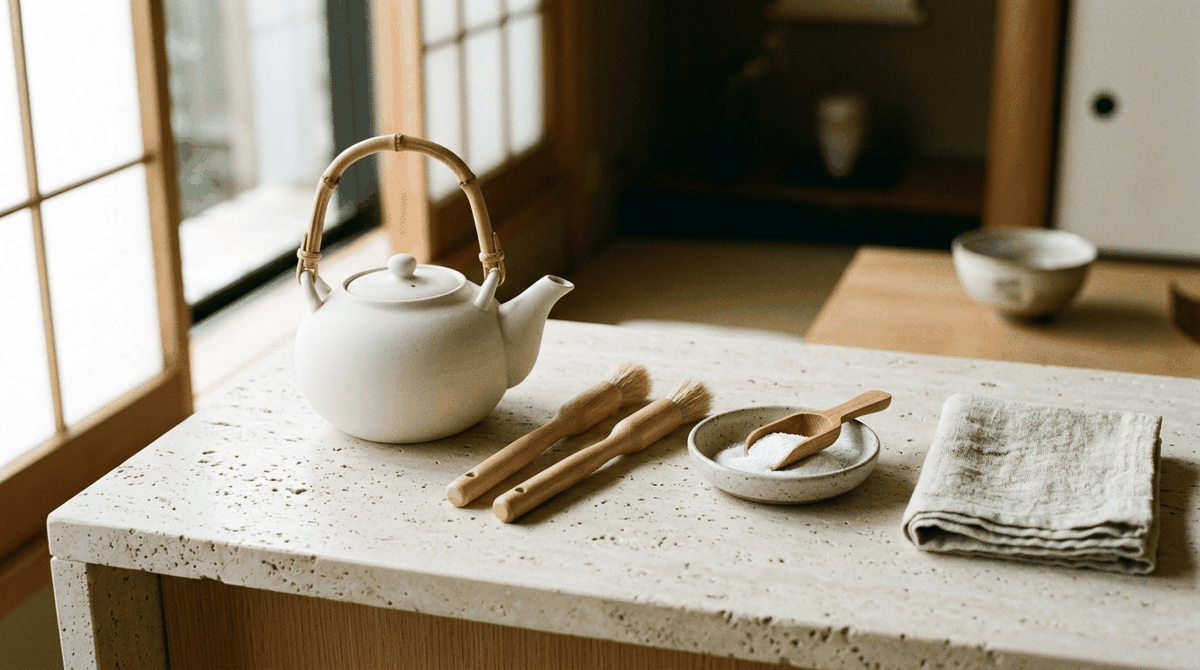
How to Clean, Descale, and Maintain Every Type of Teapot
A material-by-material protocol to clean, descale, and preserve glass, porcelain, raw Zisha clay, Tokoname stoneware, and cast iron teapots without ruining patina.
How to Season a Cast Iron Teapot (And Prevent Inside Rust)
Learn how to season raw Nanbu Tekki tetsubin kettles versus enamel-lined cast iron teapots, neutralize flash rust with green tea tannins, and dry properly.
How to Remove Stubborn Tea Stains from Glass & Porcelain Teapots Naturally
Dissolve polymerized tea tannins (thearubigins) from glass and glazed ceramic teapots in 15 minutes using sodium percarbonate, baking soda, or citric acid—no bleach.