
Cast Iron vs. Glass vs. Clay vs. Ceramic: Which Teapot Material Is Best?
Compare thermal conductivity, heat retention, mineral porosity, and tea-type pairing across cast iron, borosilicate glass, Zisha/Tokoname clay, and glazed porcelain.
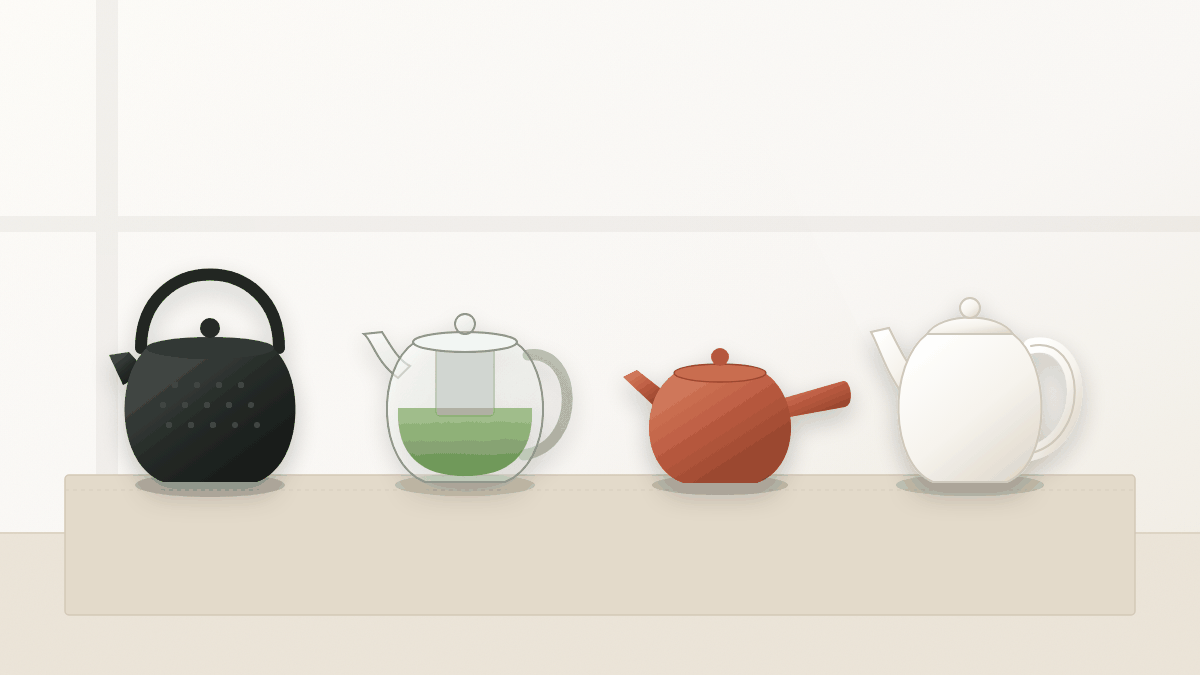
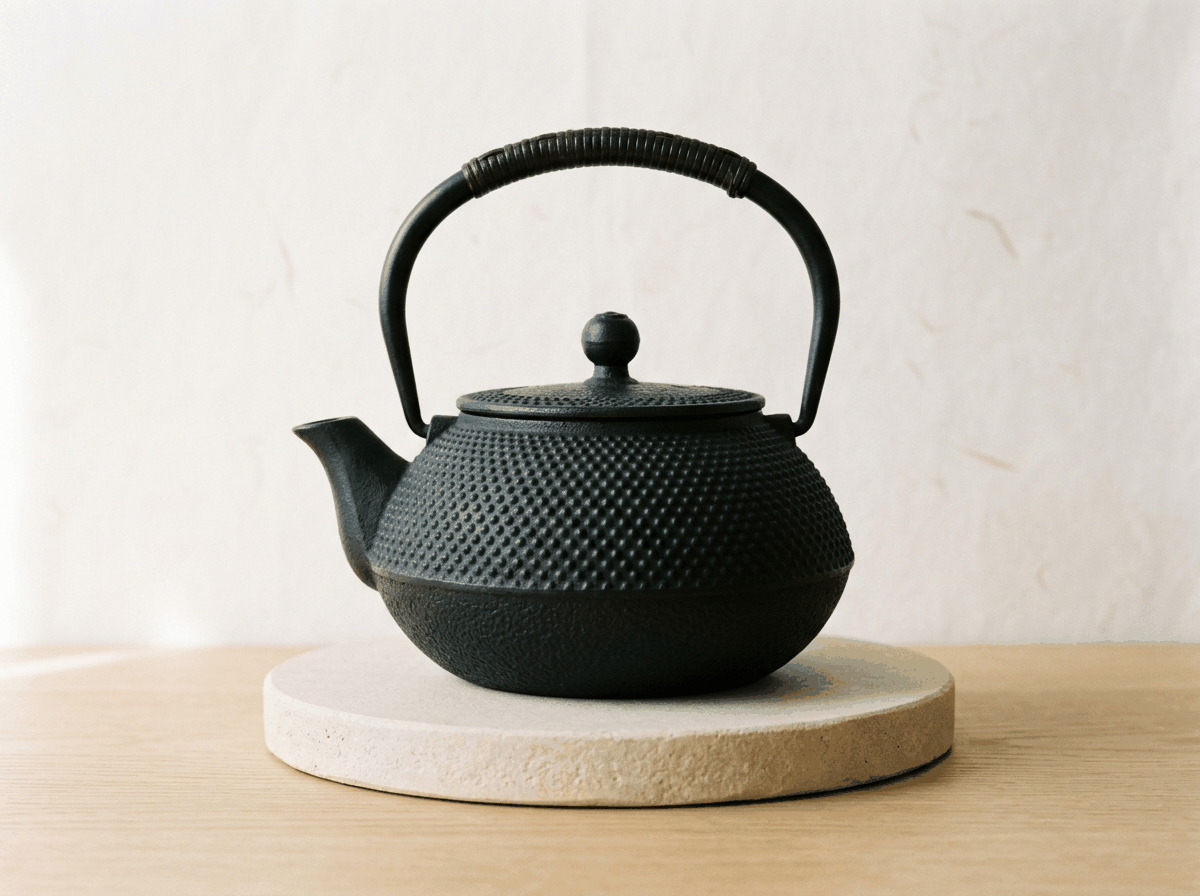
Iwachu Nanbu Tekki Arare Cast Iron Teapot
Best for:Assam, Keemun, shou pu-erh, and unhurried multi-cup table sessions
Cast Iron · 650 ml (22 oz)
- Hand-cast in Morioka, Iwate with high thermal mass that locks in steep warmth
- Vitreous interior enamel prevents metallic off-flavors and resists rust
- Precision-beveled spout geometry delivers a crisp cut-off without dribbling
Every tea leaf carries an intricate architecture of volatile aromatics, sweet amino acids, and structural polyphenols. Yet most home brewers spend weeks obsessing over leaf origin and water temperature while treating the teapot as passive decor. In reality, your teapot is an active chemical and thermodynamic instrument. Swap the exact same oolong from a thin porcelain pot into an unglazed clay pot, or from a borosilicate glass carafe into a heavy iron tetsubin, and the cup changes dramatically in brightness, body, and finish.
Choosing the best teapot material comes down to understanding how four distinct families—cast iron, borosilicate glass, unglazed clay, and glazed ceramic or porcelain—interact with heat, water, and tea chemistry. When you match a vessel’s physics to the leaves in your pantry, extraction becomes effortless rather than a constant battle against flat aromatics or harsh astringency.
Clara’s Rule of Material Physics: No single teapot material excels at every tea. A vessel that keeps malty Assam piping hot for forty minutes will effortlessly scald tender spring green buds; a porous clay pot that makes aged pu-erh taste velvety and sweet will quietly mute the jasmine lift of a delicate white tea.
Before digging into individual materials, keep in mind that steep timing and vessel thermodynamics always work together. Pairing your chosen material with precise timing—using a tool like our interactive tea steeping timer—lets you isolate what the pot itself contributes to the liquor.
The Material Science of Steeping: Three Physics Variables That Shape Flavor
When boiling water meets dried leaves inside a closed chamber, three physical properties immediately take over the infusion. Understanding them eliminates almost every mystery behind why two pots brew differently.
1. Thermal Conductivity vs. Thermal Inertia
People frequently confuse thermal conductivity (how fast heat moves through a wall) with thermal inertia (how much heat energy a material stores per degree of temperature change).
- Cast iron has high thermal conductivity and massive volumetric heat capacity due to its thick walls and high density (~7.2 g/cm³). If cold, a heavy cast iron pot acts as a ferocious heat sink, dragging 95°C water down by 10°C in seconds. Once preheated with a splash of hot water, however, it becomes a thermal flywheel that maintains brewing temperatures far longer than any ceramic or glass vessel.
- Borosilicate glass has low thermal conductivity, low wall mass, and transparency to infrared radiation. Because its walls are thin, it stores minimal heat energy and radiates warmth steadily into the room.
- Unglazed stoneware and Zisha clay sit in a sweet middle zone: lower conductivity than metal, moderate-to-high density depending on firing temperature, and thick enough walls to hold a remarkably steady plateau during short gongfu infusions.
- Thin glazed porcelain heats up almost instantaneously because there is very little clay mass to warm, making it nimble for quick temperature shifts—yet it drops temperature relatively fast in cold rooms.
2. Surface Porosity and Polyphenol Adsorption
Look at glazed ceramic, glass, or enameled iron under a scanning electron microscope and you see an impervious, glassy silicate barrier. Water and dissolved tea solids bounce off cleanly; nothing penetrates the wall.
Unglazed earthenware and high-iron stoneware clays tell a different story. During firing, clay particles sinter together without fully melting into glass, leaving microscopic open surface pores and closed internal micro-cavities. Those open pores create subtle capillary interaction with hydrophobic aroma molecules and astringent catechins. Over the course of a two-minute steep, unglazed iron-rich clay slightly softens aggressive sharp edges on the tongue while lending the liquor a rounder, denser tactile weight.
3. Heat Shock Resistance and Wall Geometry
Every time boiling water hits a room-temperature pot, the interior expands faster than the exterior. Materials with a low coefficient of thermal expansion—most famously borosilicate glass (roughly 3.3 × 10⁻⁶ K⁻¹)—shrug off sudden temperature swings without cracking. Dense, high-shrinkage clays like Yixing Zhuni expand more sharply and demand gentle pre-warming before taking a full 100°C boil, especially in chilly winter kitchens.
Master Material Comparison Matrix
| Material Family | Thermal Retention | Surface Porosity | Flavor Impact | Best Tea Categories | Care & Maintenance |
|---|---|---|---|---|---|
| Enamel-Lined Cast Iron | Very High | Zero (Vitreous Enamel) | Neutral; preserves full-bodied warmth | Black tea, masala chai, shou pu-erh, herbal | Rinse & towel dry immediately; zero soap or scrubbing |
| Borosilicate Glass | Low to Moderate | Zero (Non-Porous) | Ultra-clean, crisp, unaltered | Blooming tea, green tea, white tea, tisanes | Warm soapy wash; easy citric-acid descaling |
| Unglazed Clay (Zisha / Tokoname) | High (for size) | Micro-Porous (2%–8%) | Smooths astringency; thickens mouthfeel | High-mountain oolong, roasted oolong, pu-erh, sencha | Hot water rinse only; dedicate to one tea family |
| Glazed Ceramic / Stoneware | Moderate to High | Zero (Food-Safe Glaze) | Clean with gentle thermal cushion | Daily black, oolong, rooibos, spiced blends | Easy hand wash; occasional baking-soda soak |
| Glazed Porcelain | Low to Moderate | Zero (Vitrified Kaolin) | Sharp aroma reflection; crisp clarity | White tea, floral oolong, green tea, tasting flights | Dishwasher-safe (unaccented); effortless cleaning |
Material-by-Material Deep Dive
Cast Iron Teapots (Tetsubin & Enamel-Lined Tetsubin Kyusu)
First, an essential distinction: traditional Japanese tetsubin are raw, unlined cast iron kettles built exclusively to boil water over charcoal or hearth fire. Modern table-brewing cast iron teapot models—often called tetsubin kyusu—feature a smooth black vitreous enamel coating fused to the interior iron and include a removable mesh basket.
Because iron holds immense thermal energy, an enamel-lined vessel like the Iwachu Nanbu Tekki Arare Cast Iron Teapot is unbeatable when you want a full pot of Assam, Keemun, or earthy shou pu-erh to stay hot from the first cup to the third. The classic arare hobnail texture outside isn’t purely decorative either; those raised cast bumps slightly increase surface area while making the warm pot safer to grip.
The trade-off? Weight and thermal lag. Always pre-warm a cast iron pot with a quick swirl of hot water before dropping in your leaves, and pull the infuser basket out promptly when the timer chimes so lingering heat doesn’t over-extract bitter tannins. Even with enamel protection, the exterior iron rim and lid still need careful drying after every session—check our dedicated guide on how to season and protect a cast iron teapot from rust before your first steep.
Borosilicate Glass Teapots
If tea is visual meditation as much as taste, a glass teapot turns every steep into a transparent theater. Quality vessels use laboratory-grade 3.3 borosilicate glass rather than thick soda-lime glass, enabling wafer-thin walls that withstand boiling water without clouding or fracturing.
From a flavor standpoint, borosilicate glass is completely inert. Unlike porous clay, it refuses to swallow bright top-note esters, making it a stellar home for Silver Needle white tea, fresh spring Dragonwell, citrusy herbal blends, and hand-tied flowering bulbs. In our guide to the best glass flowering teapots, we examine how clear rounded bodies give tightly bound chrysanthemum and globe amaranth blossoms room to unfurl without crowding.
A clean glass design like the Hario ChaCha Kyusu Maru 700ml also gives you instant visual control over liquor color—a huge advantage if you prefer judging strength by hue rather than strictly watching a clock. Its lone weakness is steady radiant heat loss, which means pouring smaller batches or using a glass warmer base during long winter conversations. When mineral film or tea patina eventually dims that glass sparkle, follow our natural method for removing tea stains from glass and ceramic teapots without abrasive sponges.
Unglazed Clay Teapots (Yixing Zisha & Japanese Tokoname)
When enthusiasts speak almost reverently about a clay teapot, they are usually referring to one of two great East Asian traditions: Chinese Yixing Zisha (“purple sand” stoneware from Jiangsu province) or Japanese Tokoname / Banko iron-rich red and purple clays.
Neither is ordinary pottery clay. Yixing Zisha ore is rich in quartz, mica, and natural iron oxides. Fired without glaze between 1,140°C and 1,200°C, it develops a signature double-pore microstructure that allows subtle micro-aeration and selective polyphenol adsorption. In practical tasting terms, unglazed Zisha trims the sharp, mouth-puckering edge off young sheng pu-erh or deeply roasted cliff oolong, producing a softer, oilier broth. We explore this fascinating mineral chemistry in detail in Yixing Zisha Clay vs. Porcelain Teapots.
Across the sea in Japan, wood-fired and reduction-fired shudei clay from Tokoname contains high ferric oxide that reacts subtly with steamed green teas, softening grassy harshness while amplifying savory L-theanine sweetness. Iconic side-handle pots like the Gyokko Kiln Tokoname-Yaki Side-Handle Kyusu pair this mineral finesse with built-in ceramic sasame mesh—an aesthetic and functional triumph explored in our authentic Japanese kyusu guide.
Of course, porous clay comes with rules. You must commit a raw clay pot to a single tea profile (never wash it with soap, and never brew spiced chai inside a pot reserved for high-mountain oolong), and authentic handmade Zisha demands careful sourcing to avoid chemically dyed slip-cast knockoffs.
Glazed Ceramic & Stoneware Teapots
For most tea drinkers, an everyday ceramic teapot represents the golden mean of practicality, durability, and price-to-performance value. Crafted from dense stoneware clay and sealed inside and out with a glassy, food-safe glaze fired above 1,200°C, glazed ceramic combines the steady warmth of thick earth with the non-reactive cleanliness of glass.
Consider a modern workshop benchmark like the Zero Japan Universal Beehouse Artisan Ceramic Teapot. Its Mino-ware stoneware walls hold brewing temperature much better than thin glass, yet the vitrified interior glaze rinses spotless in ten seconds—meaning you can brew smoky Lapsang Souchong at 8:00 AM and chamomile peppermint at 9:00 PM with zero flavor carryover.
Glazed stoneware is also remarkably forgiving during Western-style multi-minute steeps. It doesn’t cool prematurely like thin glass, nor does it store the aggressive excess heat of cast iron. Look for models featuring wide-mouth stainless steel infuser baskets so whole rolled leaves can expand to three times their dry volume without crushing against the mesh.
Glazed Porcelain Teapots
Although porcelain belongs technically to the ceramic family, its mineral recipe and firing behavior earn it a distinct place in tea craft. Made from refined white kaolin clay blended with feldspar-rich stone (petuntse) and fired at extreme temperatures between 1,280°C and 1,380°C, porcelain vitrifies so completely that the clay body becomes translucent, glass-hard, and near-zero in porosity even without glaze.
Because it absorbs nothing and sits light in the hand, a porcelain teapot—such as the Sweese Fluted Porcelain Infuser Teapot—acts like an acoustic resonator for delicate top-note aromatics. Tea competition judges rely almost exclusively on white porcelain tasting sets and porcelain gaiwans because white walls reveal true liquor hue while refusing to mask defects or dull bright floral esters. If you are weighing a classic Chinese lidded bowl against a spouted Japanese pot, our Kyusu vs. Gaiwan comparison breaks down the pouring physics and ergonomics side by side.
Cast Iron vs. Ceramic Teapot: Settling the Everyday Matchup
One question shows up more often than any other when shoppers narrow down their first heirloom vessel: cast iron vs ceramic teapot—which actually belongs on the kitchen counter every morning?
While both excel at full-bodied, Western-style multi-cup infusions, they behave differently once boiling water enters the pot:
- Heat Curve Across a 30-Minute Session: Preheated cast iron wins hands down for prolonged warmth. If you work at a desk and refill your teacup slowly over forty-five minutes, cast iron keeps liquor noticeably hotter without reheating—provided you pull the infuser basket out right on time. Glazed ceramic cools steadily down to comfortable sipping temperature within fifteen to twenty minutes unless paired with a knitted cozy.
- Pouring Ergonomics and Weight: Even empty, a 650ml cast iron teapot feels substantial. Filled with water, its center of gravity requires steady grip strength, particularly for older tea drinkers or anyone pouring single-handed. A 450ml to 700ml ceramic teapot feels effortless in one hand and typically offers a lighter lid fit.
- Thermal Forgiveness for Delicate Teas: Because iron blasts stored heat straight back into the leaf chamber, cast iron is prone to scorching Japanese sencha or silver-tip white teas if your timing drifts by twenty seconds. Glazed ceramic softens the temperature peak slightly, giving delicate greens and floral oolongs a safer window.
- Longevity Against Drops and Thermal Shock: Drop a ceramic pot onto granite and the session is over. Drop a cast iron teapot and you are far more likely to chip your countertop than crack the vessel—though dropping cast iron can spider-crack its interior vitreous enamel, which eventually invites rust if chipped.
The takeaway: Choose cast iron if you primarily drink black teas, chai, aged pu-erh, or dark oolongs and prize long table warmth and heirloom heft. Choose glazed ceramic if you drink across five different tea categories a week, value featherlight single-hand pouring, and want effortless rinsing at the sink.
How to Match Your Best Teapot Material to Your Tea Pantry
Rather than hunting for a mythical single “universal” champion, pair the material to the chemical personality of the tea you brew most often:
- Japanese Steamed Greens (Sencha, Kabusecha, Gyokuro): Choose unglazed Tokoname clay for maximum umami smoothing and fine sasame filtration, or borosilicate glass if you love watching vibrant emerald needles swirl at 70°C to 80°C.
- High-Aroma Oolongs (Tieguanyin, Phoenix Dancong, Alishan): Choose high-fired porcelain (or high-shrinkage Zhuni Zisha clay) to reflect jasmine, orchid, and stone-fruit top notes cleanly.
- Roasted Cliff Oolongs & Aged Pu-erh: Choose porous Zini or Duanni Yixing clay to round out char bitterness and build thick broth texture, or cast iron when sharing big pots around a dining table.
- Black Tea, Breakfast Blends & Masala Chai: Choose enamel-lined cast iron or thick glazed stoneware. Both hold the 95°C–100°C heat needed to extract brisk malty depth and warm spices.
- Blooming Teas, White Teas & Herbal Tisanes: Choose borosilicate glass or glazed porcelain. Zero absorption ensures ginger, mint, or rose petals never hijack tomorrow’s delicate Darjeeling.
Building a Practical Two-Vessel System
If you are starting from scratch—or upgrading from a lone chipped mug infuser—the smartest strategy is a balanced two-pot rotation rather than overspending on one ultra-niche piece:
- Your Workhorse Neutral Vessel (First Purchase): Start with a glazed ceramic teapot, glazed porcelain pot, or borosilicate glass teapot equipped with a generous removable basket. This handles 100% of your daily experiments cleanly, tolerates flavored teas without retaining scent, and cleans up in seconds.
- Your Specialist Craft Vessel (Second Purchase): Once you discover the single tea family you crave most—whether earthy ripe pu-erh, roasted rock oolong, or sweet gyokuro—invest in a dedicated unglazed Yixing Zisha pot, an authentic Tokoname kyusu, or an heirloom cast iron tetsubin tuned explicitly to elevate that leaf.
Whenever you are ready to inspect real-world pouring scores, spout geometries, and capacities side by side, browse our curated teapot gallery or explore our roundup of the coolest and most unique teapots that actually pour well. And to make sure every material investment stays spotless for decades, bookmark our complete teapot care and maintenance guide.
Hands-On Benchmarks
Tested Picks & Recommendations
Iwachu Nanbu Tekki Arare Cast Iron Teapot
Cast Iron · 650 ml (22 oz)
Best ForAssam, Keemun, shou pu-erh, and unhurried multi-cup table sessions
What We Loved
- Hand-cast in Morioka, Iwate with high thermal mass that locks in steep warmth
- Vitreous interior enamel prevents metallic off-flavors and resists rust
- Precision-beveled spout geometry delivers a crisp cut-off without dribbling
Trade-offs
- Substantial filled weight requires steady wrist support when pouring
- Enamel lining means it must never sit over direct stove burners
Authentic Yixing Zhuni Zisha Shui Ping Teapot
Yixing Zisha Clay · 160 ml (5.4 oz)
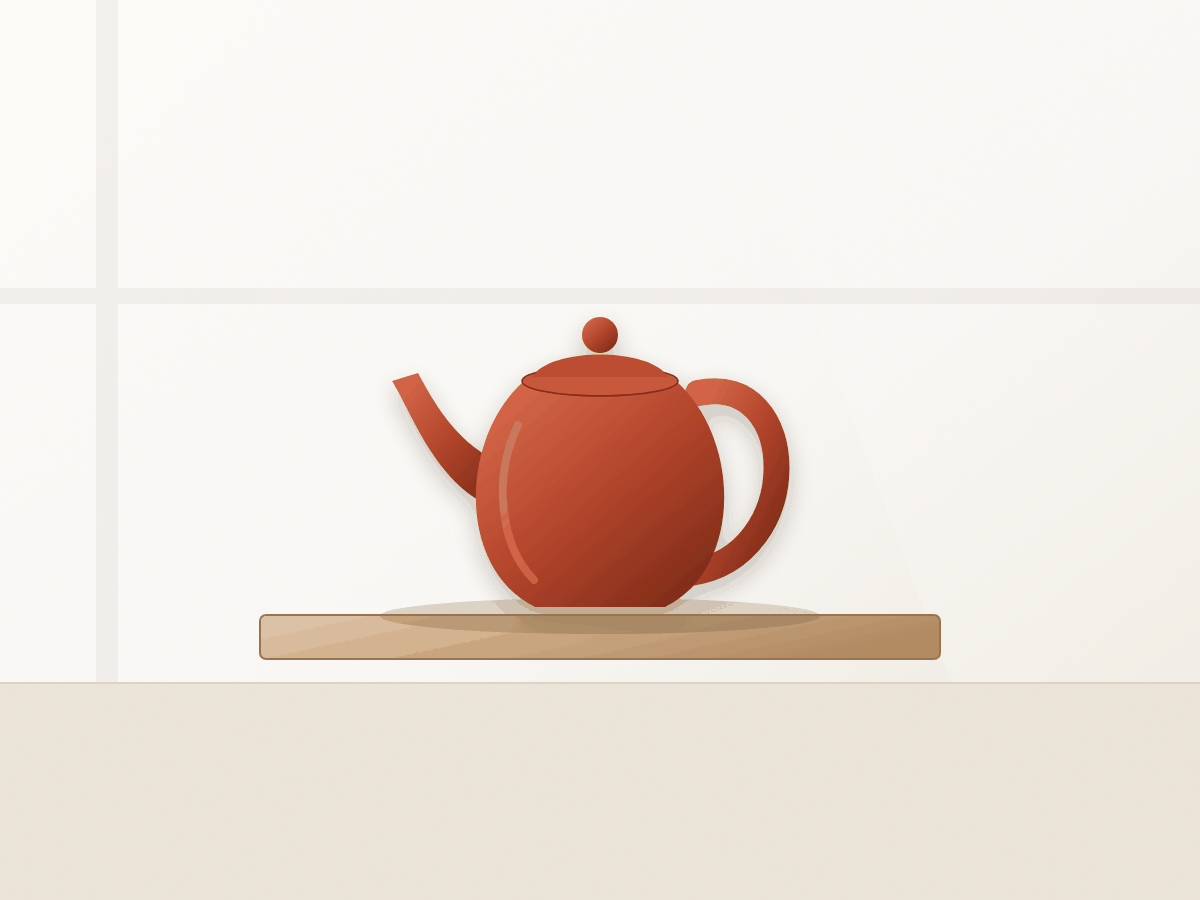
Best ForHigh-mountain oolongs, aged pu-erh, and concentrated gongfu sessions
What We Loved
- High-shrinkage iron-rich Zhuni clay concentrates heat for complex aromatic teas
- Dual-pore mineral structure softens brisk tannins and rounds mouthfeel
- Compact 160ml Shui Ping geometry enables brisk 10-second flash infusions
Trade-offs
- Requires single-tea-category dedication so pores do not cross-contaminate
- Must be cleaned strictly with boiling water and zero detergent
Zero Japan Universal Beehouse Artisan Ceramic Teapot
Ceramic & Stoneware · 450 ml (15.2 oz)
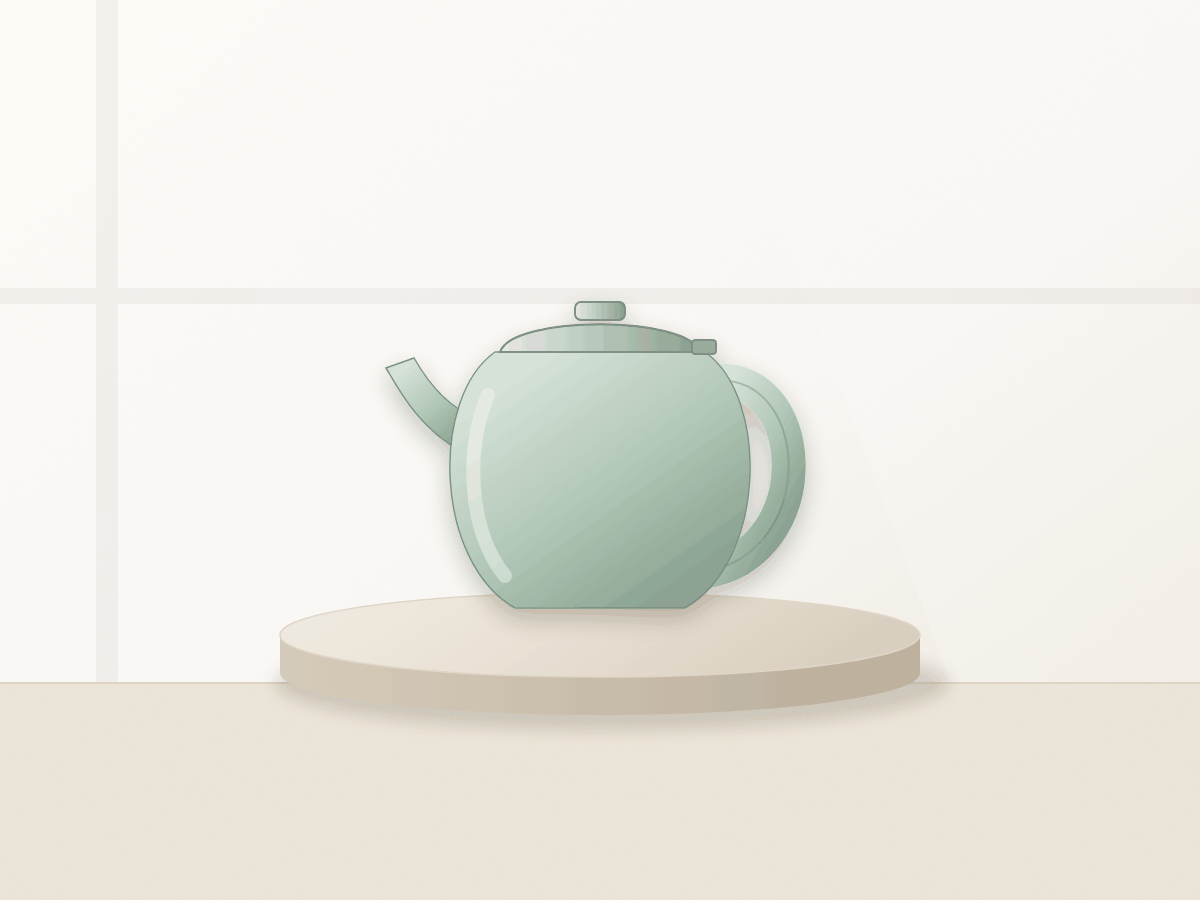
Best ForEveryday multi-tea brewing, herbal blends, and hassle-free maintenance
What We Loved
- Non-porous Mino stoneware glaze leaves zero flavor memory between teas
- Clip-on stainless lid and ultra-fine infuser stay anchored during full pours
- Balanced 450ml capacity transitions smoothly from solo mugs to two-cup pours
Trade-offs
- Cools faster over 30 minutes than thick cast iron without a cozy
- Dense stoneware walls benefit from a quick warm-water rinse first
Frequently Asked Questions
What is thermal inertia in a teapot, and why does preheating matter?
Thermal inertia describes how much energy a vessel absorbs before its interior wall reaches equilibrium with the brewing water. Heavy cast iron and thick stoneware have high volumetric heat capacity: if you pour 95°C water into a cold cast iron pot, the iron immediately steals 8°C to 12°C from the steep. Swishing hot water inside the empty pot for 10 seconds before adding leaves eliminates that temperature crash and keeps extraction consistent.
How do I verify that a glazed ceramic or porcelain teapot has a lead-free, food-safe glaze?
Reputable manufacturers test finished glazes against FDA CPG 7117.06 and California Prop 65 leachable-metal limits, firing feldspar and silica glazes above 1,200°C without low-fire lead fluxes. Look for kiln-origin documentation (such as Japanese Mino, Tokoname, or European porcelain standards), avoid vintage decorative teapots with bright low-fire red, orange, or yellow overglaze decals on interior surfaces, and check for smooth, craze-free interior glazing.
Do I really need to dedicate a clay teapot to only one type of tea?
Yes, for unglazed porous clay such as Yixing Zisha or unglazed Banko and Tokoname ware. Microscopic open pores absorb tea oils and aromatic compounds over repeated steeps. If you brew peppermint tisane or Earl Grey in the same clay pot you use for roasted Wuyi oolong, bergamot and menthol oils will linger inside the clay matrix and taint future infusions. Glazed ceramic, glazed porcelain, enamel-lined cast iron, and borosilicate glass need zero dedication.
Is cast iron or ceramic better for keeping tea hot without over-steeping?
Cast iron excels at keeping already-brewed liquor hot at the table after you remove the infuser basket, because its high thermal mass acts like a thermal battery. However, if you leave tea leaves inside a thick cast iron pot while pouring slowly, that sustained heat can push delicate green or white teas into bitterness. Glazed ceramic cools at a gentler curve, which can be safer for finicky leaves when brewing Western-style.
Why does borosilicate glass cool tea faster than stoneware or cast iron?
Borosilicate glass walls are typically thin (1.5mm to 2.5mm) and completely transparent to infrared radiation. While glass conducts heat relatively slowly compared to iron, it holds very little stored thermal energy in its thin walls and loses heat continuously through both convection and radiant emission—meaning delicate green and white teas naturally drift down out of scorching temperatures rather than stewing.
Material Science
Related Guides in This Cluster
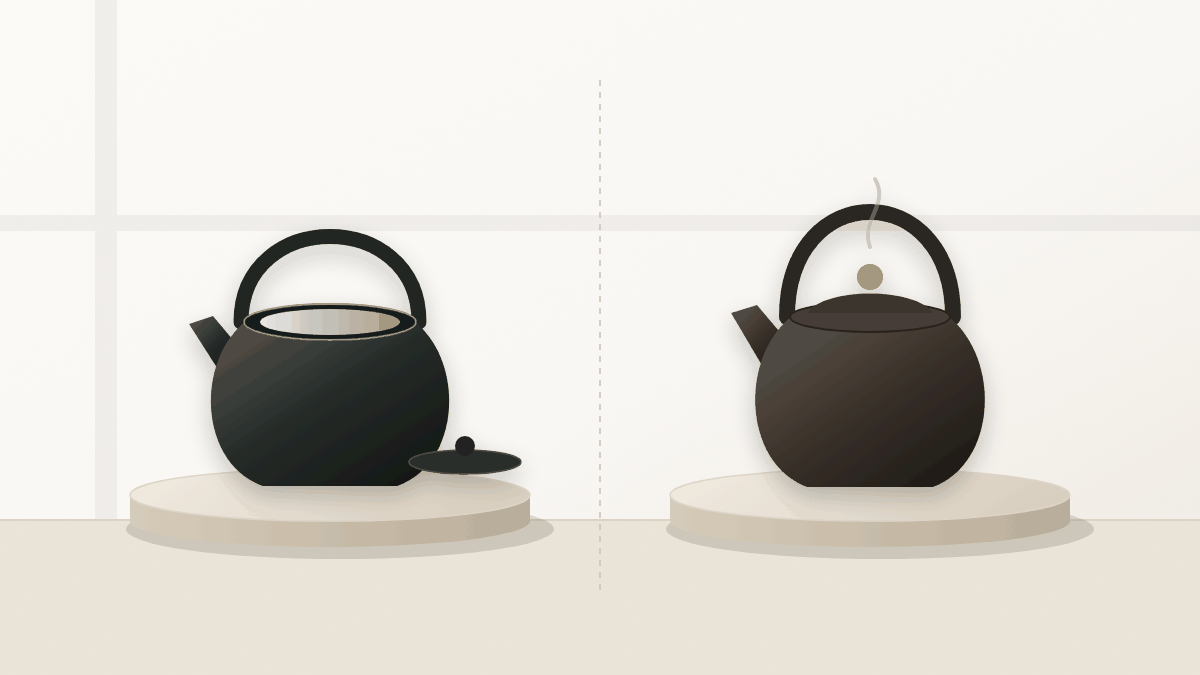
Enamel-Lined Cast Iron Teapot vs. Raw Tetsubin: Critical Differences
Never confuse a kettle with a teapot: learn the crucial differences in lining chemistry, stovetop safety, iron mineral release, and rust care between enamel-lined tetsubin kyusu and raw tetsubin.
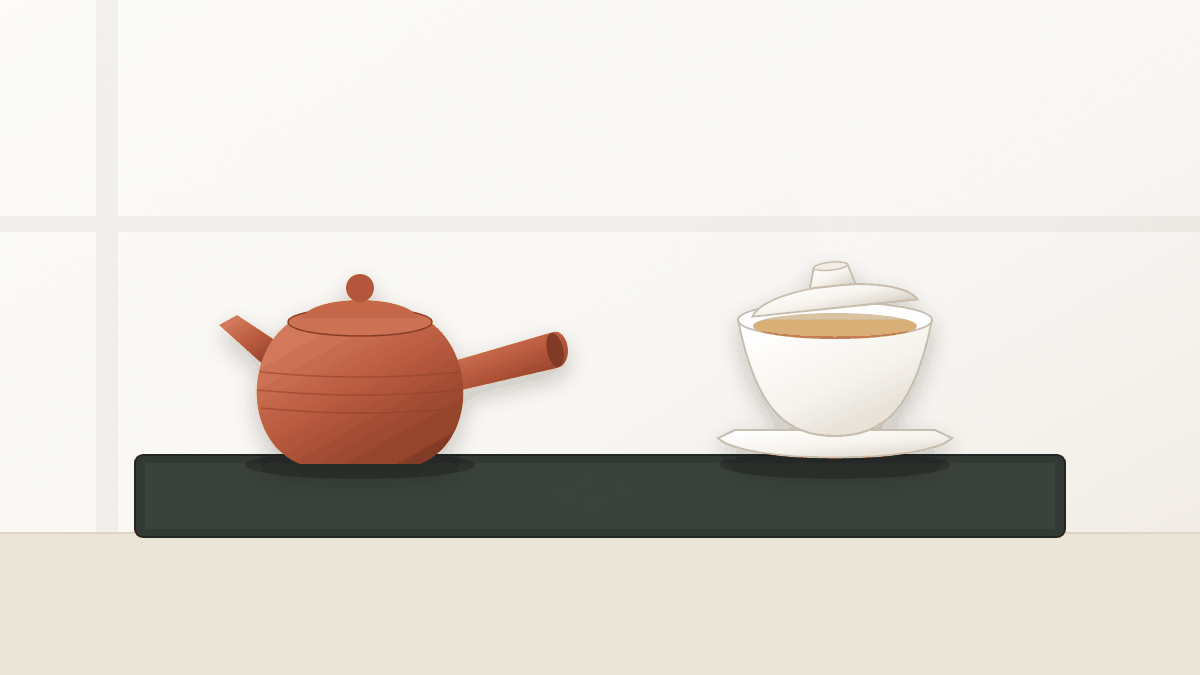
Kyusu vs. Gaiwan: Which Traditional Brewing Vessel Should You Choose?
Side-handle Japanese kyusu vs. lidded Chinese porcelain gaiwan: compare extraction speed, leaf geometry, thermal grip, and tea pairing to choose your daily vessel.
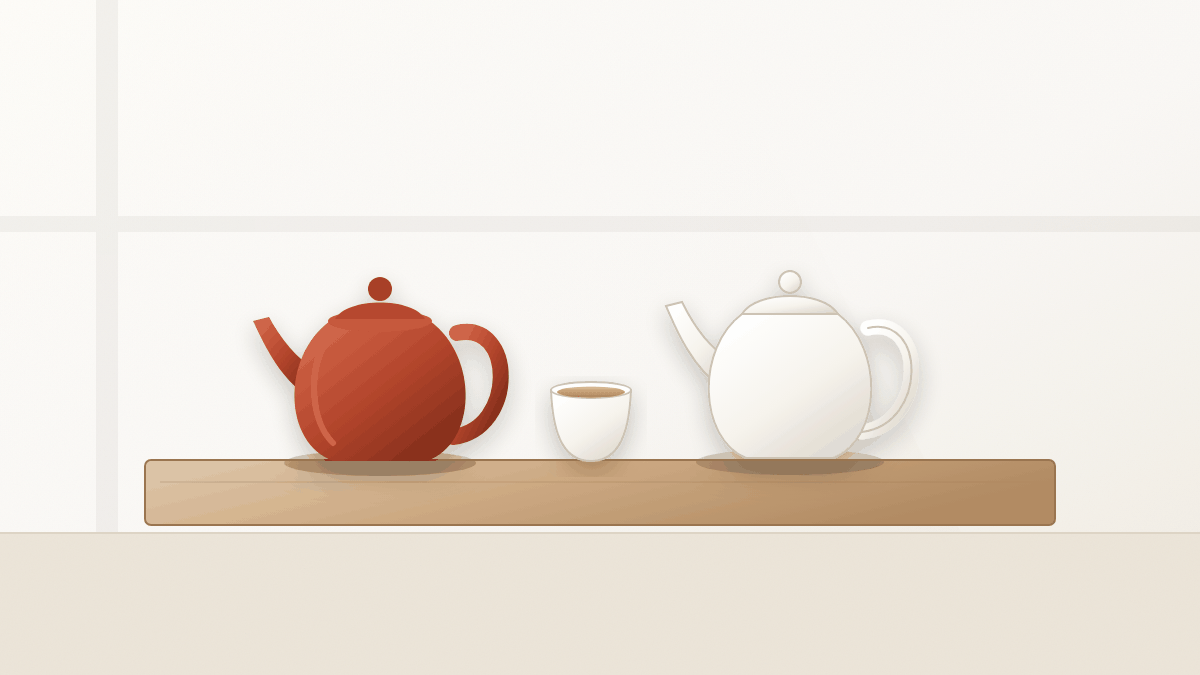
Yixing Zisha Clay vs. Porcelain Teapots: How Material Changes Tea Flavor
Discover the mineral physics of porous Yixing Zisha clay (Zhuni, Zini, Duanni) versus vitrified Dehua porcelain—and why one smooths tannins while the other sharpens aroma.