
Best Japanese Cast Iron Teapots (Tetsubin) That Won't Rust
Hands-on comparison of the best Nanbu Tekki cast iron tetsubin and enamel-lined iron teapots—covering internal rust prevention, heat inertia, and safe daily use.
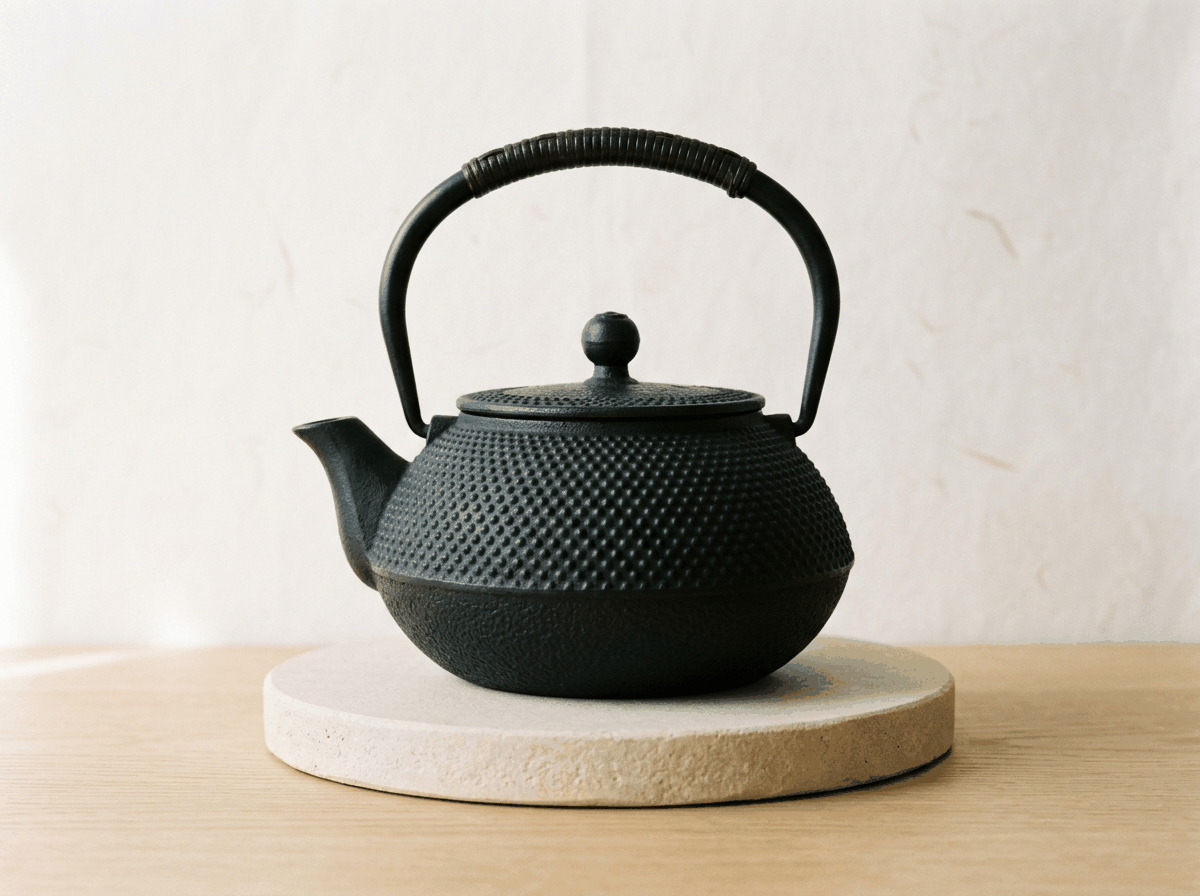
Iwachu Arare Cast Iron Tetsubin (650ml)
Best for:High-heat black teas, roasted oolongs, and unhurried tabletop steeping
Cast Iron · 650 ml (22 oz)
- Exceptional thermal mass keeps tea piping hot long after the first cup
- Hand-finished Nambu Tekki spout delivers an exact, drip-free water cutoff
- Smooth interior porcelain enamel prevents metallic off-flavors and simplifies rinsing
Few vessels anchor a tea table with the quiet authority of an authentic cast iron teapot. Wrapped in rhythmic arare hobnail texture and topped by a curved iron swing handle, a true japanese cast iron teapot radiates timeless permanence—keeping second and third pours steaming hot long after thin glass servers have gone lukewarm.
Yet ironware is also one of the most misunderstood categories in home brewing. Every week, disappointed buyers post photos of blistered interior coatings, metallic-tasting oolong, or orange rust creeping along the lid rim within months of unboxing. In nearly every case, the trouble begins long before the first steep: either someone purchased a poorly cast import with porous enamel pinholes, or they accidentally set an enamel lined cast iron teapot straight onto a roaring induction burner.
Separating heirloom nanbu tekki craftsmanship from brittle lookalikes starts with understanding how modern iron teapots are actually lined, cast, and protected against corrosion.
Tetsubin Kettle vs. Enamel-Lined Cast Iron Teapot: Know Before You Buy
Walk into any tea shop or browse online listings, and you will see the word tetsubin teapot slapped across two fundamentally different kitchen instruments:
- Raw Unlined Tetsubin (Water-Boiling Kettle): Born in 17th- and 18th-century Iwate Prefecture alongside Japanese sencha gatherings, a traditional tetsubin contains bare, unglazed cast iron inside and no mesh infuser basket. Its sole job is boiling plain spring water over charcoal, gas, or low radiant heat, releasing trace ferrous ions that give water a remarkably sweet, velvety mouthfeel before you pour it into a separate porcelain or clay pot.
- Enamel-Lined Cast Iron Teapot (Tetsu Kyusu): Almost every cast iron teapot sold with a removable stainless steel mesh infuser is actually a tetsu kyusu—a steeping vessel sealed internally with smooth black porcelain enamel. That vitrified glass barrier prevents tea leaves from reacting aggressively with raw iron (which otherwise turns tannin-rich black tea ink-black and harsh), while making post-brew rinsing virtually effortless.
Crucial Buying Rule: Because iron and porcelain enamel expand at drastically different thermal rates, an enamel-lined cast iron teapot is strictly kettle-fill only—never stovetop safe. Dive deeper into metallurgy and heat limits in our dedicated comparison of Enamel-Lined vs. Unlined Cast Iron Teapots.
Inside Rust Engineering: Why Foundry Precision Determines Longevity
Customers often ask whether any cast iron teapot truly avoids rust forever. The honest engineering answer is that cast iron will always obey chemistry—yet superior Japanese foundry work eliminates ninety percent of premature corrosion spots before the pot ever leaves the kiln.
Three hidden build details separate generational nanbu tekki pieces from disappointing knockoffs:
1. Pinhole-Free Vitrified Enamel Continuity
When low-cost factories spray cheap liquid glaze rapidly onto rough sand-cast iron, microscopic gas bubbles burst during firing—leaving tiny crater pinholes inside the belly floor and down inside the dark spout throat. Hot tea liquor slips behind those pinholes, causing creeping under-enamel rust bubbles that eventually pop and flake. Heritage Morioka kilns meticulously clean raw castings, apply tightly bonded high-silica porcelain coats, and inspect internal seams so water meets unbroken glass from wall to spout root.
2. Precision Rim Flange Machining
Even the finest enamel lined cast iron teapot exposes thin bands of machined iron along the upper lid lip and underside of the lid seat so the top nests flush without rattling. Budget imports leave jagged sand-casting bumps along that rim where droplets cling unseen under the lid. Precision-turned Japanese collars wipe completely dry in a single swipe of a linen cloth.
3. Arare Hobnail Relief & Spout Cut-Off Physics
That iconic pattern of raised geometric dots covering traditional arare pots is far more than ornament. Centuries ago, Iwate ironmasters discovered that raising tiny surface nodes subtly slows heat transfer right where fingers steady the side, while doubling exterior radiant texture. Equally critical is how the artisan hand-files the spout tip after removing the sand mold: a sharp, thinly beveled lip shears water cleanly mid-stream without trailing tea down the textured outer wall, as we verify across all entries in our 25 Coolest & Most Unique Teapots test bench.
Authentic Nanbu Tekki vs. Budget Cast Iron: Side-by-Side Comparison
| Vessel Archetype | Craft Origin | Interior Surface | Stovetop Safe? | Pour Precision | Heat Retention | Rust Risk Profile | Price Tier |
|---|---|---|---|---|---|---|---|
| Iwachu Arare Cast Iron Tetsubin | Morioka, Iwate (Nanbu Tekki) | Smooth vitrified porcelain enamel | No (Kettle-fill only) | 9.5 / 10 (Surgical cut) | 10 / 10 | Very Low (Clean rim machining) | $$$ |
| Old Dutch Sagaform Hobnail | Global Foundry Spec | Smooth porcelain enamel | No (Kettle-fill only) | 8.5 / 10 (Steady stream) | 9.5 / 10 | Low–Moderate (Dry wide rim well) | $$ |
| Traditional Raw Tetsubin Kettle | Morioka / Yamagata Artisan Kilns | Bare cast iron (builds yuaka scale) | Yes (Low-med gas, charcoal, careful coil) | 8.5 / 10 (Kettle spout) | 10 / 10 | Moderate (Requires hot residual drying) | $$$ |
| Unverified Budget Import Pot | Mass-Market Casting | Thin or bubbly painted enamel | No (High craze risk) | 6.5 / 10 (Thick spout dribble) | 8.5 / 10 | High (Spout-root pinholes & chipped paint) | $ |
Top Tested Cast Iron Teapots Reviewed
1. Iwachu Arare Cast Iron Tetsubin (650ml) — Best Authentic Nanbu Tekki
Founded in 1902 in Morioka, Japan, Iwachu remains the benchmark name for authentic nanbu tekki teaware—and testing the Iwachu Arare Cast Iron Tetsubin (650ml) makes the gap between Japanese foundry craft and generic imitations immediately obvious.
Hold it empty and you notice crisp, razor-consistent arare dots wrapping cleanly up toward a remarkably smooth machined lid rim. On the pour bench, its upward-curved spout ends in a subtle bevel that earns a 9.5/10 pour score: twenty consecutive pours from brim-full down to the final tablespoon terminated cleanly with zero stray droplets creeping down the textured hobnail belly. Inside, a deep laser-perforated stainless basket gives large black and oolong leaves ample vertical clearance while lifting cleanly out once your steep timer chimes. With 10/10 thermal retention in a manageable 650ml footprint, it hits the daily sweet spot for one to three drinkers who want heirloom durability without wrestling a two-kilogram pot one-handed.
2. Old Dutch Sagaform Cast Iron Hobnail Teapot (950ml) — Best Sharing Cast Iron
When hosting three or four brunch guests over spiced chai or malty Assam, a 650ml pot empties before everyone finishes pouring. That is where the Old Dutch Sagaform Cast Iron Hobnail Teapot earns its place on the tray.
Offering nearly a full liter (950ml) wrapped in classic black hobnail relief, the Sagaform delivers 9.5/10 heat retention, holding steeped black tea steaming hot well past the thirty-minute mark—especially when rested on an iron trivet. Its overhead swing handle pivots slightly forward of center to help your wrist manage the heavy water load smoothly. While its thicker spout lip scores 8.5/10 (requiring a crisp upward snap at the end of a pour to prevent a trailing drop) and its wider top lip demands diligent towel drying after use, its smooth enamel lining and spacious stainless basket make it the smartest $$ entry point for family-scale tea service.
3. Authentic Raw Unlined Morioka Tetsubin Kettle (900ml–1,200ml) — Best for Water Alchemy
If your real goal is boiling plain water on a low gas ring or tea-table warmer to experience how trace iron minerals transform tea texture, skip enameled steeping pots entirely and invest in an unlined raw tetsubin kettle. Because bare iron reacts directly with oxygenated boiling water, it gradually forms a protective pale mineral crust (yuaka) across the floor and gently rounds harsh tap water astringency before you pour over leaves in a porcelain gaiwan or stoneware pot. Just remember: never steep tea leaves directly inside an unlined boiling tetsubin, and explore cross-material pros and cons inside our Teapot Materials Comparison.
4. Low-Profile Modern Flat Cast Iron Kyusu (450ml–550ml) — Best Compact Desk Iron
Not every japanese cast iron teapot wears tall domed arare relief. Several contemporary Iwate studios cast sleek, low-center-of-gravity flat-profile tetsu kyusu finished with smooth matte skin and brushed copper or hammered iron lids. Lower vertical profile cuts sloshing weight on small trays while maintaining thick thermal walls ideal for concentrated multi-steep roasted oolongs and ripe pu-erh.
Thermal Inertia & Best Teas for Cast Iron Brewing
Understanding thermal inertia unlocks why cast iron tastes magical with certain leaves and risky with others.
Because dense gray iron carries tremendous volumetric heat capacity, an unheated cast iron teapot initially behaves like a thermal sponge. If you pour 205°F (96°C) water straight into a cold iron pot, the walls steal roughly 8°C to 12°C immediately—leaving high-elevation black teas dull and flat. The fix takes ten seconds: swirl 150ml of hot water inside the empty vessel, pour it into your empty teacups to pre-warm them, then add leaves and fresh brewing water.
Once pre-warmed, iron locks heat steady across the entire infusion—making it tailor-made for leaves that demand sustained near-boiling energy:
- Bold Black Teas & Breakfast Blends (205°F–212°F / 96°C–100°C): Orthodox Assam, Yunnan Dian Hong, Keemun, and hearty Earl Grey develop rich maltiness and bright body inside hot cast iron without cooling prematurely mid-steep.
- Charcoal-Roasted Oolongs & Shou Pu-erh (200°F–212°F / 93°C–100°C): Wuyi Da Hong Pao, heavy-roast Dong Ding, and earthy aged ripe pu-erh shed compressed cocoa and mineral notes effortlessly when thick iron keeps extraction temperatures flat.
- Spiced Chai & Herbal Tisanes (208°F–212°F / 98°C–100°C): Ginger root, cinnamon bark, cardamom pods, and dense South African rooibos thrive on prolonged heat after lifting or leaving the basket submerged.
Conversely, be careful brewing delicate Japanese green teas like gyokuro or first-harvest sencha in heavy cast iron unless you pull the stainless mesh basket on the exact second—sustained iron warmth will push catechins straight into sharp bitterness. Keep our interactive Tea Steeping Timer beside your tray when timing delicate steeps, or turn to a fast-cooling clay side-handle vessel from our Authentic Japanese Kyusu Teapots Guide.
Non-Negotiable Rules to Keep Your Cast Iron Teapot Rust-Free
Preventing inside rust and protecting exterior urushi-style baked lacquer takes under two minutes after every session:
- Remove Wet Leaves Immediately: Never let soggy tea leaves sit inside an iron pot overnight. Prolonged cool humidity creeps up to the exposed top rim flange and triggers orange oxidation spots.
- Rinse With Warm Plain Water Only: Skip dish soap, bleach, baking soda abrasives, and dishwashers entirely. Swirl warm tap water through the enamel belly and out the spout while the iron is still gently warm.
- Wipe the Rim & Hobnail Exterior Bone-Dry: Use a clean, lint-free linen towel to dry the unglazed lid groove, lid underside, spout tip, and raised arare dots immediately.
- Air-Dry With the Lid Off: Rest the empty pot uncovered on a counter mat for 20 minutes so trapped warm vapor escapes completely before nesting the lid back on.
- Use Green Tea Tannins If Flash Rust Appears: If an accidental damp evening leaves a tiny orange speck on the collar lip or inside a raw kettle, never attack it with steel wool or sandpaper. Steep inexpensive loose-leaf green tea inside the pot following our step-by-step How to Season a Cast Iron Teapot (And Prevent Inside Rust) protocol so natural tea catechins convert reactive orange rust into inert, food-safe black iron tannate—and review our Complete Teapot Care Guide for full multi-material upkeep.
Final Verdict: If you want a lifelong heirloom whose 9.5/10 spout cut-off and vitrified enamel resist corrosion effortlessly, choose the Iwachu Arare Cast Iron Tetsubin (650ml). If you regularly pour three or four large mugs across leisurely weekend mornings, step up to the high-volume Old Dutch Sagaform Cast Iron Hobnail Teapot—and keep both strictly off the stove burner.
Hands-On Benchmarks
Tested Picks & Recommendations
Iwachu Arare Cast Iron Tetsubin (650ml)
Cast Iron · 650 ml (22 oz)
Best ForHigh-heat black teas, roasted oolongs, and unhurried tabletop steeping
What We Loved
- Exceptional thermal mass keeps tea piping hot long after the first cup
- Hand-finished Nambu Tekki spout delivers an exact, drip-free water cutoff
- Smooth interior porcelain enamel prevents metallic off-flavors and simplifies rinsing
Trade-offs
- Enamel-lined interior cannot be placed on direct burners without cracking the glaze
- Substantial dry weight requires deliberate wrist control when pouring at full capacity
Old Dutch Sagaform Cast Iron Hobnail Teapot
Cast Iron · 950 ml (32 oz)
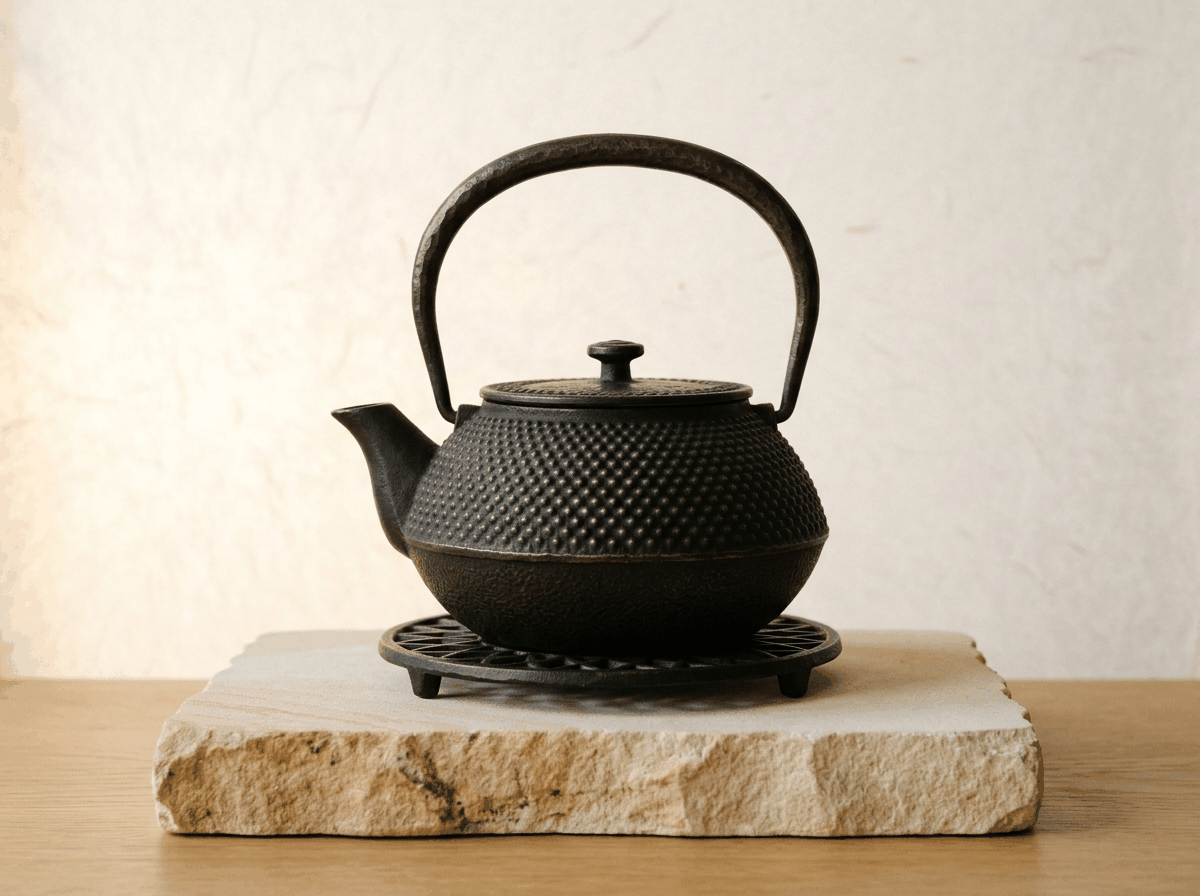
Best ForMulti-cup black tea brunches, spiced chai infusions, and prolonged tabletop warmth
What We Loved
- Generous 950ml volume serves three to four mugs without re-brewing
- Thick enameled cast-iron walls hold steep temperatures steady for over 30 minutes
- Accessible mid-tier entry into traditional hobnail iron aesthetics
Trade-offs
- Heavy when filled to capacity, benefiting from a gentle trivet pour stance
- Broad, thick spout lip occasionally retains one trailing droplet at slow pour speeds
Frequently Asked Questions
What is the real difference between an Iwachu Nanbu Tekki teapot and budget cast iron imports?
Authentic Morioka Nanbu Tekki foundries like Iwachu use finely milled sand molds that produce crisp, uniform arare hobnail dots, smoothly finished lid-lip tolerances, and an even vitrified interior porcelain lining free of pinholes. Budget cast iron imports frequently leave rough casting seams inside the spout neck, uneven bubbly enamel that traps rust around micro-pores, and blunt spout tips that drip down the outer shell.
Why does enamel flake inside some cast iron teapots, and is flaking dangerous?
Interior porcelain enamel flakes or crazes almost always because of thermal shock—either setting an enamel-lined pot on a stove burner or induction plate, or pouring cold water into scorching hot iron. Because iron and glass-porcelain expand at sharply different speeds, stress fractures shatter the glaze bond. Once sharp glassy enamel chips start peeling into tea, retire the pot from drinking service immediately rather than swallowing loose glaze shards.
Can I put an enamel-lined cast iron teapot on a gas, electric, or induction stove?
No. Never place an enamel-lined cast iron teapot (tetsu kyusu) directly onto a gas flame, glass-top electric element, or induction burner. Even low burner settings can crack the porcelain glaze. Always heat water in a separate kettle and pour it into your cast iron steeping pot. Only true unlined raw iron tetsubin kettles—sold without interior enamel or infuser baskets—are safe for direct water boiling.
Why do rust spots still appear around the rim of a rust-resistant cast iron teapot?
Even in the highest-craft enamel-lined cast iron teapot, the upper collar edge where the lid rests and the outer lip of the spout leave thin strips of exposed or thinly coated iron so tolerances remain snug. Trapping damp steam under a closed lid after steeping invites orange flash rust along that rim. Prompt warm rinsing, thorough towel drying while warm, and air-drying with the lid off stop rim rust cold.
Should I preheat a cast iron teapot before steeping loose-leaf tea?
Yes, every single time. Dense cast iron carries substantial thermal inertia: if you pour boiling water straight into room-temperature iron, the metal absorbs roughly 8°C to 12°C within seconds, leaving Assam or aged pu-erh under-extracted. Swirl 150ml of hot tap or kettle water around the empty pot for 10 seconds, dump it out, then load your leaves and steep water.
Curated Picks
Related Guides in This Cluster
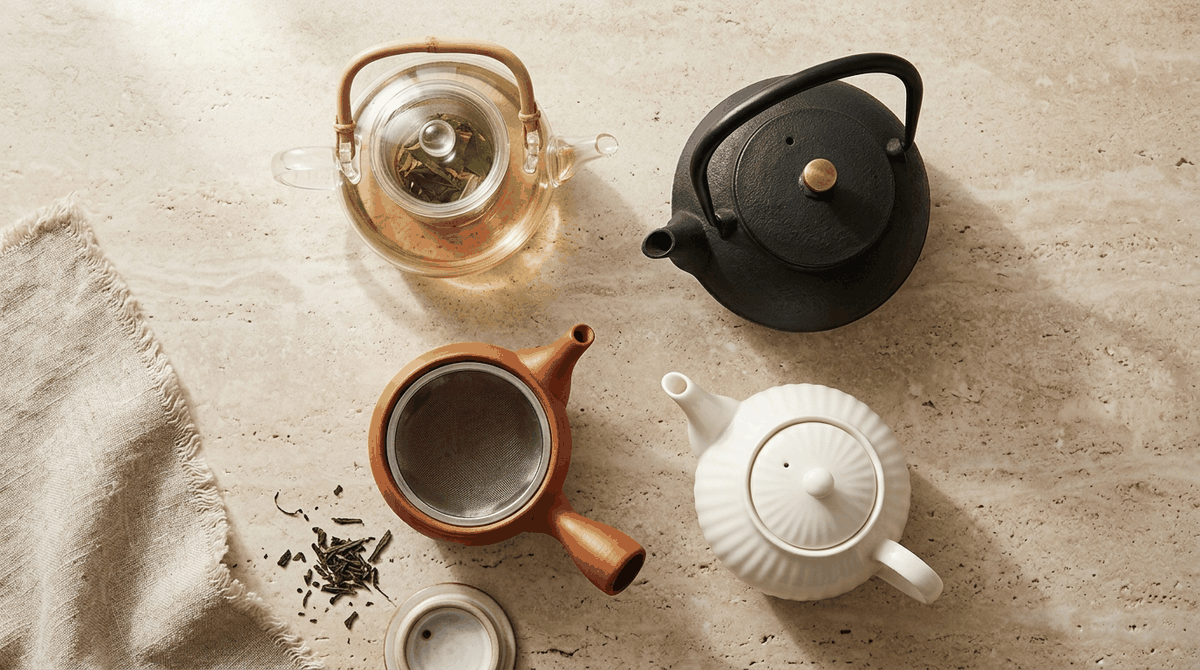
25 Coolest & Most Unique Teapots That Actually Pour Well
Our lab-tested guide to the 25 coolest and most unique teapots—combining sculptural glass, Japanese kyusu, and cast iron with laminar non-drip pouring.
Best Borosilicate Glass Teapots for Blooming Tea (Heat-Resistant Picks)
Compare the best borosilicate glass teapots for blooming tea and loose-leaf infusions—covering thermal shock safety, optical clarity, and spout cut-off.
Authentic Japanese Kyusu Teapots: Side-Handle vs. Back-Handle Picks
Master the craft of authentic Japanese kyusu teapots: yokode side-handle ergonomics, Tokoname clay mineral physics, and sasame ceramic mesh vs. steel strainers.