
Enamel-Lined Cast Iron Teapot vs. Raw Tetsubin: Critical Differences
Never confuse a kettle with a teapot: learn the crucial differences in lining chemistry, stovetop safety, iron mineral release, and rust care between enamel-lined tetsubin kyusu and raw tetsubin.
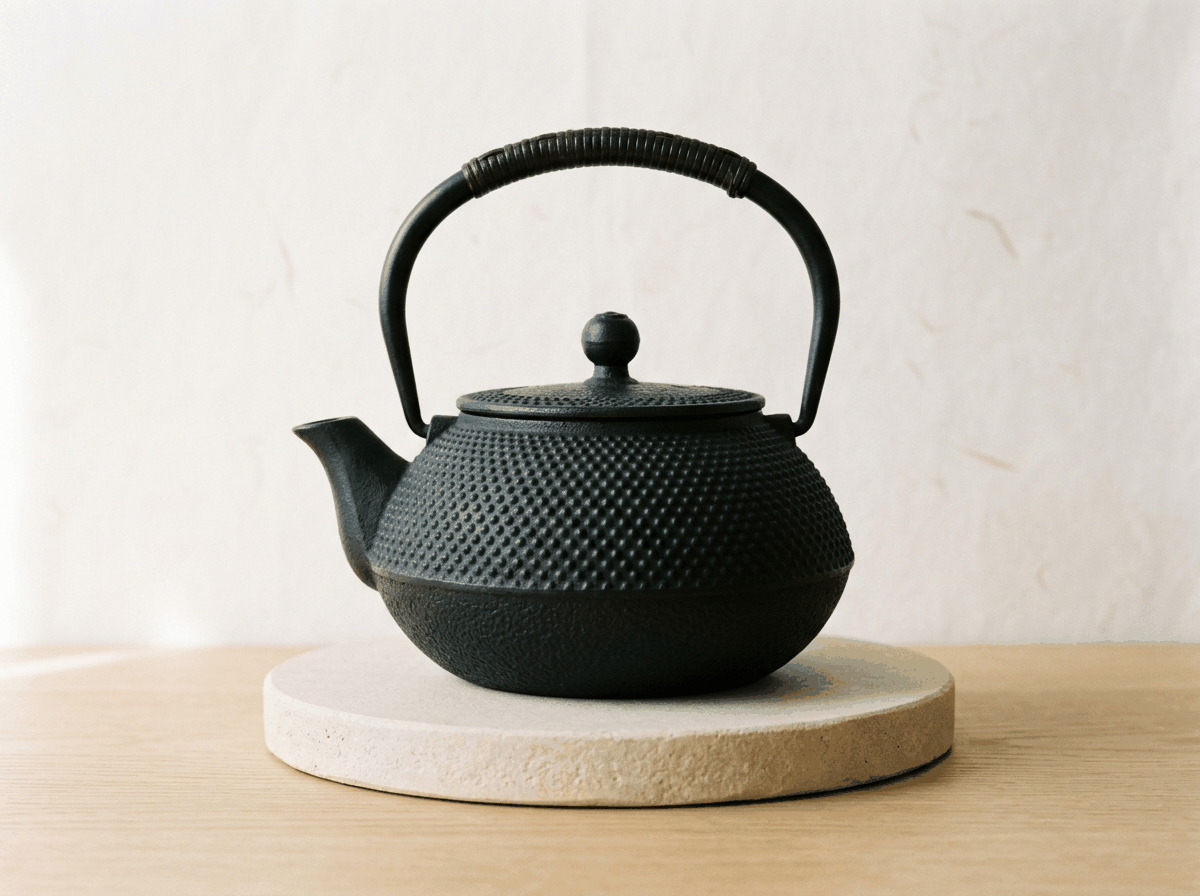
Iwachu Arare Cast Iron Tetsubin (650ml)
Best for:Precision-pouring enameled cast iron steeping for Assam, Keemun, and roasted oolongs
Cast Iron · 650 ml (22 oz)
- Hand-cast Morioka Nanbu Tekki iron shell holds steep temperatures within 3°C over 5 minutes
- Smooth porcelain-enamel interior stops metallic off-flavors and cleans with plain warm water
- Beveled Japanese foundry spout achieves a crisp 9.5/10 laminar cutoff
Pick up a heavy hobnail Japanese iron vessel from almost any Western kitchen shelf and the tag will cheerfully call it a tetsubin. Yet drop that exact vessel onto a gas burner to boil water for morning oolong, and you may hear a faint, heartbreaking ping as glassy flakes fracture silently inside the belly. Conversely, toss loose Assam leaves directly into an authentic heirloom iron kettle and watch your amber brew darken into muddy, metallic ink within ninety seconds.
Few categories in modern teaware create as much confusion—or as many accidentally ruined pots—as raw cast iron kettle vs teapot distinctions. Every Western shopper looking at an enamel lined cast iron teapot (tetsu kyusu) alongside an authentic unlined tetsubin faces one fundamental rule: one is a tea-brewing vessel lined in glass; the other is a bare-metal water-boiling kettle. Knowing the metallurgy, glaze chemistry, iron ion release, and thermal expansion behavior separating the two saves you from cracking a prized heirloom—and helps you choose the right vessel for your actual brewing ritual.
Anatomy & Chemistry: Porcelain Enamel vs. Kamasabi Raw Iron
On the outside, an artisanal Japanese iron kettle and a tabletop cast iron teapot often share the exact same sand-cast arare (hailstone) bumps, graceful overhead bail handle, and deep matte charcoal lacquer (urushi or baked iron-tea glaze). Flip open the lid, however, and you are looking at two fundamentally incompatible material sciences.
1. Inside an Enamel-Lined Cast Iron Teapot (Tetsu Kyusu)
An enamel lined cast iron teapot begins life as a sand-cast iron body, but foundries apply a liquefied vitreous porcelain frit—essentially powdered silica glass blended with mineral pigments—across the entire interior chamber and spout wall, then kiln-fire the vessel above 800°C until the glass melts into a continuous, non-porous black skin.
That glossy or satin-black porcelain coating transforms raw reactive metal into an inert brewing sanctuary. Just like glazed porcelain or borosilicate glass, the enamel barrier refuses to oxidize, refuses to absorb residual jasmine or Earl Grey oils, and isolates acidic tea polyphenols completely from reactive metallic iron. Almost every modern tetsubin teapot shipped with a removable stainless steel mesh infuser basket uses this interior enamel glaze.
2. Inside a Raw Unlined Tetsubin Kettle
True traditional tetsubin crafted in Morioka (Nanbu Tekki) or Yamagata are not teapots at all—they are dedicated stovetop water kettles. Instead of applying glass glaze inside, traditional smiths treat the naked sand-cast interior through a centuries-old charcoal-firing technique called kama-yaki.
Fired inside an oxidizing charcoal bed around 800°C to 1,000°C, the bare gray iron surface oxidizes intentionally into a dense, tight crystalline skin of magnetite (Fe₃O₄) and dark ferric oxides. That dark slate-gray, faintly granular interior resists aggressive rusting during dry storage while still allowing water molecules direct contact with natural iron—and over months of boiling mineral-rich spring water, it grows a prized chalky white calcium-carbonate shield called yuaka (“kettle scale”).
Side-by-Side Comparison: Enamel-Lined Teapot vs. Raw Tetsubin Kettle
Use this technical engineering table before applying flame, tea leaves, or mineral descalers to any cast iron piece in your kitchen:
| Feature | Enamel-Lined Cast Iron Teapot (Tetsu Kyusu) | Raw Unlined Tetsubin Kettle |
|---|---|---|
| True Role | Teapot (steeping leaves in preheated water) | Kettle (boiling plain water for separate pots) |
| Interior Material | Smooth, vitrified black porcelain glass coating | Bare charcoal-fired magnetite iron (kamasabi) |
| Mesh Infuser Included? | Yes (removable stainless steel basket) | No (never designed to hold tea leaves inside) |
| Direct Stovetop Safe? | No. Open flames, coils, and induction crack glaze | Yes. Safe on charcoal, low/med gas, radiant & induction |
| Bioavailable Iron Release | Zero (glass blocks metallic leaching) | Trace Fe²⁺ ions dissolved gently into boiling water |
| Impact on Tea Liquor | Neutral flavor + unmatched prolonged heat mass | Softens water texture; turns steeped tea black/metallic |
| Dishwasher / Soap Safe? | Never (plain warm water rinse + hand-dry rim) | Never (boiling water rinse + residual-heat air dry) |
| Where Rust Develops | Unglazed upper lip, lid flange, spout edge, or chipped glass | Entire floor & inner walls if left damp or stripped of yuaka |
Why Putting an Enamel-Lined Cast Iron Teapot on a Stove Destroys It
If there is one physical fact every cast iron teapot owner should memorize, it is differential thermal expansion.
On paper, heavy iron looks indestructible enough to drop straight onto a blazing range. Inside an enamel lined cast iron teapot, however, two dissimilar solids are welded face to face:
- Gray Cast Iron Shell: Linear thermal expansion coefficient around 11 to 12 × 10⁻⁶ per Kelvin, paired with high thermal conductivity.
- Vitreous Porcelain Enamel Lining: Brittle silica glass layer expanding at roughly 8 to 10 × 10⁻⁶ per Kelvin, with almost zero tensile elasticity once cooled rigid.
When you pour 95°C kettle water into a pre-warmed enameled pot, both layers warm gently together across a modest ~70°C shift—staying comfortably inside structural safety margins. Place that same enameled pot onto a direct gas burner, glowing electric spiral coil, or hyper-fast induction cooktop, and bottom iron metal leaps rapidly toward 250°C to 400°C+ while liquid above pins the glass ceiling near 100°C.
The resulting shear stress between furiously expanding iron and rigid porcelain glass creates crazing (spiderweb micro-fractures), followed by blistering pops where jagged glass enamel chips clean off the pot floor. Worse, induction ranges pump sudden localized eddy heat directly into the bottom ring before water convection even starts—cracking porcelain linings faster than gas flames. Once enamel cracks, trapped tea moisture seeps behind the glaze edge and rusts invisibly beneath the glass shell.
Clara’s Rule of Thumb: Treat an enamel-lined cast iron pot exactly like fine glazed stoneware wrapped in a heavy thermal coat. Always boil water in a separate kettle, swirl a splash inside to pre-warm the iron walls, pour out, add your leaves and fresh hot water, and keep direct stove heat completely off-limits. (An indirect tea-light candle warmer holding an already-filled pot is the lone tabletop warming exception when permitted by the maker.)
Iron Mineral Bioavailability & Water Taste: What Actually Enters Your Cup
Many buyers search out a tetsubin teapot after hearing that Japanese cast iron enriches drinks with healthy dietary iron and miraculously transforms harsh tap water into velvet-sweet tea. Both claims hold real chemistry—but only for one of the two vessel types.
How Raw Tetsubin Alters Water Chemistry
When pure water simmers inside an unlined raw iron kettle, trace quantities of divalent ferrous iron (Fe²⁺) oxidize smoothly off the kamasabi surface and dissolve into solution—often alongside slight mineral shifts from the kettle’s protective yuaka crust. Two noticeable sensory changes happen when you pour that boiled water into a separate ceramic or clay teapot:
- Trace Bioavailable Iron: Boiling plain water in unlined cast iron adds small, measurable amounts of soluble ferrous iron (though never as a substitute for clinical dietary supplementation, and heavily reduced once thick yuaka calcium scale coats the bottom).
- Smooth Palate & Dechlorination: Trace dissolved iron ions and mild mineral buffering subtly bind residual chlorine compounds and smooth spiky polyphenol harshness once poured over delicate Japanese sencha, gyokuro, or white tea—creating that legendary rounded, spring-water sweetness prized by traditional tea masters.
Why Steeped Tea Leaves and Bare Iron Clash Chemically
So why doesn’t everyone brew loose leaves straight inside a raw iron kettle? Try dropping black tea or young green tea into boiling water inside bare iron and watch what unfolds in under two minutes.
Tea leaves burst with catechins, gallic acid, and condensed tannins. The moment dissolved iron ions meet high concentrations of tea polyphenols directly inside the pot, they undergo a vigorous coordination reaction forming ferric tannate (iron(III) tannate)—literally the historical blue-black pigment once used to manufacture iron-gall writing ink! Within minutes, bright golden Darjeeling turns murky slate-purple, delicate aromatics collapse into sharp metallic bitterness, and an astringent film coats your teeth.
That single chemical reaction explains why porcelain-enamel linings were invented in the first place. An enamel lined cast iron teapot trades iron mineral release for total chemical neutrality—allowing you to steep any black, oolong, green, or herbal leaf inside an iron shell with zero ink-black discoloration while keeping the tea piping hot for half an hour or more.
Three-Second Inspection: How to Tell Which One You Own
Because online listings, secondhand shops, and gift tags casually label everything tetsubin, use this rapid 10-second tabletop inspection before turning on any burner:
- Shine a Flashlight Inside: Do you see a smooth, uniform, slightly glossy or satin jet-black surface that reflects light like dark obsidian or ceramic glaze? That is porcelain enamel—kettle-fill only. A true unlined raw tetsubin reveals matte, granular charcoal-gray sand-cast iron or chalky pale-gray mineral scale (yuaka) across the floor.
- Check the Rim Shelf & Infuser Basket: If the vessel includes a stepped interior collar built to suspend a removable stainless steel mesh basket, it is engineered as a steeping teapot (tetsu kyusu), almost universally enamel-lined. Authentic stovetop tetsubin kettles ship empty with wide open interiors and zero infuser shelf.
- Inspect the Top Lip Edge: Look closely at the thin horizontal rim where the lid rests. On an enameled pot, you will see a crisp transition line where glossy black glaze stops against matte painted raw cast iron along the top rim edge—exactly where stray water droplets sit if you forget to wipe dry.
Rust Prevention & Remediation Across Both Designs
Both types of cast iron can last generations—and both develop orange iron(III) oxide spots if mistreated—yet their maintenance paths diverge sharply.
- Protecting an Enamel-Lined Cast Iron Teapot: Your porcelain interior is impervious to water, so rust attacks only the exposed unglazed rim lip, lid edge, spout tip, and exterior pinholes. Never put the pot in a dishwasher, never scrub with detergent or scouring pads, and never leave damp tea leaves soaking overnight. Immediately after service, discard leaves, rinse with warm water, leave the lid off for 15 minutes so residual iron warmth dries the chamber, and wipe the exposed rim lip completely dry with a soft linen towel.
- Protecting a Raw Unlined Tetsubin Kettle: Never scrub inside with steel wool, vinegar, or citric acid—doing so strips the protective yuaka mineral crust down to raw rust-prone metal. Empty boiling water completely after every session while the iron is scorching hot, leave the lid ajar so residual heat flashes remaining droplets to steam in seconds, and never allow plain water to cool inside for hours.
Already staring at orange speckles inside an iron rim or inherited raw kettle? Follow our step-by-step green tea tannin passivation ritual in How to Season a Cast Iron Teapot (And Prevent Inside Rust), and review cross-material care habits inside our Complete Teapot Care Guide.
Choosing Between Cast Iron Craft Benchmarks
Once you know you want effortless loose-leaf steeping with marathon tabletop heat retention—rather than an open-flame kettle—an authentic enamel-lined iron pot outperforms thin glass and lightweight porcelain effortlessly. Both benchmark models in our curated teapot gallery pair smooth protective glazing with precision Japanese-inspired spout engineering (just remember: despite legacy marketplace naming, both are kettle-fill enameled teapots, not stovetop kettles):
1. Iwachu Arare Cast Iron Tetsubin (650ml) — The Heirloom Morioka Benchmark
Hand-cast in Morioka, Iwate by one of Japan’s most respected Nanbu Tekki foundries, the Iwachu Arare Cast Iron Tetsubin (650ml) demonstrates why authentic foundry casting commands heirloom loyalty. Beneath its crisp raised hobnail texture, a smooth vitreous porcelain-enamel chamber keeps pre-warmed boiling infusions within three degrees Celsius across a five-minute steep—earning a flawless 10/10 heat score—while its beveled foundry spout cuts cleanly at 9.5/10 pour precision. Pair its fine stainless steel basket with bold Assam, roasted Wuyi oolong, or earthy ripe shou pu-erh, and time steeps cleanly using our interactive tea steeping timer.
2. Old Dutch Sagaform Cast Iron Hobnail Teapot (950ml) — The High-Volume Host
When hosting three to four mug drinkers at breakfast or brewing hearty spiced chai batches, the Old Dutch Sagaform Cast Iron Hobnail Teapot delivers nearly a full liter of insulated iron warmth. Its smooth interior porcelain lining protects brisk black and herbal blends from metallic off-flavors while a forward-pivoted bail handle balances heavy liquid smoothly across the pour. Curious how enameled iron stacks up against Yixing Zisha clay, glazed porcelain, and stovetop glass—or hunting for the best foundry-cast designs available today? Explore our Teapot Materials Comparison and our dedicated buying roundup of the Best Japanese Cast Iron Teapots (Tetsubin).
Hands-On Benchmarks
Tested Picks & Recommendations
Iwachu Arare Cast Iron Tetsubin (650ml)
Cast Iron · 650 ml (22 oz)
Best ForPrecision-pouring enameled cast iron steeping for Assam, Keemun, and roasted oolongs
What We Loved
- Hand-cast Morioka Nanbu Tekki iron shell holds steep temperatures within 3°C over 5 minutes
- Smooth porcelain-enamel interior stops metallic off-flavors and cleans with plain warm water
- Beveled Japanese foundry spout achieves a crisp 9.5/10 laminar cutoff
Trade-offs
- Porcelain-enamel lining cannot sit over direct gas flames, coils, or induction burners
- Dense 650ml iron build demands deliberate forearm balance when filled
Old Dutch Sagaform Cast Iron Hobnail Teapot
Cast Iron · 950 ml (32 oz)
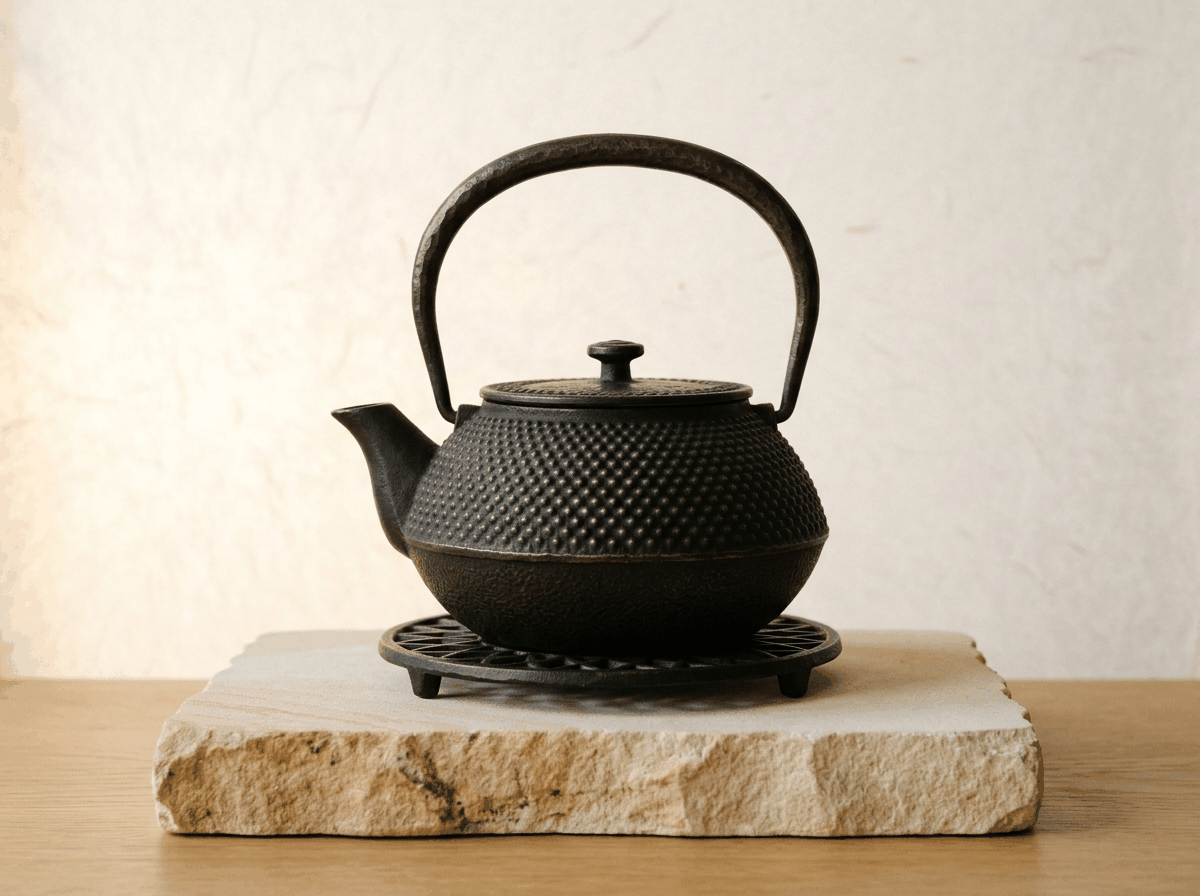
Best ForHigh-capacity four-mug black tea brunches and prolonged tabletop warmth
What We Loved
- Generous 950ml chamber keeps multiple servings piping hot past 30 minutes
- Smooth interior porcelain glaze pairs with a deep stainless steel infuser basket
- Mid-tier entry into classic hobnail iron craftsmanship with balanced bail pivot
Trade-offs
- Enamel-lined interior strictly prohibits stovetop boiling (kettle-fill only)
- Thicker rim lip rewards a decisive upward wrist snap at slow pouring speeds
Frequently Asked Questions
Why does an enamel lined cast iron teapot crack on a stove burner or induction cooktop?
Cast iron and vitreous porcelain enamel expand at different thermal rates under intense heat. When direct gas flames, glowing electric coils, or rapid induction eddy currents heat the iron bottom past 250°C while water sits above, uneven expansion creates shear tension between the rigid glass glaze and shifting metal. The enamel crazes into fine hairline cracks, blisters, or pops off in sharp flakes—exposing bare iron underneath to trapped moisture and rust.
Does an enamel-lined cast iron teapot add dietary iron to your tea?
No. An intact vitreous porcelain-enamel glaze seals the iron interior behind a smooth, impermeable glass barrier, preventing metal ions from dissolving into your brew. Only unlined raw cast iron tetsubin kettles release trace bioavailable ferrous iron (Fe2+) when boiling plain water—and that exact reaction is why you should never steep tannin-rich tea leaves inside raw iron, which turns the cup dark, inky, and metallic.
Why do retailers call enamel-lined cast iron teapots tetsubin if they are not kettles?
In Japan, traditional makers distinguish clearly between an unlined water-boiling tetsubin kettle and an enamel-lined tetsu kyusu (iron teapot). When export wholesalers introduced Nambu Tekki teaware to Western markets, many retailers kept the iconic word tetsubin in product titles as a catch-all style label. Always inspect the interior lining and included mesh basket rather than relying on the listing title alone.
How do I fix rust inside an enamel-lined cast iron teapot versus a raw tetsubin?
On an enamel-lined teapot, minor orange spots almost always form along the uncoated top rim lip, lid edge, or tiny enamel pinholes; gently wipe loose rust dry, steep green tea inside for 20 minutes so natural tannins convert orange iron oxide into inert black iron tannate, and always towel-dry the rim thoroughly while warm. In a raw unlined tetsubin, boil green tea to blacken surface flash rust without scrubbing away the protective white mineral scale (yuaka).
Can I use a candle warmer under an enamel-lined cast iron teapot?
Yes, provided the pot already holds warm brewed tea and the manufacturer permits gentle tea-light warmers. A single candle sits far below open-flame burner intensity and simply offsets ambient cooling across thick iron walls. Never use a candle warmer beneath an empty pot, and never place enameled cast iron onto active kitchen ranges or microwaves.
Material Science
Related Guides in This Cluster
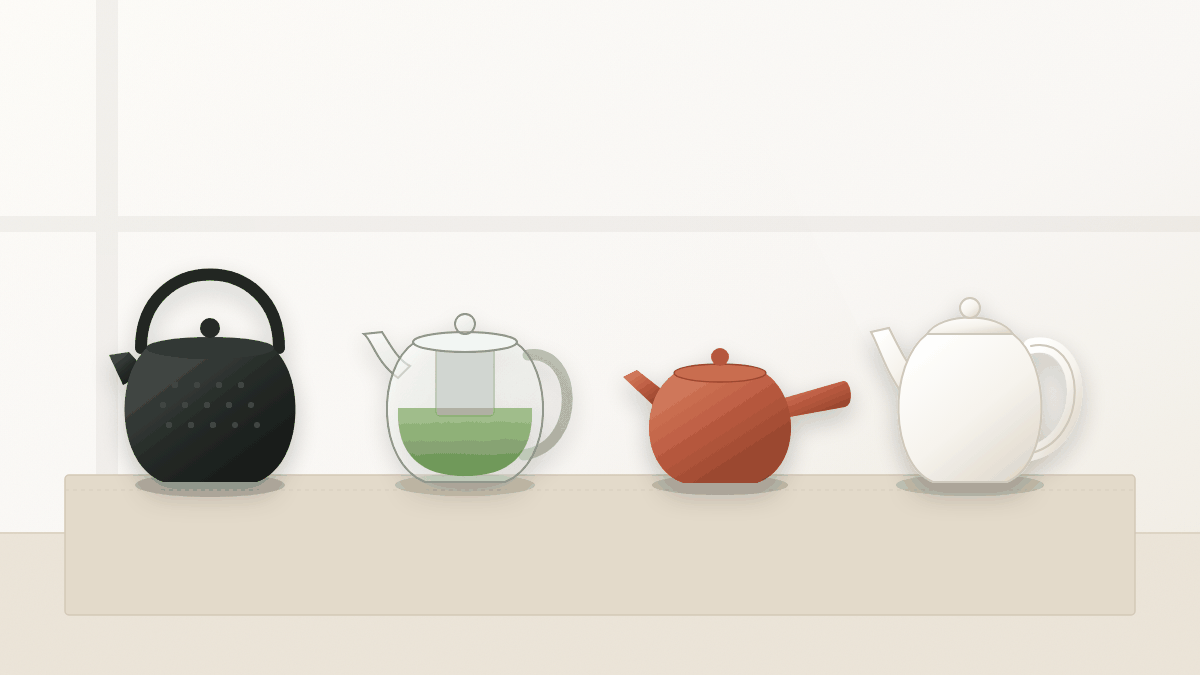
Cast Iron vs. Glass vs. Clay vs. Ceramic: Which Teapot Material Is Best?
Compare thermal conductivity, heat retention, mineral porosity, and tea-type pairing across cast iron, borosilicate glass, Zisha/Tokoname clay, and glazed porcelain.
Kyusu vs. Gaiwan: Which Traditional Brewing Vessel Should You Choose?
Side-handle Japanese kyusu vs. lidded Chinese porcelain gaiwan: compare extraction speed, leaf geometry, thermal grip, and tea pairing to choose your daily vessel.
Yixing Zisha Clay vs. Porcelain Teapots: How Material Changes Tea Flavor
Discover the mineral physics of porous Yixing Zisha clay (Zhuni, Zini, Duanni) versus vitrified Dehua porcelain—and why one smooths tannins while the other sharpens aroma.