
25 Coolest & Most Unique Teapots That Actually Pour Well
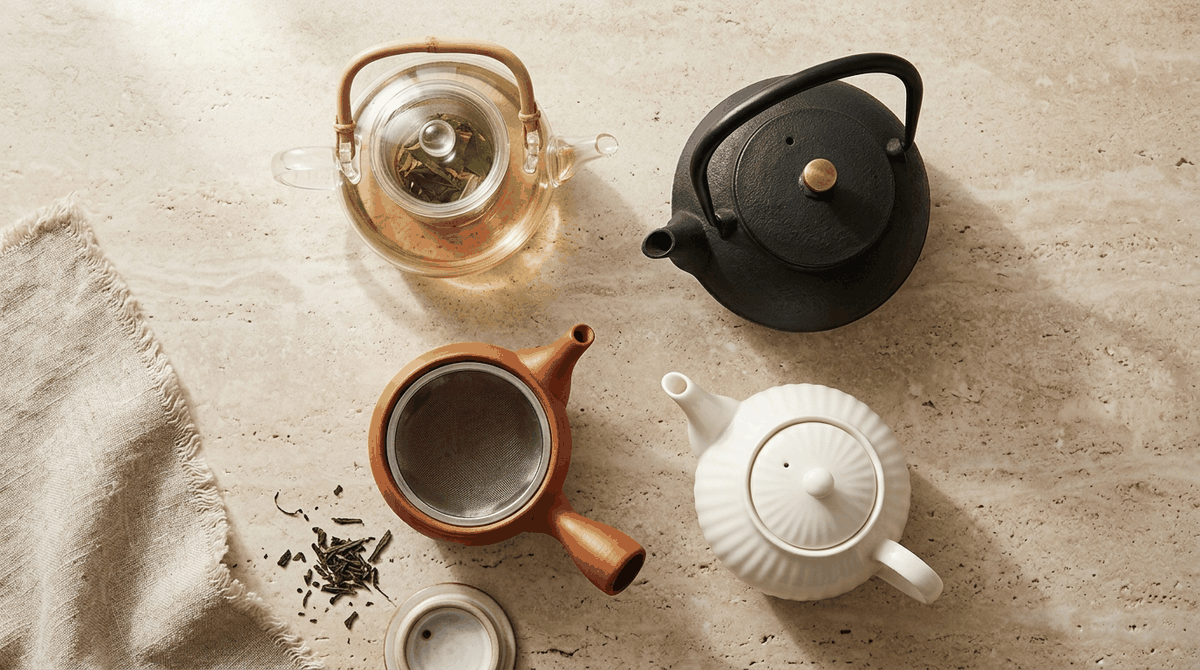
Our lab-tested guide to the 25 coolest and most unique teapots—combining sculptural glass, Japanese kyusu, and cast iron with laminar non-drip pouring.
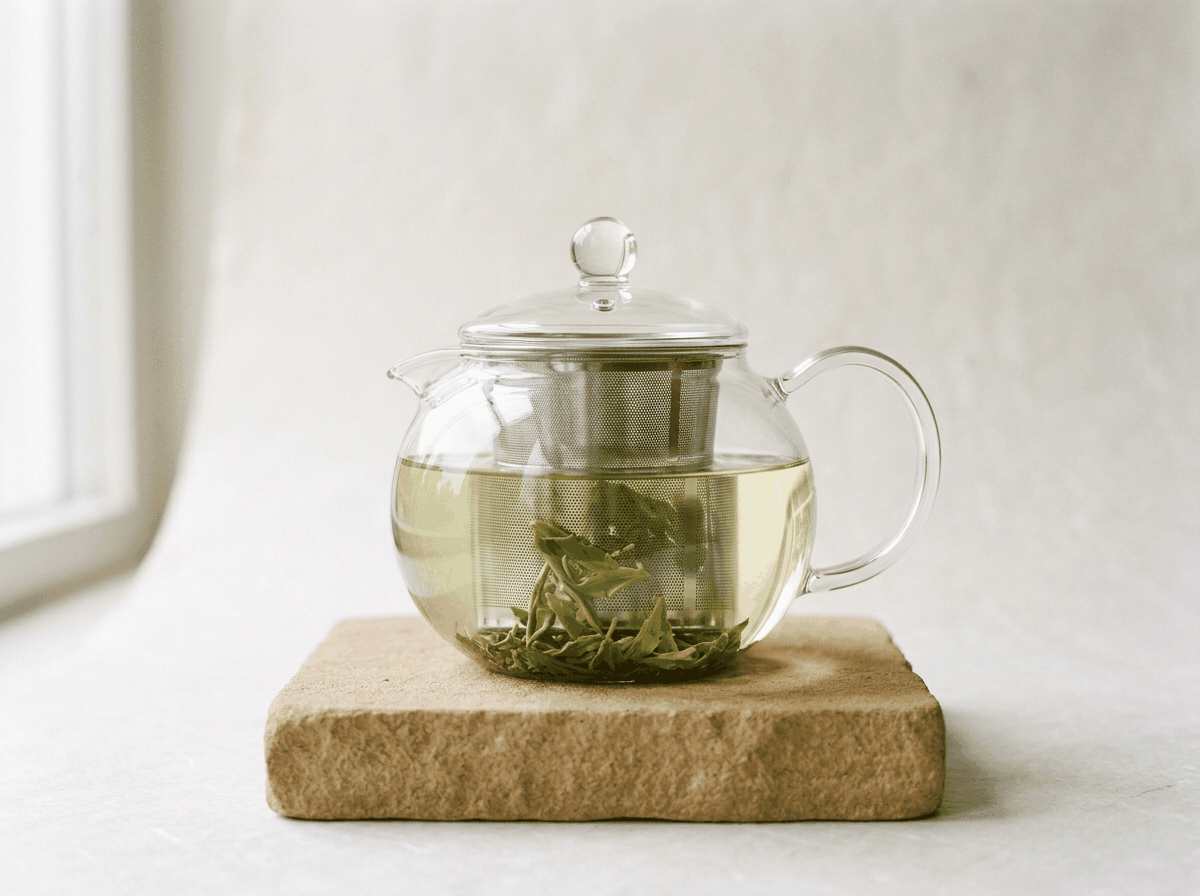
Hario ChaCha Kyusu Maru 700ml
Best for:Daily loose-leaf visibility, green teas, and budget-friendly clarity
Borosilicate Glass · 700 ml (23.7 oz)
- Deep, wide-diameter stainless steel mesh basket allows full leaf expansion
- Crisp borosilicate glass spout lip terminates cleanly without post-pour dribble
- Wide lid opening fits an adult hand for effortless rinsing and cleaning
Walk into any museum gift shop and you will spot a dozen unique teapots designed purely to catch the eye—geometric spheres, whimsical ceramic creatures, asymmetric stoneware cones—yet roughly four out of five fail the moment boiling water meets leaf. They glug, choke on fine tea dust, trap rolled oolong in thimble-sized strainers, or drag a stubborn bead of tea straight down the underside of the spout onto your tablecloth.
I built the TeapotsCool test bench to separate sculptural theater from serious brewing engineering. Over the past year, I timed steep drains, measured thirty-minute infrared heat-loss curves, and filmed slow-motion pour cut-offs across dozens of cool teapots spanning borosilicate glass, reduction-fired Japanese clay, enameled cast iron, and kinetic tabletop brewers.
Every vessel on this list earns its shelf space twice: first as an unmistakable centerpiece on the tray, and second as a genuinely functional loose leaf teapot whose pour mechanics hold up under daily use.
The Fluid Physics of a True Non-Drip Teapot
Before diving into the twenty-five vessels, it helps to know why an ordinary decorative pot drips while a well-crafted non drip teapot terminates its stream like a knife blade.
When tea exits a spout, fluid momentum competes against surface tension and atmospheric drag—a phenomenon fluid engineers call the Coandă effect. If a potter glazes the outer spout tip too thickly, creating a rounded bead, water clings to that curve and curls backward down the neck the instant you tilt upright. By contrast, a thin, sharply beveled spout lip shears the stream cleanly mid-air.
Four mechanical traits separate great unique teapots from messy shelf ornaments:
- Laminar Spout Geometry: A gradual internal S-curve accelerates flow smoothly without creating bubbles or turbulence at the tip, while a crisp underside undercut stops stray droplets in their tracks.
- Lid-Vent Pressure Equilibrium: Every pouring vessel needs air rushing back in to replace exiting liquid. If the lid fits too tightly without a 1.5mm to 2mm vent pinhole—or if the spout sits too low relative to the fill line—the pot surges, sputters, and spills.
- Generous Leaf Hydration Space: Any teapot with infuser basket must give dry leaves room to triple in volume. Narrow cylindrical cages compress rolled Taiwanese oolongs and white peony leaves into an airless plug that under-extracts the center while over-brewing the edges.
- Balanced Handle Torque: Whether you lift a traditional rear loop or rotate a 90-degree Japanese side-handle, your wrist should stay neutral without fingers brushing scalding steam vents.
Curator’s Benchmark: Every pick highlighted in our Curated Teapot Gallery is evaluated on a 10-point Pour Score (laminar stream stability and instant cut-off) and Heat Score (thermal retention over a 30-minute tasting session).
Category 1: Kinetic, Magnetic & Borosilicate Glass Teapots (Picks 1–6)
Glass transforms steeping from a waiting game into visual alchemy, letting you watch water convection currents turn emerald sencha needles or suspended jasmine blossoms in real time.
1. Magnetic Semi-Automatic Glass Gongfu Teapot
Our highest-scoring conversation piece pairs dual suspended borosilicate chambers with a concealed stainless-steel ball bearing valve. When you swing the curved wooden or bamboo arm into contact with the upper brewing dome, magnetic attraction lifts the valve instantly—releasing golden oolong downward into the serving pitcher with zero leaf transfer. Explore our full hands-on test in the Magnetic Semi-Automatic Glass Gongfu Teapot review.
2. Hario ChaCha Kyusu Maru 700ml
Deceptively minimal yet architecturally pure, the Hario ChaCha Kyusu Maru 700ml solves the biggest flaw of budget glass pots: cramped baskets. Its colossal stainless mesh infuser extends nearly to the rounded borosilicate floor, hydrating leaves even when you brew a single afternoon cup, while its short flared spout earns a crisp 9/10 pour rating.
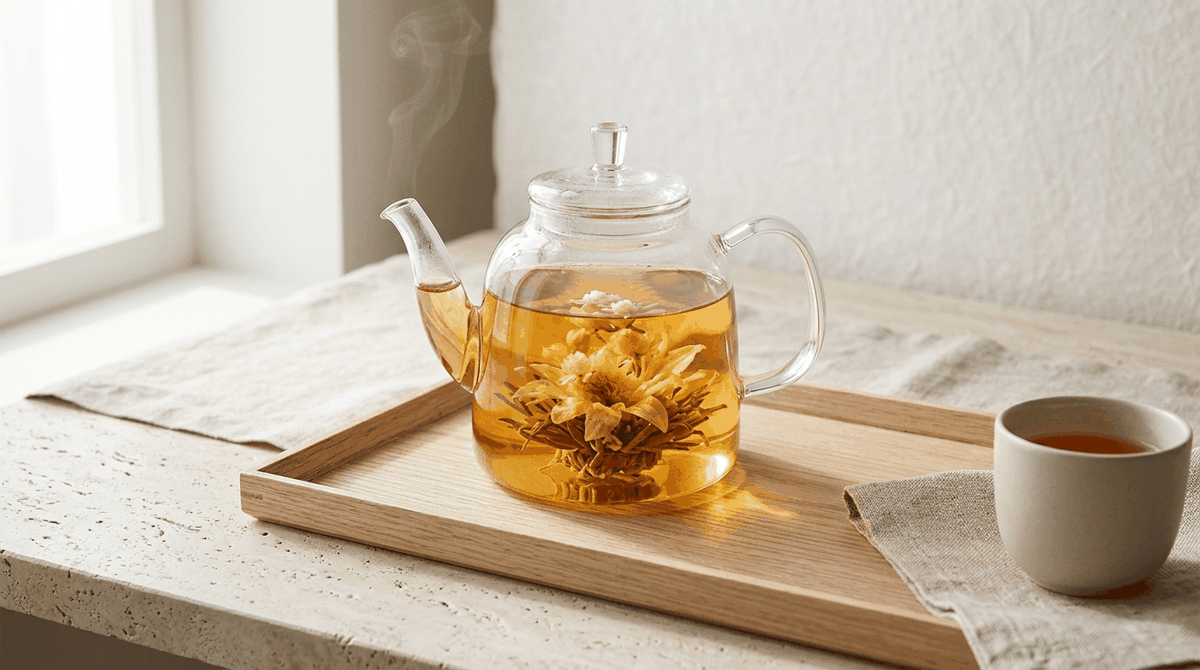
3. Teabloom Celebration Borosilicate Flowering Teapot
Built with wide-aperture optical glass engineered to withstand gentle stovetop warming, the Teabloom Celebration Borosilicate Flowering Teapot offers wide lateral clearance so hand-tied blooming tea bulbs unfurl without flattening against curved walls. Read our thermal shock safety guide in Best Borosilicate Glass Teapots for Blooming Tea.
4. Two-Position Tilting Glass Infuser Carafe
Rather than lifting a dripping metal basket onto a saucer, this clever angled carafe tilts backward at 45 degrees while your tea leaves steep inside a built-in side mesh bay. Once your timer chimes, rock the vessel onto its flat primary base: the water drains smoothly away from the leaves, halting bitterness instantly.
5. Double-Wall Ribbed Thermal Glass Pitcher
Vertical optical flutes transform morning sunlight into delicate refraction bands while doubling the surface area of the outer wall to keep your fingertips cool without a bulky handle. An internal stainless lid coil catches whole leaves cleanly as you decant into tasting cups.
6. Cold-Brew Tall Decanter with Silicone Spout Collar
Designed specifically for overnight cold-maceration of shade-grown kabusecha and floral oolongs, this slim borosilicate carafe drops neatly into refrigerator door shelves. Its weighted silicone pouring collar acts as an integrated leaf screen and provides a zero-drip edge when serving over clear ice spheres.
Category 2: Japanese Side-Handle Kyusu & Studio Stoneware (Picks 7–13)
Nothing in the ceramic world rivals Japanese kyusu engineering for one-handed balance, crisp stream discipline, and mineral interaction with delicate green leaves.
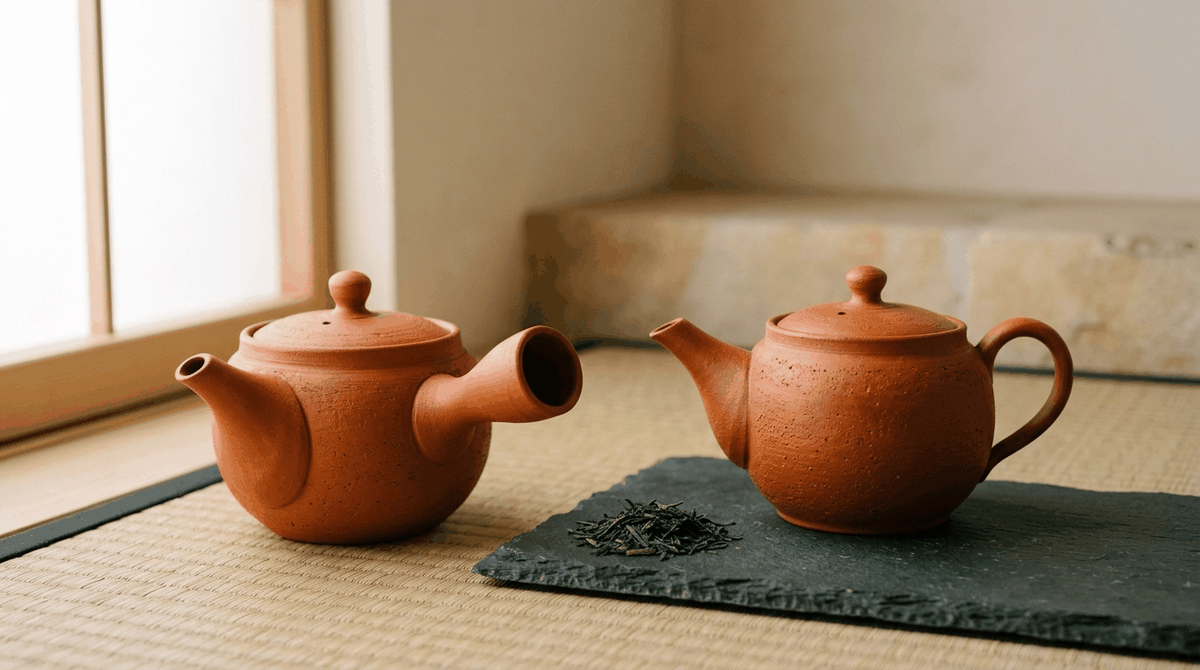
7. Gyokko Kiln Tokoname-Yaki Side-Handle Kyusu
Carved from iron-rich Aichi Prefecture clay and fired in a classic yokode (90-degree side-handle) profile, the Gyokko Kiln Tokoname-Yaki Side-Handle Kyusu delivers a rare 10/10 pour score. Its built-in ceramic sasame strainer punches dozens of fine clay perforations directly behind the spout root, arresting steamed sencha needles while Tokoname’s iron oxides gently round out crisp vegetative astringency. Dive deeper into handle physics in our Authentic Japanese Kyusu Teapots Guide.
8. Zero Japan Universal Beehouse Artisan Ceramic Teapot
If you prefer glazed stoneware that switches cleanly from Earl Grey to roasted hojicha without flavor carryover, the Zero Japan Universal Beehouse Artisan Ceramic Teapot remains an icon of Mino-ware utility. Its clip-on brushed stainless lid locks tightly for single-handed tilts, while the beveled glazed spout stops mid-stream without leaving a stray drop.
9. Banko-Yaki Flat Hira-Kyusu (Low-Profile Gyokuro Pot)
Looking almost like a wide sculptural saucer with a hollow side stem, the flat hira-kyusu spreads tea leaves across a single shallow layer rather than burying them vertically. That wide geometry exposes maximum leaf surface area to low-temperature water—essential when coaxing thick savory umami out of shaded gyokuro.
10. Handleless Shiboridashi Stoneware Pourer
Stripped down to a shallow ceramic bowl with a thumb-pinched spout channel and grooved lid, the shiboridashi ditches traditional strainers altogether. Micro-flutes carved into the pouring lip retain whole leaves while decanting concentrated, syrupy nectar drop by drop.
11. Tokoname Hohin Thumb-Grip Vessel
Bridge the gap between a Chinese gaiwan and a side-handle pot with a hohin: a compact, handleless vessel flanked by a flared thermal collar so your thumb and middle finger lift the pot comfortably during 160°F (71°C) green-tea infusions.
12. Wood-Fired Shigaraki Ash-Glaze Dobin
When natural wood ash lands on raw Shigaraki stoneware inside a multi-day climbing kiln, it melts into unpredictable celadon-green glass waterfalls down the shoulder. Paired with a tall arched bamboo overhead handle (uwade), a traditional dobin excels for table sharing of nutty genmaicha and roasted oolongs.
13. Mino Matte Basalt Stoneware Everyday Pot
Slip-cast in matte charcoal-black clay with a high-contrast raw clay foot ring, this contemporary Japanese studio form hides an aggressively sharp spout undercut that outpours porcelain pots twice its price tier ($$$).
Category 3: Double-Walled Thermal & Cast Iron Tetsubin (Picks 14–19)
When you brew heavily oxidized black teas, spiced chai, or aged shou pu-erh that demand near-boiling heat from first cup to fourth refill, thermal mass and twin-wall insulation rule the tray.
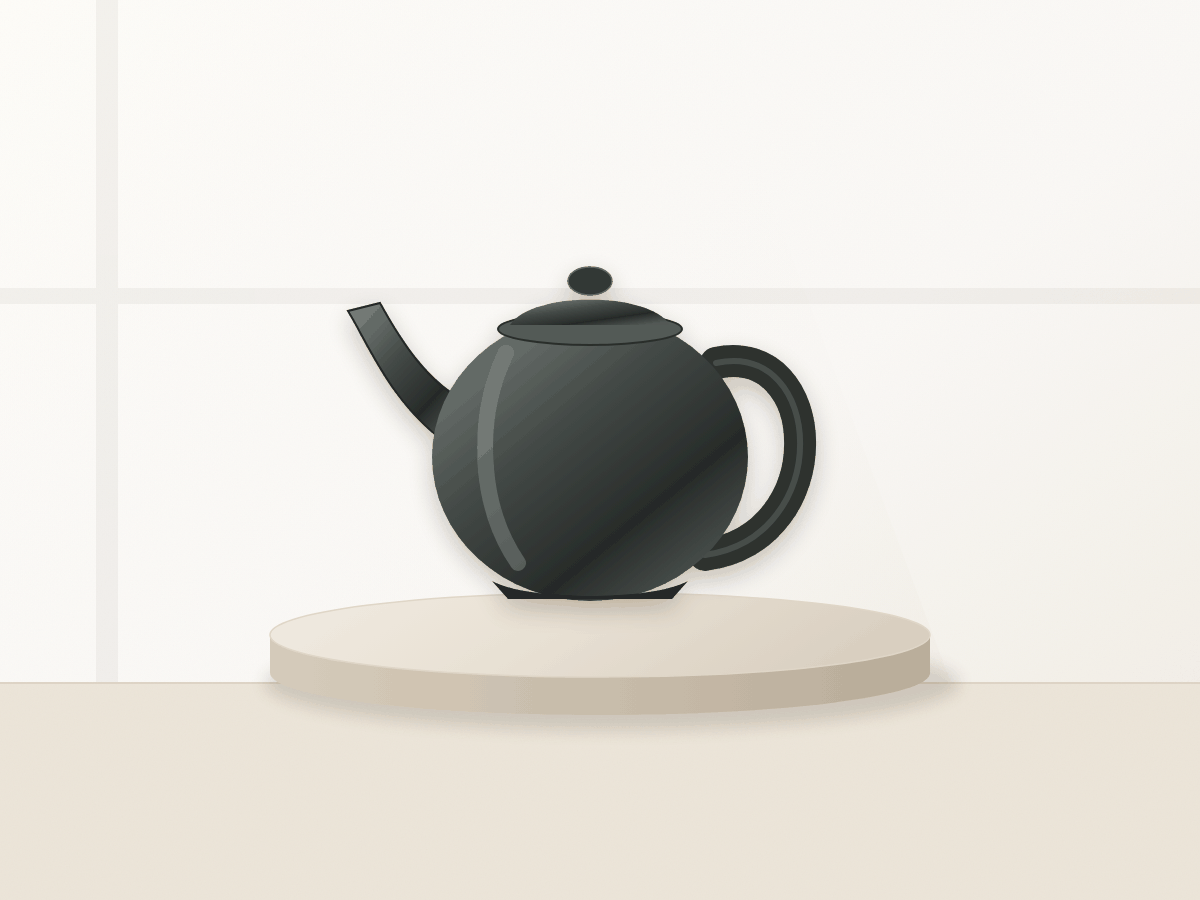
14. Bredemeijer Duet Bella Ronde Insulated Teapot
Engineering precision meets Nordic minimalism in the Bredemeijer Duet Bella Ronde Insulated Teapot. Twin-wall brushed stainless construction surrounds an air-insulated cavity that keeps steeped black tea piping hot for up to sixty minutes without scorching on a candle flame—and its contoured internal spout achieves a rare dual 10/10 pour and heat score.
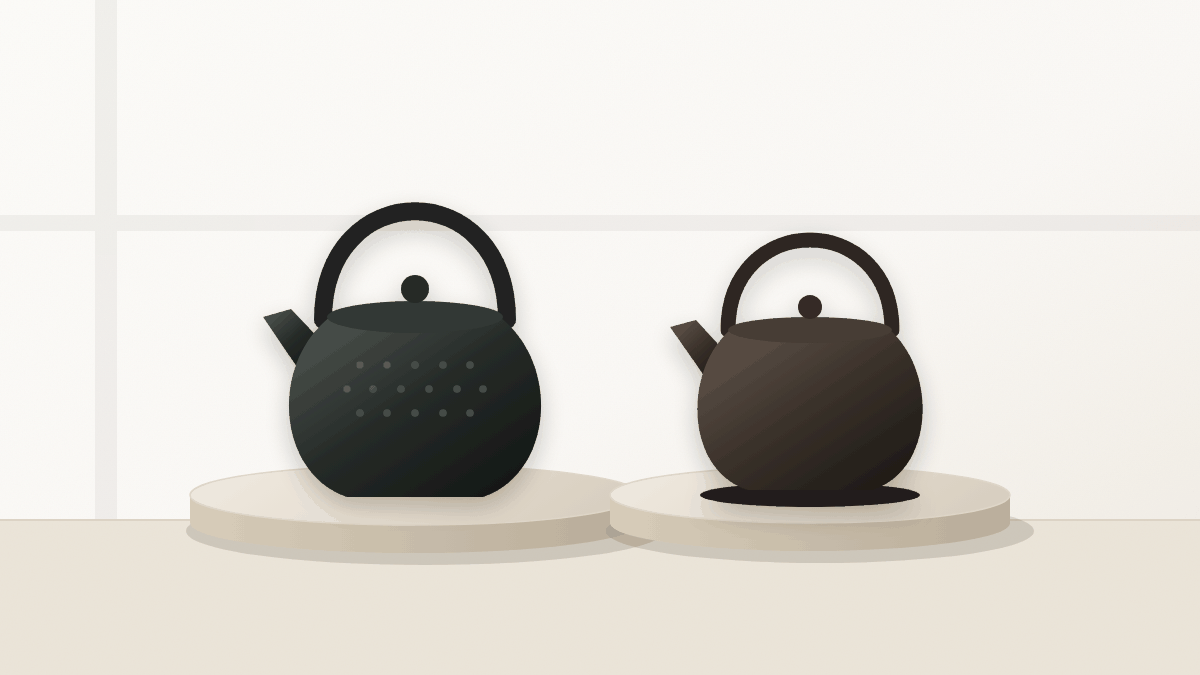
15. Nambu Tekki Hobnail (Arare) Enamel-Lined Cast Iron Pot
Forged in Iwate Prefecture with raised geometric iron dots (arare) originally designed to dissipate exterior shell heat, a genuine porcelain-enameled tetsubin kyusu pairs unmistakable sculptural heft with low-maintenance rust resistance for multi-hour winter sessions.
16. Raw Unlined Cast Iron Boiling Tetsubin
Unlike enameled steeping pots, an unlined artisan tetsubin is strictly a water-boiling kettle whose exposed iron interior releases trace bioavailable iron ions into spring water—dramatically smoothing mouthfeel before water even touches your leaves. Check our Teapot Materials Comparison before deciding between raw iron and enamel-lined vessels.
17. Stoneware-Clad Felt & Cork Thermal Carafe
A cylindrical stoneware body nestled inside a removable tailored wool-felt or natural cork jacket delivers tactile Scandinavian warmth without risking scalded palms. Snap-fit stainless collars keep the pour edge laser-sharp.
18. Double-Wall Vacuum Porcelain Gongfu Pot
Slip-cast with a sealed hollow porcelain air gap inside ultra-thin translucent walls, this modern Taiwanese innovation gives you the sustained thermal retention of dense clay with the zero-absorption flavor neutrality of vitrified porcelain.
19. Hammered Copper-Lid Iron Tetsubin Hybrid
Combining heavy matte black cast iron with a hand-planished solid copper lid creates striking patina contrast over years of steam exposure, while the tall finial stays pleasantly grip-friendly.
Category 4: Sculptural, Architectural & Refined Novelty Teapots (Picks 20–25)
Collectible novelty teapots often carry a bad reputation among purists because decorative molds frequently compromise flow mechanics. These six designs prove expressive silhouette and sound fluid dynamics can coexist.
20. Bauhaus Geometric Sphere Porcelain Pot
Born from 1920s German industrial porcelain craft, a true spherical belly eliminates dead circulation corners, allowing tea leaves to tumble in continuous convection loops while an upright cantilevered handle balances above the center of gravity.
21. Fluted Celadon Jingdezhen Ribbed Vessel
Deep vertical flutes carved into translucent jade-green celadon porcelain don’t just cast crisp architectural shadows—they increase radiant surface cooling slightly around the grip collar while shielding a thick, heat-holding interior chamber.
22. Cantilevered Walnut-Handle Studio Porcelain
Instead of curving clay into an ear loop, contemporary ceramicists bolt solid oiled walnut or cherry handles onto recessed ceramic tangs, giving crisp visual warmth and zero heat conduction to your grip.
23. Rotating-Chamber Gravity Filter Pot
Among kinetic novelty teapots, rotating-turret vessels stand out for pure utility: twist the upper ceramic basket ninety degrees against its frosted glass base to align drain channels and cascade brewed liquor cleanly downward without removing messy wet hardware.
24. Stackable Tea-for-One Nesting Carafe & Cup
Engineered for quiet desk mornings, a wide-bottomed miniature pot perches flush atop its matching wide-mouth stoneware cup. Pouring boiling water into the upper pot conducts ambient heat downward, pre-warming your cup automatically before the first pour.
25. High-Necked Botanical & Animal Stoneware Vessels
If your heart is set on whimsical animal, owl, pumpkin, or botanical novelty teapots, apply two non-negotiable engineering checks before buying: confirm the spout emerges low from the belly and rises above the maximum rim line so water doesn’t overflow mid-steep, and inspect the spout tip for a clean, sharp undercut rather than thick pooled glaze.
Lab Comparison: Top Curated Unique Teapots Side by Side
| Curated Teapot | Material | Capacity | Infuser Architecture | Pour Score | Heat Score | Price Tier |
|---|---|---|---|---|---|---|
| Hario ChaCha Kyusu Maru 700ml | Borosilicate Glass | 700ml | Deep Stainless Basket | 9 / 10 | 6 / 10 | $ |
| Gyokko Kiln Tokoname Kyusu | Tokoname Kyusu Clay | 320ml | Integrated Ceramic Sasame | 10 / 10 | 8.5 / 10 | $$$ |
| Magnetic Gongfu Glass Teapot | Borosilicate Glass | 500ml | Magnetic Ball-Valve Chamber | 9.5 / 10 | 7 / 10 | $$ |
| Bredemeijer Duet Bella Ronde | Insulated Dual-Wall | 1200ml | Removable Fine Mesh | 10 / 10 | 10 / 10 | $$$ |
| Teabloom Celebration Glass | Borosilicate Glass | 1200ml | Removable Glass Spiral | 9 / 10 | 6.5 / 10 | $$ |
| Zero Japan Universal Beehouse | Glazed Stoneware | 680ml | Deep Stainless Basket | 9.5 / 10 | 8.5 / 10 | $$ |
Matching Your Vessel to Water Temperature, Tea Type & Care
Even the finest loose leaf teapot cannot rescue scorched leaves or mineral-choked mesh. Pairing material thermal mass to your favorite leaf genre keeps extraction sweet and aromatic:
- Delicate Green & White Teas (158°F–180°F / 70°C–82°C): Choose single-wall borosilicate glass or unglazed Tokoname clay. Rapid initial heat dissipation protects young sencha and silver needle buds from turning bitter during multi-minute sessions.
- Rolled Oolongs & Floral Teas (185°F–200°F / 85°C–93°C): Opt for a magnetic Gongfu glass system or thick glazed stoneware where leaves enjoy huge lateral volume to expand cleanly across three to five infusions.
- Black Teas, Assam & Aged Pu-erh (205°F–212°F / 96°C–100°C): Lean on double-walled insulated pots or pre-warmed cast iron tetsubin so extraction heat remains steady from start to finish.
To dial in exact steep durations for each material without guessing, bookmark our interactive Tea Steeping Timer Tool. And whenever tannins accumulate in porous clay or borosilicate glass, follow our material-specific protocols in the Complete Teapot Care & Descaling Guide so every non drip teapot in your collection pours as cleanly in year ten as it did on day one.
Hands-On Benchmarks
Tested Picks & Recommendations
Hario ChaCha Kyusu Maru 700ml
Borosilicate Glass · 700 ml (23.7 oz)
Best ForDaily loose-leaf visibility, green teas, and budget-friendly clarity
What We Loved
- Deep, wide-diameter stainless steel mesh basket allows full leaf expansion
- Crisp borosilicate glass spout lip terminates cleanly without post-pour dribble
- Wide lid opening fits an adult hand for effortless rinsing and cleaning
Trade-offs
- Single-wall borosilicate sheds heat faster than stoneware or cast iron
- Not rated for direct stovetop flame heating
Gyokko Kiln Tokoname-Yaki Side-Handle Kyusu
Tokoname Kyusu Clay · 320 ml (10.8 oz)
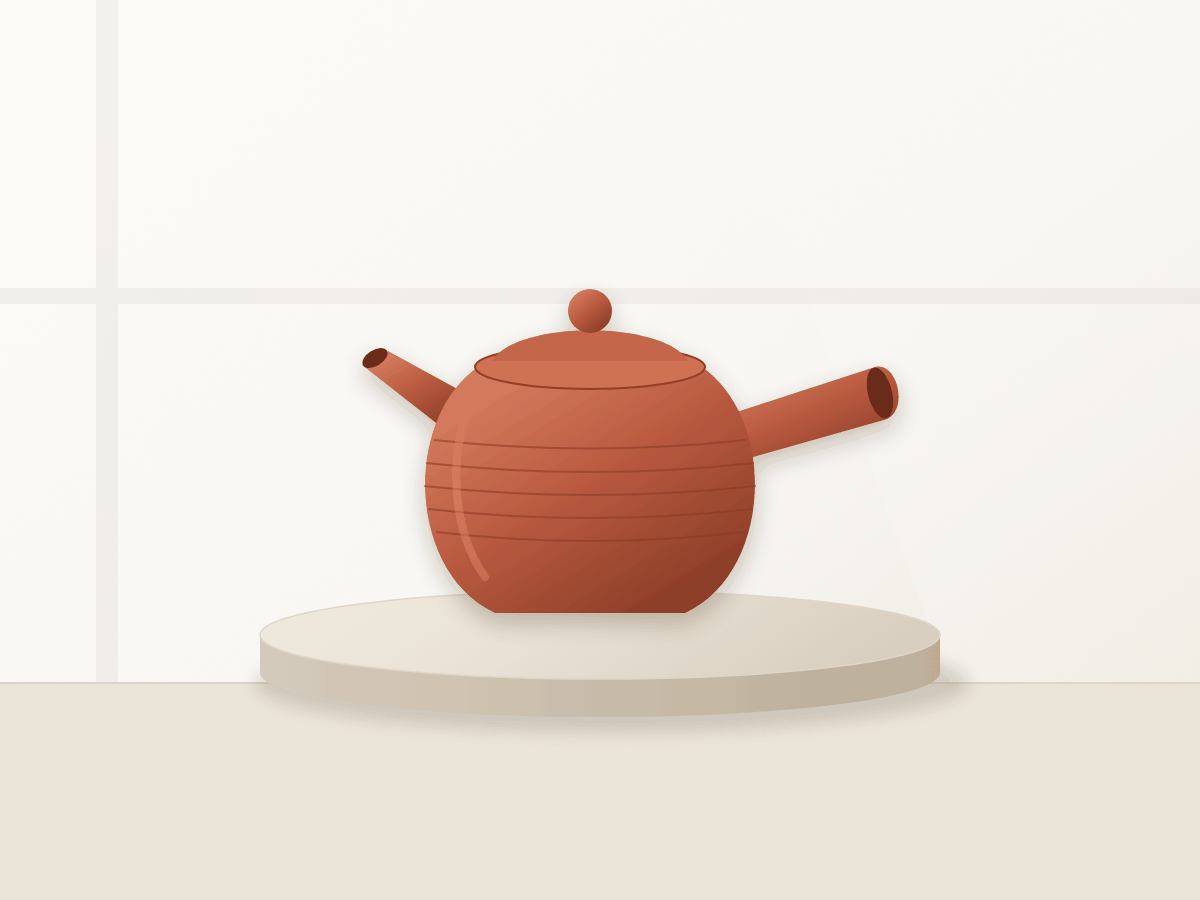
Best ForJapanese sencha, gyokuro, and precision one-handed wrist pours
What We Loved
- Iron-rich unglazed Tokoname reduction clay subtly softens astringency in green tea
- Precision-cut spout lip and ceramic sasame mesh deliver a 10/10 laminar cut-off
- Hollow side-handle (yokode) stays cool while supporting natural wrist rotation
Trade-offs
- Compact 320ml solo/duo capacity requires multiple short infusions for groups
- Hand-wash only with warm water—never use dish soap on porous clay
Magnetic Semi-Automatic Glass Gongfu Teapot
Borosilicate Glass · 500 ml (16.9 oz)
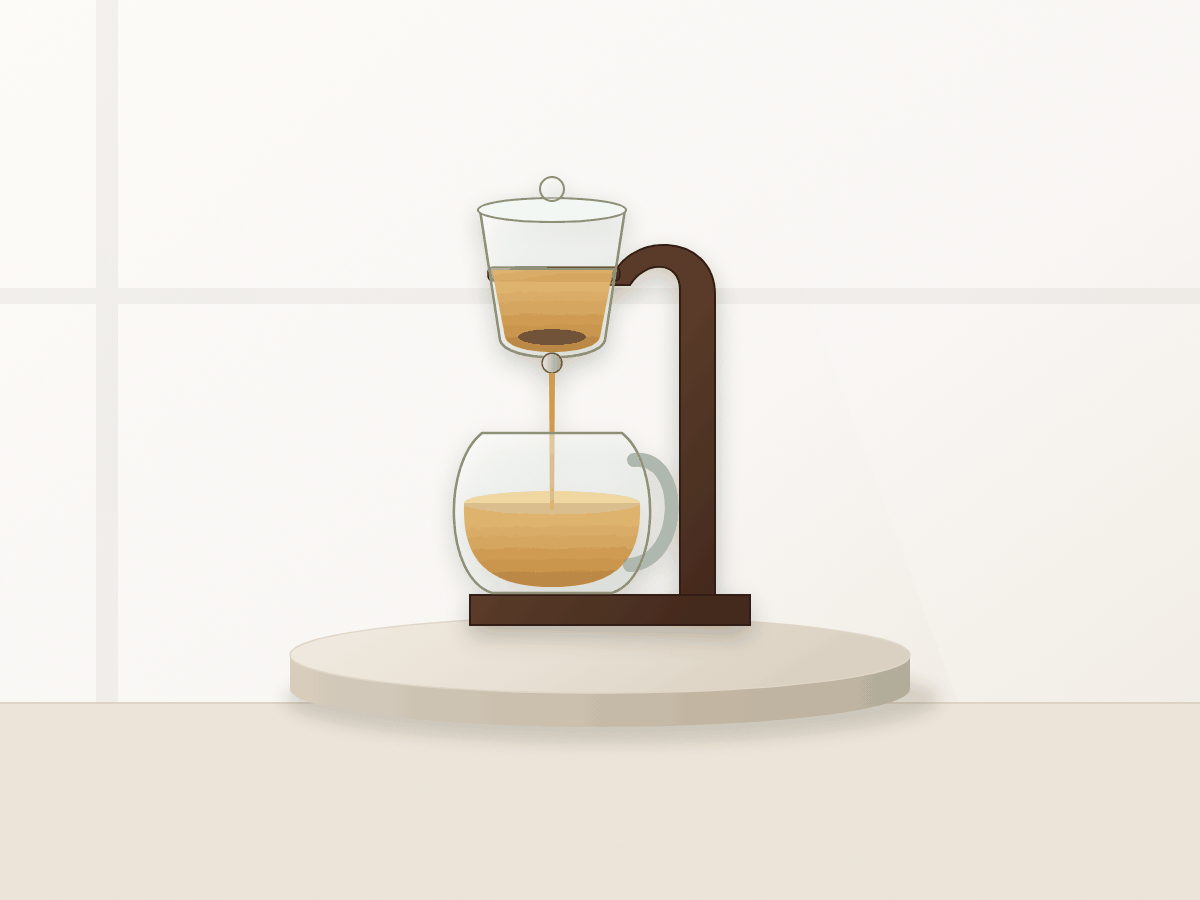
Best ForEffortless Gongfu-style flash steeps, oolongs, and desk brewing
What We Loved
- Magnetic steel ball valve releases tea from upper infuser into server instantaneously
- Eliminates over-steeping bitterness with precise second-by-second drain control
- Dramatic suspended-glass silhouette works as functional kinetic tea theater
Trade-offs
- Glass-and-magnet upper assembly has more parts to rinse after brewing
- Fixed 500ml server capacity is tailored for 1 to 3 drinkers
Bredemeijer Duet Bella Ronde Insulated Teapot
Ceramic & Stoneware · 1,200 ml (40.5 oz)
Best ForLong table gatherings, black teas, and multi-cup thermal insulation
What We Loved
- Double-walled insulated construction keeps tea hot for up to an hour
- Engineered internal spout geometry produces a zero-drip, ribbon-smooth stream
- Ergonomic cool-touch handle balances a full 1.2-liter load comfortably
Trade-offs
- Opaque body hides leaf color progression during steeping
- Heavier empty footprint requires deliberate two-handed pouring when brim-full
Frequently Asked Questions
What makes a unique teapot pour cleanly without dripping?
Clean pouring comes down to three engineering details: a sharp, thin-walled upper and lower spout lip that breaks surface tension instead of encouraging the Coanda effect, an internal spout inlet positioned slightly below the water line, and an unobstructed lid vent pinhole (at least 1.5mm wide) that equalizes air pressure as liquid leaves the belly.
Are novelty teapots actually practical for daily loose leaf tea brewing?
Many cheap decorative novelty teapots fail because they trap leaves in cramped strainers or use thick, rounded glaze over stubby spouts. However, engineered novelty and sculptural teapots—such as magnetic ball-valve glass brewers, cantilevered stoneware pots, and high-necked animal stoneware with wide chambers—deliver genuine daily utility alongside visual charm.
Which teapot material holds heat best for long tea sessions?
Double-walled insulated vessels (like the Bredemeijer Duet series) and heavy enameled cast iron tetsubin retain heat longest, holding water above 160°F (71°C) well past the 35-minute mark when pre-warmed. Thick-walled stoneware ranks next, while single-wall borosilicate glass cools fastest unless paired with a candle warmer.
How large should a loose leaf teapot with an infuser be?
Look at basket diameter as much as total vessel volume. A solo drinker brewing concentrated gongfu or sencha sessions thrives with 250ml to 350ml, while everyday multi-cup steepers do best around 600ml to 750ml. Crucially, the infuser basket should occupy at least 60% of the vessel depth so rolled oolongs can unfurl completely.
Can sculptural or decorative glazed teapots go in the dishwasher?
Clear, unpainted borosilicate glass and plain commercial porcelain pots without metallic luster glazes generally tolerate top-rack dishwashing. Unglazed Japanese Tokoname clay, cast iron tetsubin, bamboo-handled dobin, and delicate hand-painted novelty ceramics must always be rinsed by hand with warm water only.
Curated Picks
Related Guides in This Cluster
Best Japanese Cast Iron Teapots (Tetsubin) That Won't Rust
Hands-on comparison of the best Nanbu Tekki cast iron tetsubin and enamel-lined iron teapots—covering internal rust prevention, heat inertia, and safe daily use.
Best Borosilicate Glass Teapots for Blooming Tea (Heat-Resistant Picks)
Compare the best borosilicate glass teapots for blooming tea and loose-leaf infusions—covering thermal shock safety, optical clarity, and spout cut-off.
Authentic Japanese Kyusu Teapots: Side-Handle vs. Back-Handle Picks
Master the craft of authentic Japanese kyusu teapots: yokode side-handle ergonomics, Tokoname clay mineral physics, and sasame ceramic mesh vs. steel strainers.