
Yixing Zisha Clay vs. Porcelain Teapots: How Material Changes Tea Flavor
Discover the mineral physics of porous Yixing Zisha clay (Zhuni, Zini, Duanni) versus vitrified Dehua porcelain—and why one smooths tannins while the other sharpens aroma.
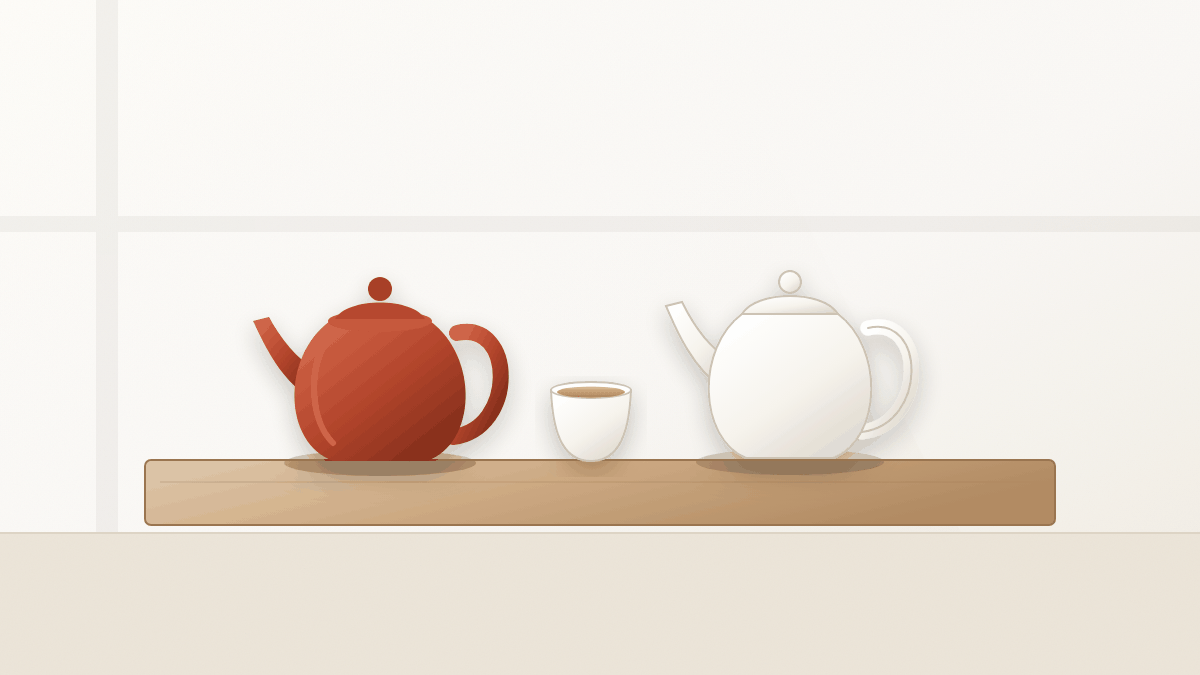

Authentic Yixing Zhuni Zisha Shui Ping Gongfu Teapot
Best for:High-aroma Tieguanyin, Phoenix Dancong, and vibrant young sheng pu-erh
Yixing Zisha Clay · 160 ml (5.4 oz)
- High-iron Zhuni clay contracts sharply in the kiln, reflecting brisk top-note florals
- Classic Shui Ping belly circulates boiling water evenly around tight rolled leaves
- Raw unglazed mineral walls build a soft satin sheen across dedicated sessions
Take the exact same six grams of spring high-mountain oolong, weigh the exact same ninety-three-degree filtered water, and time two simultaneous three-minute or thirty-second steeps down to the millisecond using our interactive tea steeping timer. Brew one batch inside a thin ivory porcelain teapot and the other inside an unglazed terracotta Yixing clay teapot. When you pour both cups side by side, you will swear two completely different teas came out of the kettles.
The porcelain cup leaps out with razor-sharp orchid fragrance, high-pitched citrus brightness, and a brisk, crystalline finish. The Yixing cup feels noticeably rounder, silkier across the mid-palate, and sweeter at the back of the throat—yet slightly quieter in high floral lift.
That sensory divergence is not tea folklore or placebo. Comparing yixing vs porcelain teapot performance exposes a textbook clash between two fundamentally opposite ceramic architectures: micro-porous iron-rich siltstone versus fully vitrified kaolin glass. Understanding how these two materials reshape flavor chemistry helps you pick the best teapot material for every jar in your cupboard—and ensures you never accidentally mute a prize white tea or strip the velvet off an aged pu-erh cake.
For the full four-material landscape including cast iron and borosilicate glass, start with our comprehensive teapot material comparison pillar guide. Below, we look under the microscope at China’s two most celebrated ceramic traditions.
Mineral Anatomy: Double-Pore Zisha vs. Vitrified Kaolin Porcelain
Even though both vessels begin as raw earth shaped by human hands and hardened in a kiln, Yixing Zisha stoneware and Dehua or Jingdezhen porcelain live on opposite ends of ceramic physics.
Inside Yixing Zisha Ore (Zhuni, Zini, and Duanni)
Harvested deep beneath the Huanglongshan and Zhaozhuang hills in Jiangsu Province, authentic Zisha (“purple sand”) is not sticky river mud—it is a weathered, sedimentary siltstone crushed into fine dry powder and rehydrated into workable clay. Chemically, Zisha is rich in quartz grains, layered mica platelets, and iron oxide (Fe₂O₃) alongside aluminum silicates.
When potters fire a clay teapot made from true Zisha between 1,140°C and 1,200°C without any surface glaze, something extraordinary happens inside the kiln: the clay binder shrinks around rigid quartz particles that do not melt completely. That differential contraction locks in a famous double-pore structure:
- Closed internal pores tucked inside mineral aggregates, trapping microscopic air pockets that slow conductive heat loss through the pot wall.
- Open surface pores measuring roughly 1 to 10 microns across, creating a breathable, matte micro-topography that gently interacts with passing liquid.
Within authentic Yixing ore, potters distinguish three primary families that behave differently in your cup:
- Zini (Purple-Brown Clay): The classic middle ground of mineral porosity and iron content, firing to deep plum, eggplant, or chocolate tones.
- Zhuni (Vermilion Clay): Harvested from scarce yellow ore pockets rich in iron oxide, Zhuni contracts a staggering 20% to 25% in the kiln. That tight sintering drops its open porosity well below Zini, producing wrinkled micro-textures and a bright metallic chime when tapped—exemplified by a traditional gongfu piece like the Authentic Yixing Zhuni Zisha Shui Ping Gongfu Teapot.
- Duanni (Pale Buff & Golden Clay): A natural blend containing high quartz and pale mica that fires porous and open-grained, prized for thick, creamy mouthfeel.
Inside High-Fired Porcelain (Dehua & Jingdezhen Tradition)
Walk south to Dehua or Jingdezhen and the ceramic recipe shifts entirely. Fine Chinese porcelain blends pure white kaolin clay with feldspar-rich petuntse (“china stone”) and finely ground silica, then pushes kiln temperatures up to 1,280°C–1,380°C.
At that ferocious heat, feldspar melts into liquid glass and fuses seamlessly around the kaolin lattice. Once cooled, the finished porcelain teapot exhibits near-zero open porosity (typically under 0.5%) even on unglazed foot rings. Coated further in a clear, high-fired silicate glaze, porcelain behaves chemically almost identically to laboratory borosilicate glass: impermeable, completely non-absorbent, and incapable of holding scent from yesterday’s steep.
Yixing vs. Porcelain Teapot Comparison Matrix
| Material Dimension | Yixing Zisha Clay (Unglazed) | High-Fired Glazed Porcelain | Flavor Consequence in the Cup |
|---|---|---|---|
| Kiln Firing Range | 1,140°C–1,200°C (partially sintered) | 1,280°C–1,380°C (fully vitrified) | Zisha stays micro-porous; porcelain turns glass-solid |
| Open Surface Porosity | 2%–8% (varies by Zhuni vs. Duanni) | < 0.5% (impervious under glaze) | Clay adsorbs trace aromatics; porcelain reflects 100% |
| Thermal Insulation | High (closed micro-pores trap heat) | Low-to-Moderate (thin walls cool faster) | Clay sustains high gongfu extract temperatures |
| Impact on Tea Bitterness | Rounds harsh edges & smooths catechins | Zero dampening; exposes every flaw | Clay rescues rough steeps; porcelain enforces precision |
| Top-Note Aroma Lift | Slight muting (except dense Zhuni) | Maximum floral & volatile projection | Porcelain dominates delicate green & white teas |
| Cross-Tea Versatility | Single tea family dedication required | Switch from smoky tea to mint in seconds | Porcelain handles chaotic daily rotations |
| Cleaning & Stains | Hot water rinse only; builds satin patina | Soap-safe, baking-soda friendly, stain-proof | Porcelain stays immaculate with zero rules |
How Each Material Reshapes Flavor Chemistry
Why does microscopic surface porosity make an audible, tasteable difference across a quick thirty-second gongfu infusion? It comes down to selective interaction with two rival chemical groups inside tea liquor: aromatic esters and astringent polyphenols.
Adsorption and Muting: Why Zisha Smooths Tannins
Brew young raw (sheng) pu-erh, heavily charcoal-roasted Wuyi cliff tea, or brisk Assam in boiling water, and high levels of bitter catechins and rough pyrogallol-type tannins flood into solution immediately. Inside a porous yixing clay teapot, water fills thousands of microscopic surface crevices along the raw wall.
Because many harsh organic molecules and heavy roasted phenols exhibit mild hydrophobic affinity for unglazed iron-silicate surfaces, a small fraction adsorbs gently onto the clay wall rather than attacking your tongue all at once. Meanwhile, iron ions embedded within the Zisha matrix engage in trace micro-redox interactions that soften perceived sharpness. The result isn’t diluted tea—it is restructured tea where harsh spikes recede and heavy sweetness steps forward.
Choosing the right ore fine-tunes that effect precisely:
- Need aroma plus punch? High-density Zhuni—such as our benchmark Yixing Zhuni Shui Ping Gongfu Teapot—barely muting high-mountain oolong florals while sealing in blistering heat to coax thick honey notes out of tightly curled leaves.
- Need smoothness for dark fermentation? Classic Zini or open-pored Duanni wraps ripe shou pu-erh and aged white tea in supple, broth-like texture that glass or glazed ceramic simply cannot replicate.
Reflection and Fidelity: Why Porcelain Sharpens Top Notes
Put an ultra-fragrant tea—think first-flush Darjeeling, Silver Needle white tea, fresh spring Dragonwell, or light-oxidation Baozhong—inside an open-grained clay pot, and you immediately notice what went missing: the shimmering top layer of jasmine, green pear, and gardenia volatiles vanished into the clay’s pores.
A glossy porcelain teapot acts like an acoustic concert shell. Because zero aromatic esters soak into the vitrified wall, every delicate terpene rebounds straight into the rising steam and into your nose. Even better, brilliant white walls inside a Sweese Fluted Glazed Porcelain Teapot or a traditional Chinese porcelain bowl give you immediate visual feedback on golden infusion clarity—a huge asset when fine-tuning steep length across Western multi-cup pots or quick gaiwan vs. teapot sessions.
Thermal Dynamics in Practice: Heating Curves and Wall Geometry
Flavor chemistry tells half the story; temperature curves over time tell the rest.
Because Yixing clay traps microscopic closed air cavities around its quartz particles, its thermal conductivity stays noticeably lower than metal while its wall thickness holds warmth comfortably inside the steep chamber. During a ten-infusion gongfu session with 100°C water, a thick-walled clay teapot stays stubbornly hot between pours—essential for coaxing deep sweetness out of stubborn, tightly compressed pu-erh cakes or charcoal-baked oolongs.
Conversely, a thin-walled porcelain pot or gaiwan dumps excess heat more rapidly once boiling water lands inside. While that drop frustrates dark-tea lovers unless the vessel is pre-warmed thoroughly, it acts as a built-in safety net for tender green and white tea buds that turn boiled and savory if held too long at extreme temperatures. Meanwhile, thicker Western-style porcelain teapots (around 600ml to 800ml, like the Sweese Fluted Glazed Porcelain Teapot) balance that equation with generous water volume and rounded wall mass that comfortably holds heat across a leisurely three-cup breakfast pour.
The Truth About Patina, Seasoning, and Single-Tea Dedication
Few corners of tea culture generate more bad internet advice than seasoning a yixing clay teapot—a ritual practitioners call yanghu (“nurturing the pot”). Let’s clear away the myths right now.
Never Boil a Teapot in Tea Soup
You may read old forum posts advising new owners to simmer a raw clay pot in a saucepan filled with strong black tea leaves for two hours to “season it fast.” Do not do this. Boiling clay in stagnant tea soup forces oversized tannins and bitter oxidized sludge deep into the open pores, choking natural breathability and imparting a flat, musty stewed flavor to every future cup.
How Authentic Yanghu Works
- Initial Dust Rinse: Rinse a brand-new Zisha pot once with simmering clean water and wipe inside and out with a clean lint-free cloth to flush away residual kiln dust.
- One Pot, One Tea Family: Dedicate each clay vessel strictly to one broad tea category (for example: roasted Wuyi oolong, green-style Taiwanese oolong, sheng pu-erh, or shou pu-erh). Never brew artificially scented teas, Earl Grey, or herbal mint inside unglazed clay.
- Pour-Over Nurturing: During normal sessions, occasionally splash leftover clean hot tea liquor from your pitcher gently across the lid and shoulders, then buff dry with a soft cotton tea towel while the pot is still warm. Over thirty to eighty clean steeps, microscopic tea oils polish the natural clay crystals into a deep, luminous satin glow—what collectors call jade-like patina.
After each session, empty spent leaves promptly, rinse exclusively with hot water (zero dish soap, zero scrubbing pads), and leave the lid resting slightly ajar until completely bone dry. For full seasonal upkeep across every ceramic surface in your kitchen, keep our complete teapot care guide and our natural tea stain removal guide bookmarked.
Spotting Authentic Handmade Zisha vs. Mass-Produced Fakes
Because true Huanglongshan Zisha ore is finite and slab-building requires years of apprenticeship, online marketplaces are flooded with cheap imitations labeled “Yixing.” Knowing five tactile signs saves you from pouring boiling tea into chemically dyed factory mud:
- Check the Interior Tool Marks: Traditional Yixing potters beat thin clay slabs flat with wooden paddles and assemble bodies on a manual banding wheel (da ni pian). Look inside the pot under bright light for delicate radial knife-trimming marks around the inner bottom seam (ni men) and subtle horizontal striations—never sterile, glassy slip-cast smoothness or raised vertical mold parting lines running right through the handle and spout.
- Watch for Suspicious Gloss Out of the Box: Authentic freshly fired Zisha looks velvety matte, never mirror-shiny. If a brand-new pot looks lacquered or slick like varnished leather, manufacturers often rubbed wax, silicone oil, or chemical metal oxides (huagongni) onto low-grade mud to fake an aged patina.
- Inspect Mineral Speckling: Look closely with a phone zoom lens. Real Zisha exhibits tiny, uneven matte flecks of golden mica, faint iron pinpoints, and subtle quartz texture rather than uniform monochromatic plastic-like color.
- Test the Water Absorption Sheet: Splash boiling water over the exterior belly of an unglazed pot. On real porous clay (especially Zini and Duanni), the surface drinks moisture slightly and dries evenly within seconds via retained heat, whereas wax-coated fakes bead water like freshly polished car paint.
- Listen to the Lid Fit & Ring: Gently slide the lid edge against the collar. Dense Zhuni rings brightly like stone or hard porcelain; Zini offers a slightly warmer wooden-stone clink. Cheap low-fired terracotta sounds dull and muffled.
Choosing Your Winner: When to Pour Clay vs. Porcelain
If you want one clear takeaway from the yixing vs porcelain teapot matchup, anchor your choice to what excites your palate most:
Reach for a Porcelain Teapot When:
- You love variety—switching effortlessly between Silver Needle white tea, Jasmine pearls, Darjeeling first flush, and chamomile tisane without maintaining four separate pots.
- You crave brilliant floral aromatics, crisp clarity, and easy zero-rule cleanup.
- You want an objective, neutral daily driver like the Sweese Fluted Glazed Porcelain Teapot (or a compact porcelain gaiwan) that tells the unvarnished truth about every leaf you buy.
Reach for a Yixing Zisha Clay Teapot When:
- You have fallen deeply in love with one signature tea family—such as roasted Wuyi rock oolong, aromatic Dancong, high-mountain Tieguanyin, or aged pu-erh—and drink it multiple times a week.
- You want to tame brisk bitterness, lock in gongfu steeping heat, and transform sharp infusions into velvety, viscous, lingering cups using a classic silhouette like the Authentic Yixing Zhuni Zisha Shui Ping Gongfu Teapot.
- You genuinely enjoy the quiet tactile ritual of nurturing an heirloom ceramic tool over years of unhurried sessions.
And remember: most seasoned collectors never force an either-or choice. Pair one reliable porcelain daily driver with one dedicated clay companion—and whenever you want to compare side-by-side pouring scores, wall capacities, and material designs across every craft tradition, explore our curated teapot gallery or browse our coolest and most unique teapots guide.
Hands-On Benchmarks
Tested Picks & Recommendations
Authentic Yixing Zhuni Zisha Shui Ping Gongfu Teapot
Yixing Zisha Clay · 160 ml (5.4 oz)
Best ForHigh-aroma Tieguanyin, Phoenix Dancong, and vibrant young sheng pu-erh
What We Loved
- High-iron Zhuni clay contracts sharply in the kiln, reflecting brisk top-note florals
- Classic Shui Ping belly circulates boiling water evenly around tight rolled leaves
- Raw unglazed mineral walls build a soft satin sheen across dedicated sessions
Trade-offs
- High firing shrinkage makes true Zhuni delicate against abrupt cold-to-boiling shock
- Must be reserved for a single tea style to keep mineral pores pure
Sweese Fluted Glazed Porcelain Teapot
Glazed Porcelain · 800 ml (27 oz)
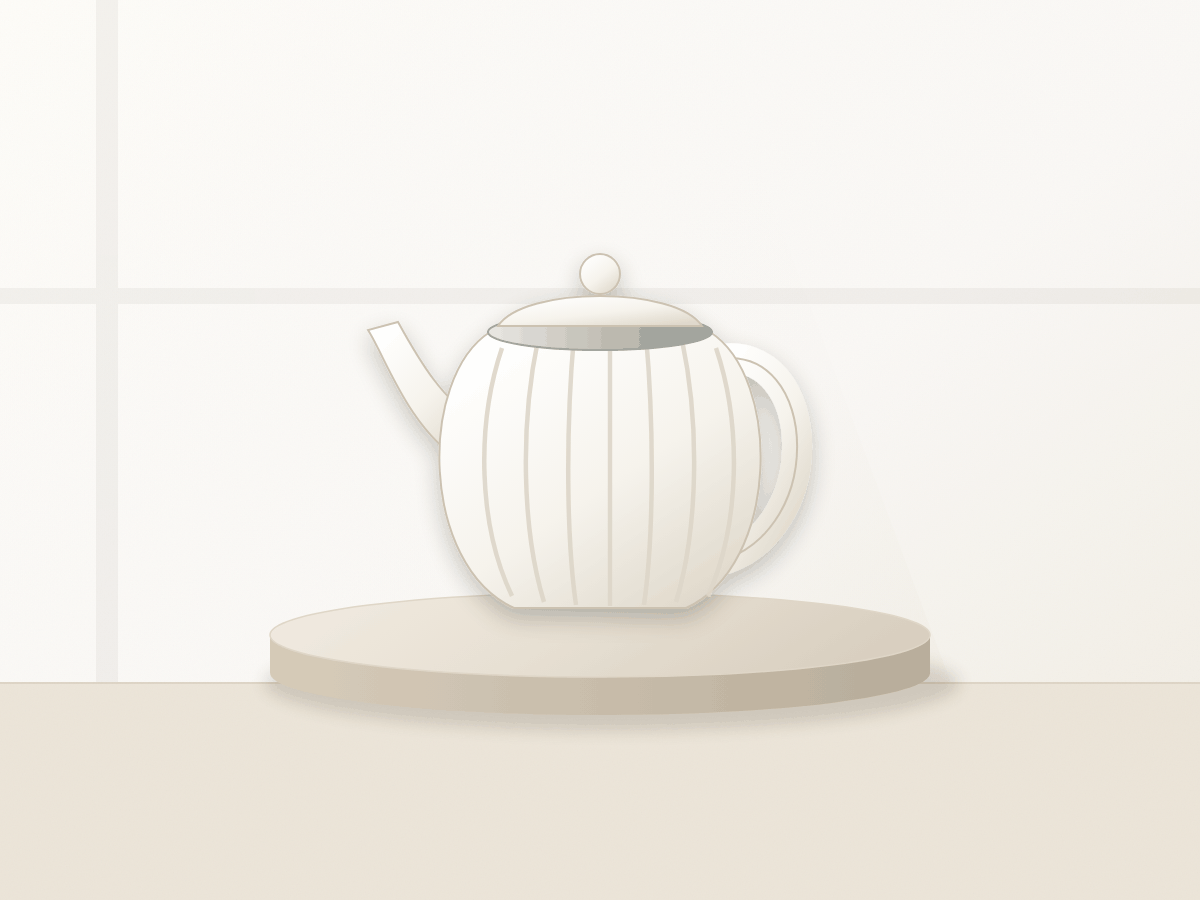
Best ForMulti-tea rotation, delicate white teas, floral oolongs, and clean liquor inspection
What We Loved
- High-fired vitrified porcelain adds zero mineral dampening to delicate aromatics
- Deep removable stainless basket lets whole leaves expand without crowding
- Lustrous white interior makes judging infusion color and clarity effortless
Trade-offs
- Does not round off brisk tannins in rough young pu-erh or dark roasted teas
- Larger 740ml footprint targets Western multi-cup brewing rather than 150ml gongfu
Frequently Asked Questions
How does Yixing Zisha clay's double-pore microstructure actually change the taste of tea?
Authentic Yixing ore contains quartz grains, mica platelets, and iron-rich clay binders that shrink at different rates during kiln firing around 1,140°C to 1,200°C. That differential contraction forms both closed internal air cavities—which insulate heat inside the wall—and open microscopic surface pores (1 to 10 microns wide). Those open pores create subtle capillary adsorption that trims away bitter catechins and volatile harsh notes while boosting perceived broth viscosity.
Does seasoning a Yixing clay teapot really make plain hot water taste like tea?
Not in a healthy, clean teapot. Boiling a pot in leftover tea soup or leaving stagnant leaf dregs inside merely coats the pores with rancid oxidized tannins. True seasoning (yanghu) simply cleans raw kiln dust and warms the mineral surface so future brews stabilize smoothly—if plain hot water poured into an empty Zisha pot tastes strongly of old tea, it needs a gentle boiling-water flush.
Why do professional tea tasters prefer a porcelain teapot or gaiwan for evaluating new teas?
High-fired porcelain is vitrified above 1,300°C until its open porosity drops near zero. Because the glassy interior refuses to adsorb aroma esters or react with polyphenols, porcelain acts as an objective acoustic and chemical mirror. Every floral lift, roast flaw, or leaf astringency shows up unmodified, letting tasters judge raw leaf quality accurately.
How can you spot a fake slip-cast or chemically dyed Yixing clay teapot?
Watch for three warning signs: an unnaturally glossy, wax-like shine straight out of the box (often shoe polish or barium-carbonate surface coatings), vertical molding seam lines running down the handle or belly interior, and a flat ceramic thud instead of a crisp stone-like ring when gently tapped with the lid. Authentic slab-built Zisha exhibits subtle mineral flecks, faint horizontal scraping marks inside, and a matte satin luster that brightens gradually only through brewing.
Should I choose Zhuni, Zini, or Duanni Zisha clay for oolong versus pu-erh tea?
Match pore openness to roast and fermentation intensity. High-shrinkage Zhuni is the densest and least porous of the Zisha family, making it brilliant for aromatic Taiwanese high-mountain oolong and Phoenix Dancong because it preserves high-note florals while holding fiery heat. Medium-porosity Zini excels with roasted Wuyi rock tea and ripe or aged pu-erh, smoothing bitterness into deep sweetness. More porous Duanni rounds out aged white tea and earthy ripe pu-erh, though it can slightly mute delicate green-style aromatics.
Material Science
Related Guides in This Cluster
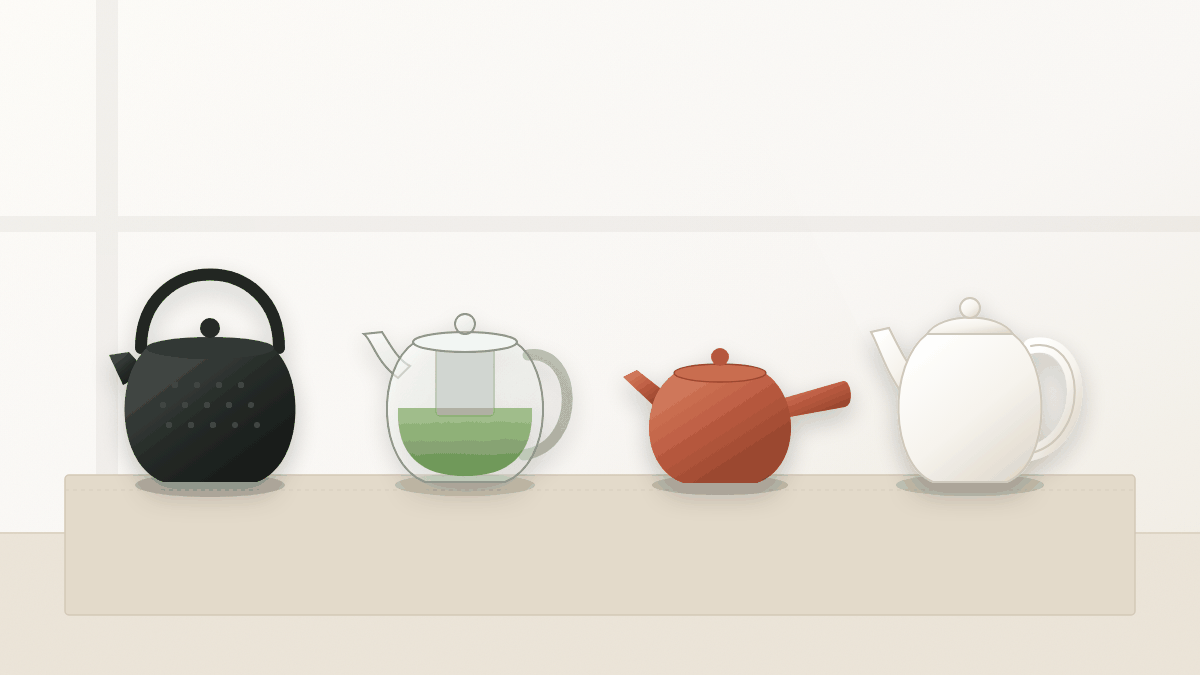
Cast Iron vs. Glass vs. Clay vs. Ceramic: Which Teapot Material Is Best?
Compare thermal conductivity, heat retention, mineral porosity, and tea-type pairing across cast iron, borosilicate glass, Zisha/Tokoname clay, and glazed porcelain.
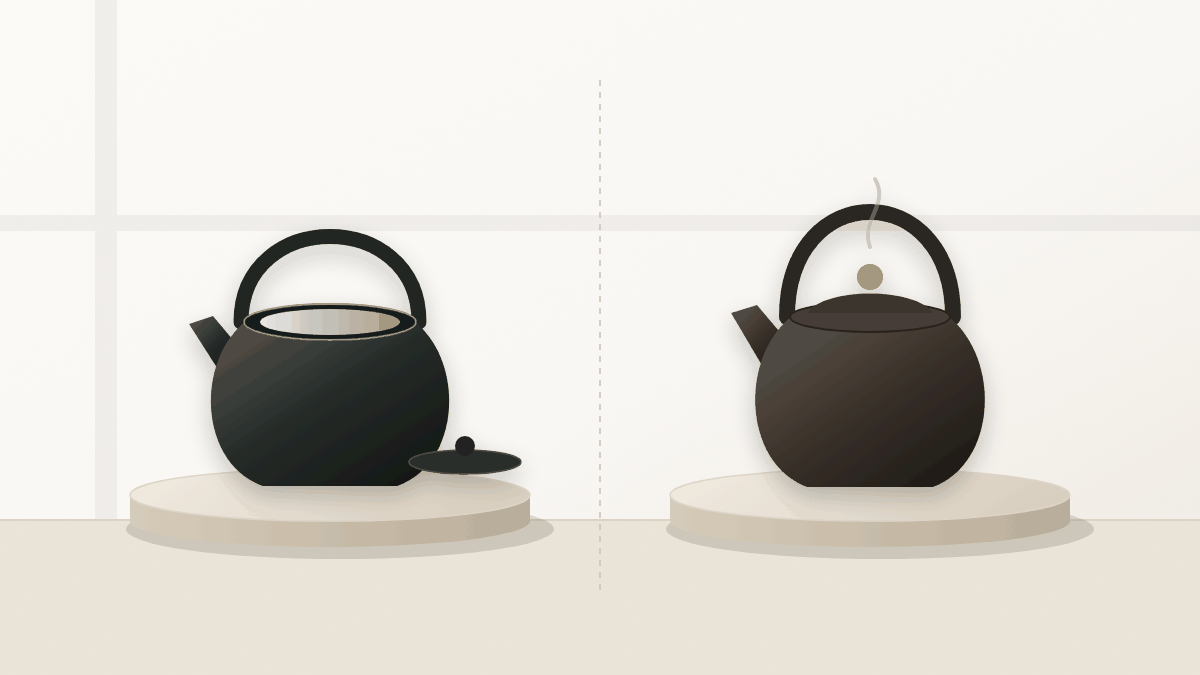
Enamel-Lined Cast Iron Teapot vs. Raw Tetsubin: Critical Differences
Never confuse a kettle with a teapot: learn the crucial differences in lining chemistry, stovetop safety, iron mineral release, and rust care between enamel-lined tetsubin kyusu and raw tetsubin.
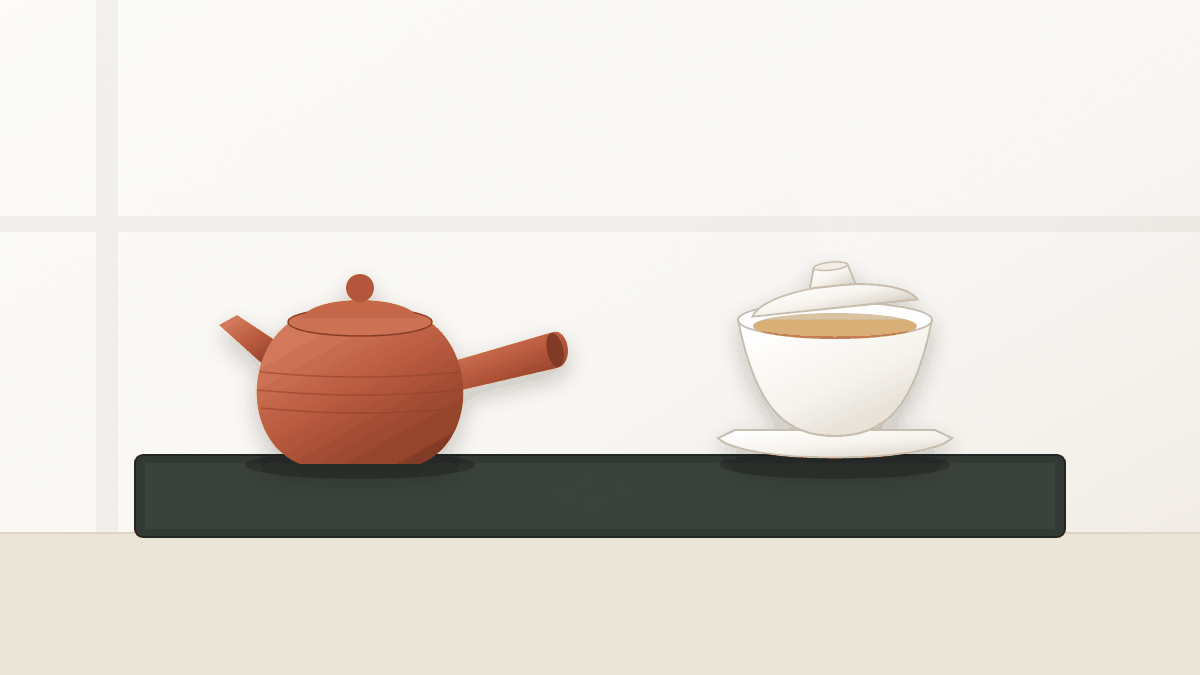
Kyusu vs. Gaiwan: Which Traditional Brewing Vessel Should You Choose?
Side-handle Japanese kyusu vs. lidded Chinese porcelain gaiwan: compare extraction speed, leaf geometry, thermal grip, and tea pairing to choose your daily vessel.