
Kyusu vs. Gaiwan: Which Traditional Brewing Vessel Should You Choose?
Side-handle Japanese kyusu vs. lidded Chinese porcelain gaiwan: compare extraction speed, leaf geometry, thermal grip, and tea pairing to choose your daily vessel.
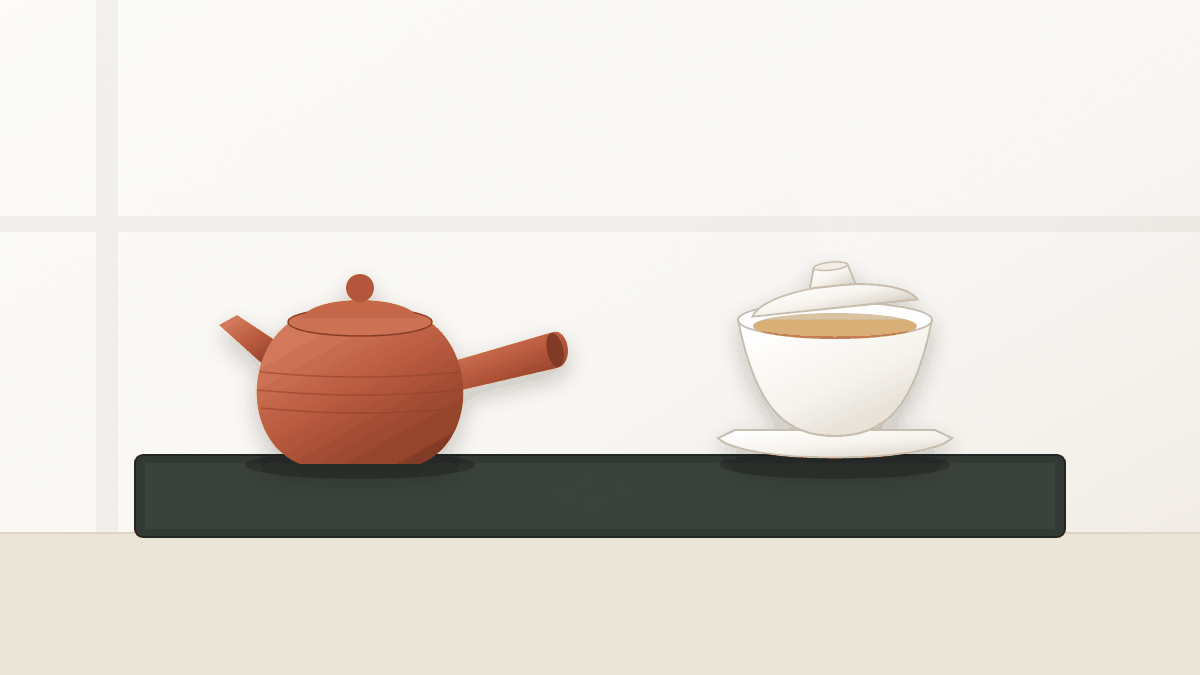
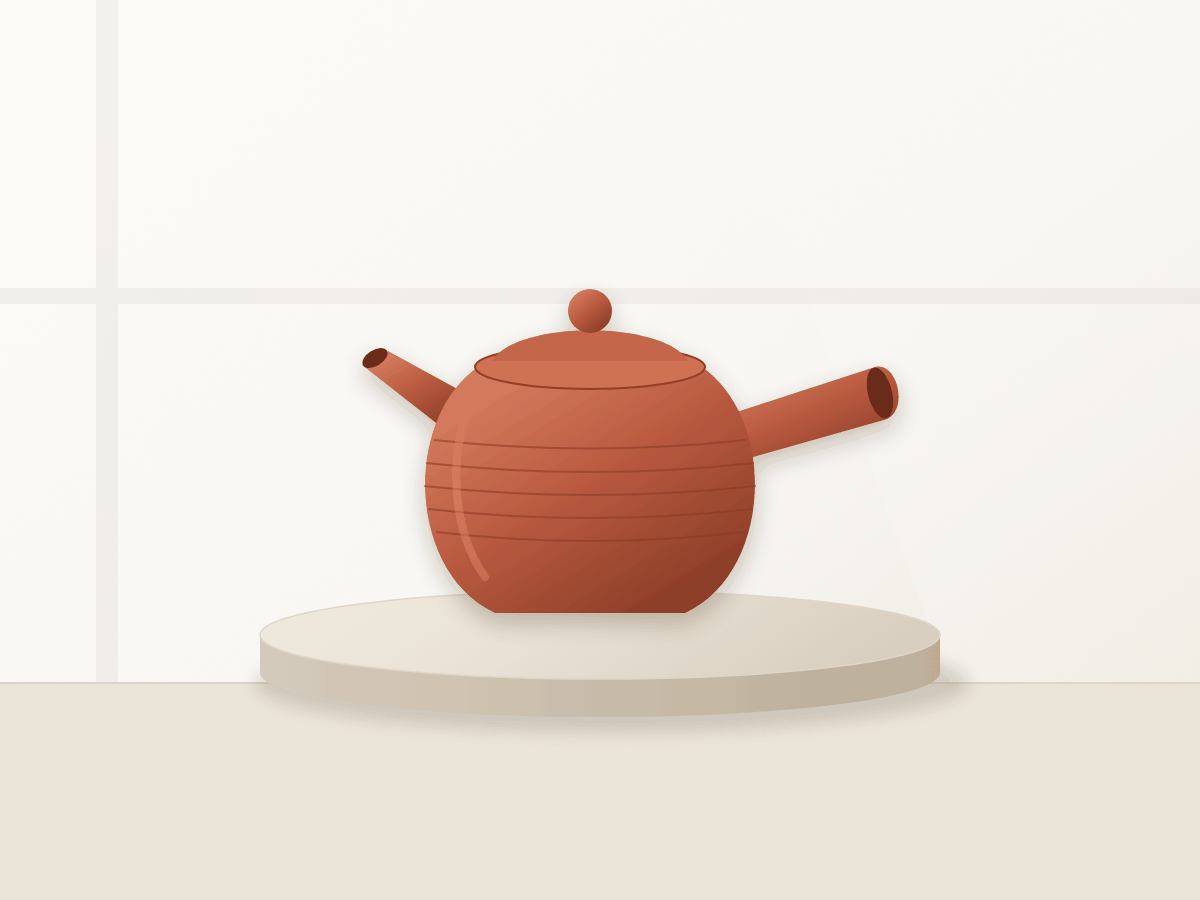
Gyokko Kiln Tokoname-Yaki Side-Handle Kyusu
Best for:Steamed Japanese green teas (sencha, kabusecha, gyokuro) needing fine filtration
Tokoname Kyusu Clay · 320 ml (10.8 oz)
- Hand-thrown Tokoname red clay softens astringency in high-umami green teas
- Built-in ceramic sasame mesh stops fine fukamushi tea fragments cleanly
- Hollow yokode side handle stays cool across repeated steeping rounds
Stand before any serious loose-leaf tea bar and you will quickly spot two iconic Eastern silhouettes sitting side by side: a stout, spouted Japanese pot anchored by a perpendicular side handle, and a deceptively simple lidded Chinese porcelain bowl balanced atop a small saucer. Both vessels were engineered over centuries to brew multiple concentrated infusions from whole tea leaves—yet the kyusu vs gaiwan debate remains one of the most practical equipment crossroads in specialty tea.
At first glance, the distinction looks purely cultural. In reality, comparing a gaiwan vs teapot reveals sharp differences in fluid dynamics, extraction speed, thermal safety, and leaf-geometry compatibility. Choosing the right vessel determines whether your morning sencha pours sweet and velvety instead of murky and bitter, or whether your high-mountain oolong smells like spring orchids rather than damp cardboard.
If you are still deciding across broader vessel families—including cast iron, glass, and stoneware—our pillar guide on the best teapot material for every tea style maps the wider landscape. Here, we zoom strictly into the mechanical duel between the Japanese kyusu and the Chinese gaiwan.
Anatomy & Ergonomics: Side-Handle Craft vs. Three-Piece Cup
To understand why these two vessels behave so differently during a steep, look closely at how water moves into, around, and out of the brewing chamber.
The Japanese Kyusu (Yokode, Uwade, and Ushirode)
In Japan, kyusu literally translates to “teapot,” though in specialty tea circles the word most often evokes the iconic yokode kyusu—a side-handle japanese teapot extending at roughly a 90-degree angle from the spout. Potters also craft ushirode kyusu (rear-handle pots familiar in Western kitchens) and uwade kyusu (overhead arch handles), yet the hollow side-handle remains unmatched for wrist biomechanics.
Resting your thumb gently over the lid’s air hole while tipping your wrist inward creates effortless rotational torque without twisting your forearm. Just as important, the hollow ceramic tube forming the handle contains trapped air, insulating your palm from hot clay walls. Inside the spout junction sits an integrated strainer—either a perforated clay dome (sasame), a wide wrap-around ceramic band (obi-ami), or a fine stainless mesh basket. Models like the Gyokko Kiln Tokoname-Yaki Side-Handle Kyusu pair this precision internal clay screen with iron-rich Tokoname clay built specifically to tame green tea astringency.
The Chinese Gaiwan (Bowl, Lid, and Saucer)
Originally adapted from covered drinking cups during the Ming and Qing dynasties, the gaiwan (“lidded bowl”) embraces radical minimalism: three unattached parts symbolizing Heaven (the lid), Humanity (the bowl), and Earth (the saucer). There is no spout, no handle, and no metal or clay mesh anywhere.
Instead, filtration happens dynamically. By nudging the concave lid slightly off-center, you create a crescent-shaped gap just wide enough for clear liquor to escape while holding expanded leaves back against the rim. Because the brewing chamber is completely open at the top, a gaiwan doubles as an interactive sensory instrument: you can watch whole rolled leaves dance immediately upon hitting hot water, smell pure condensed aromatics on the warm porcelain lid between steeps, and adjust the drain aperture on the fly.
Kyusu vs. Gaiwan: Head-to-Head Performance Matrix
| Brewing Dimension | Traditional Japanese Kyusu | Classic Porcelain Gaiwan | Practical Winner |
|---|---|---|---|
| Drain Time (150ml pour) | 7–14 seconds via spout & screen | 2–4 seconds across wide flared rim | Gaiwan (unmatched flash speed) |
| Fine Leaf Filtration | Exceptional (ceramic/steel micro-mesh) | Poor for broken or steamed needles | Kyusu (clean, sediment-free liquor) |
| Thermal Grip Safety | High (cool hollow side handle) | Moderate (requires flared rim & practice) | Kyusu (zero burnt fingertips) |
| Aroma Inspection | Limited to small lid opening | Direct, expansive lid & bowl sniffing | Gaiwan (sensory clarity) |
| Heat Retention | Moderate-to-High (clay walls + small mouth) | Low-to-Moderate (wide open heat loss) | Kyusu (holds warmth for black/oolong) |
| Post-Session Cleanup | 20–40 seconds (mesh rinsing) | 5 seconds under running tap | Gaiwan (zero hidden crevices) |
| Left-Handed Comfort | Directional (standard pots favor right hand) | 100% ambidextrous | Gaiwan (unless custom left-hand kyusu) |
Extraction Speed & Fluid Dynamics: Why Seconds Matter
Most newcomers overlook drain time (chushutsu in Japanese tea practice)—yet pour speed is one of the strongest reasons a kyusu vs gaiwan comparison matters in the cup.
Imagine steeping a high-leaf-ratio Taiwanese Dong Ding oolong or a crisp young sheng pu-erh for 15 seconds. In a 100ml porcelain gaiwan, once you tilt the bowl, nearly the entire liquid column rushes over the wide lip in three seconds flat. Extraction halts abruptly, freezing the liquor at exact equilibrium between sweetness and structure.
Now brew that same leaf weight inside a 240ml kyusu teapot. Water has to travel laterally through a dense bed of swollen leaves, press through dozens of pinpoint ceramic holes, and funnel down a narrow spout. That pour takes 10 to 12 seconds—meaning the final drops exiting your spout steeped nearly 75% longer than planned!
Clara’s Timing Adjustment Rule: Whenever you switch a gongfu-style tea from a wide gaiwan into a spouted loose leaf teapot, begin pouring 5 to 8 seconds earlier than your target steep time—and track the total wet-leaf contact window consistently with our interactive tea steeping timer.
Does slower pouring make the kyusu inferior? Not at all. In Japanese tea brewing, that gentle, rhythmic deceleration is actually prized: as water gradually drains to the final golden itteru (“last drop”), concentrated umami and body coat the cup naturally without violent leaf agitation.
Leaf Geometry: Steamed Japanese Needles vs. Whole-Leaf Rolled Oolongs
Look closely at dry tea leaves before water ever touches them, and the ideal vessel almost announces itself.
Where the Kyusu Dominates: Steamed & Broken Leaf Structures
Japanese tea processing stops oxidation using bursts of steam rather than dry wok heat. Steaming softens leaf veins deeply, and subsequent rolling machines shape leaves into glossy emerald needles (asamushi light-steamed, chumushi medium-steamed, and fukamushi deep-steamed sencha). Deep-steamed fukamushi leaves are extraordinarily crumbly; once brewed, they break down into thick grassy confetti mixed with sweet leaf particulates.
Try brewing fukamushi sencha or crumbly Kenyan CTC black tea in a gaiwan and you will spend the entire session picking floating leaf grit off your teeth. A traditional kyusu teapot—especially one outfitted with a wrap-around obi-ami steel belt or a crisp sasame clay dome inside an authentic Japanese kyusu—holds those micro-fragments effortlessly while keeping your cup jewel-clear.
Equally important is chamber shape. Wide, flat-bottomed Japanese kyusu (hiragata shape) let delicate steamed leaves spread out in a thin, uncompressed layer rather than piling up in a tight suffocating clump, maximizing smooth sweetness at 70°C to 80°C.
Where the Gaiwan Dominates: Whole Twisted & Rolled Leaves
Switch to Chinese oolongs—tightly balled Taiwanese Alishan, twisted Wuyi Yancha strip leaves, or long Silver Needle white tea buds—and the geometry flips. These large, resilient whole leaves hold together cleanly without shedding fine dust. Behind a slightly offset gaiwan lid, big leaves act as their own natural dam while giving you effortless control over pour speed.
Even better, rolled oolongs expand dramatically in volume. Inside a narrow-mouthed spouted pot with a cramped basket infuser, tight oolong pellets choke against the steel mesh before fully opening. A round-bellied gaiwan—or an ultra-spacious borosilicate loose leaf teapot like the Hario ChaCha Kyusu Maru 700ml, which packs a wide central mesh basket—lets every leaf unfurl freely.
Thermal Grip, Material Pairing & Heat Retention
When deciding between a gaiwan vs teapot, ergonomics and material thermodynamics shape daily pleasure far more than tradition alone.
Avoiding Burnt Fingers on a Gaiwan
Let’s be honest: the biggest barrier keeping tea drinkers away from a gaiwan is fear of scalded fingertips. That pain almost always happens for two preventable reasons:
- Wrong rim profile: Cheap novelty gaiwans often have straight vertical walls with barely any lip flare. You need a distinct flared rim (piekou) that kicks outward away from the hot liquid line, creating an insulated air pocket for your fingers.
- Overfilling: Never fill a gaiwan to the brim. Leave 6mm to 8mm of empty headspace below the top rim so boiling water stops safely beneath your thumb and middle finger.
Material matters here, too. Thin glaze-fired porcelain transfers minimal lateral heat up to a flared rim, making porcelain the safest and easiest beginner gaiwan material. Glass gaiwans look stunning on social feeds, yet glass conducts heat straight into the lip far faster and turns slippery when wet—reserve glass gaiwans for warm 80°C green teas rather than 100°C boiling cliff oolongs.
How Clay vs. Porcelain Alters the Cup
Because most authentic gaiwans are made from non-porous vitrified porcelain, they act as neutral flavor mirrors—perfect for auditing delicate white teas, subtle green buds, and floral jasmine blends. Traditional Tokoname clay kyusu, by contrast, contain fine unglazed iron oxides that subtly round off bitter catechins in grassy green teas. (If you want to understand that exact mineral chemistry across Chinese and Japanese ceramics, explore our deep comparison of Yixing Zisha clay vs. porcelain teapots.)
Need the clean flavor neutrality of a gaiwan paired with the cool grip and filtration of a teapot? A high-clarity borosilicate option like the Hario ChaCha Kyusu Maru 700ml bridges both worlds cleanly—giving you side-or-rear handle ergonomics, crisp visibility, and zero mineral taste alteration across multi-cup table pours.
Cleaning, Care & Daily Workflow
If you drink three or four teas across a busy workday, friction at the kitchen sink decides which vessel sits on your desk permanently.
- Gaiwan Workflow (Five-Second Reset): Tilt the bowl over your compost caddy, sweep the spent leaves out with one quick splash of warm water, rinse the lid, and towel dry. There are zero narrow spouts for dried leaf stems to lodge inside, and zero dark mesh corners hiding stale oils.
- Kyusu Workflow (Mindful Mesh Care): Knock the wet leaf cake cleanly out of the body, then run warm water backward through the outside of the spout for three seconds to clear tiny tea fragments trapped in the ceramic filter holes. Never scrub unglazed Tokoname clay with dish soap or abrasive brushes; every few weeks, use our gentle baking-soda or oxygen-clean approach from our guide to removing tea stains from glass and ceramic teapots on glazed or glass models, and keep our complete teapot care guide handy for deep maintenance.
The Verdict: Which Traditional Vessel Belongs on Your Tea Tray?
You don’t need an encyclopedic ceramic collection to brew world-class tea at home, just a clear match between your habits and your hardware:
Choose a Japanese Kyusu If:
- You love steamed Japanese green teas (sencha, kabusecha, genmaicha, gyokuro) or finer broken-leaf blends that slip through wide strainer gaps.
- You want stress-free thermal safety with a cool-touch hollow handle and zero learning curve.
- You enjoy brewing unhurried solo cups or two-person sessions where gentle, sediment-free pouring shines. (Explore our Gyokko Kiln Tokoname-Yaki Side-Handle Kyusu for classic clay craft, or the Hario ChaCha Kyusu Maru for large clear-glass versatility.)
Choose a Porcelain Gaiwan If:
- You mainly brew whole-leaf oolongs, aged or young pu-erh, and delicate white teas using rapid gongfu infusions.
- You prize instant 3-second pours, direct aroma inspection off the warm lid, and effortless five-second sink cleanup between different teas.
- You are left-handed or want a compact, travel-friendly, ambidextrous vessel that doubles as a neutral tasting standard.
Still curious how these two East Asian icons stack up against cast iron kettles, thick stoneware, and Yixing gongfu pots? Head back to our full material comparison guide or compare pouring precision ratings directly inside our curated teapot gallery.
Hands-On Benchmarks
Tested Picks & Recommendations
Gyokko Kiln Tokoname-Yaki Side-Handle Kyusu
Tokoname Kyusu Clay · 320 ml (10.8 oz)
Best ForSteamed Japanese green teas (sencha, kabusecha, gyokuro) needing fine filtration
What We Loved
- Hand-thrown Tokoname red clay softens astringency in high-umami green teas
- Built-in ceramic sasame mesh stops fine fukamushi tea fragments cleanly
- Hollow yokode side handle stays cool across repeated steeping rounds
Trade-offs
- Side-handle orientation favors right-handed pouring unless ordered left-handed
- Dense ceramic mesh holes require gentle rinsing after deep-steamed leaves
Hario ChaCha Kyusu Maru 700ml
Borosilicate Glass · 700 ml (23.7 oz)
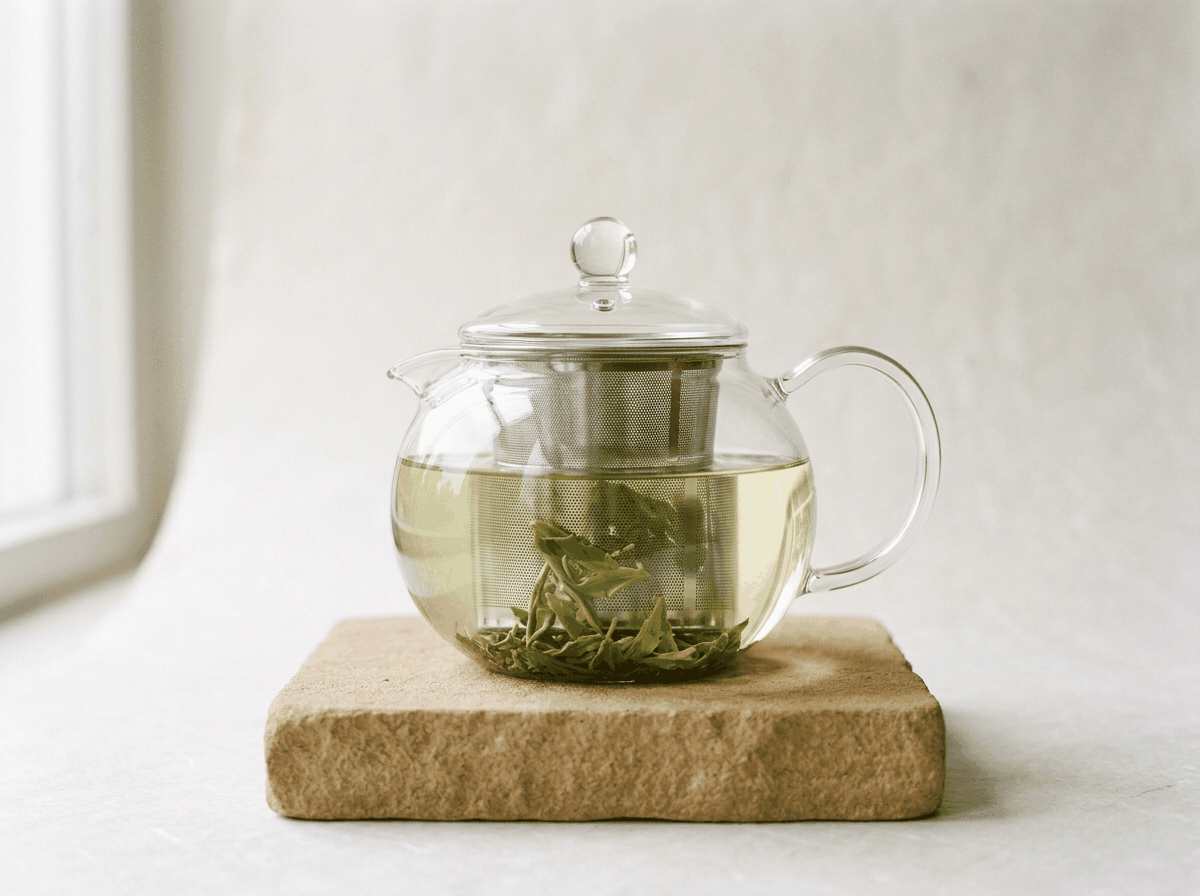
Best ForEveryday loose-leaf sencha, rolled oolongs, and multi-cup visual brewing
What We Loved
- Heat-resistant borosilicate glass leaves zero mineral imprint on bright teas
- Generous stainless steel mesh basket gives tightly rolled leaves full room to unfurl
- Wide-mouth glass body cleans effortlessly with warm water or a dishwasher cycle
Trade-offs
- Back-handle geometry and 700ml volume pour too slowly for 10-second gongfu flashes
- Thin glass cools liquor faster than clay in drafty rooms
Frequently Asked Questions
Which pours faster for gongfu flash infusions: a gaiwan or a kyusu?
A 90ml to 120ml porcelain gaiwan pours significantly faster—typically emptying completely in 2 to 4 seconds because the entire tilted rim acts as a wide spillway. A traditional clay kyusu pours through a narrow spout backed by fine ceramic mesh, usually taking 7 to 14 seconds to drain fully, which adds noticeable extraction time during rapid flash steeps.
How do you hold a porcelain gaiwan without burning your fingers at boiling temperatures?
Use a flared-rim gaiwan and fill water only up to the collar line—about 5mm to 8mm below the top rim—so boiling water never touches the porcelain under your fingertips. Rest your index finger lightly on the concave lid knob and grip opposite edges of the flared upper lip with your thumb and middle finger using a relaxed 'eagle-claw' hold.
Why is a Japanese kyusu better than a gaiwan for steamed green teas like fukamushi sencha?
Deep-steamed Japanese green teas fracture into fine, needle-like leaf fragments during rolling and drying. Because a gaiwan relies only on a 1mm to 2mm gap between lid and bowl to strain tea, those tiny fukamushi particles rush straight into your cup and turn cloudy and bitter. A Tokoname kyusu integrates hundreds of microscopic ceramic filter holes (sasame or obi-ami) that trap fine dust while letting rich umami broth pass cleanly.
Can I brew Chinese oolongs and pu-erh inside a kyusu teapot?
Yes, especially inside a glass kyusu or a shallow-body banko or shudei clay kyusu with an open spout filter. Just match the leaf-to-water ratio and mind the longer drain time: because a kyusu pours slower than a gaiwan, start pouring 5 seconds earlier than you would with a gaiwan to prevent over-steeping young sheng pu-erh or brisk cliff oolong.
Is a gaiwan or a kyusu easier for a beginner loose-leaf tea drinker to master?
A kyusu teapot is far easier on day one because its handle eliminates all heat-transfer anxiety and its internal strainer handles filtration automatically. Mastering a gaiwan takes roughly five to ten sessions to build muscle memory for lid-gap angle and finger placement, though once learned, a gaiwan rewards you with lightning-fast cleanup and unmatched versatility.
Material Science
Related Guides in This Cluster
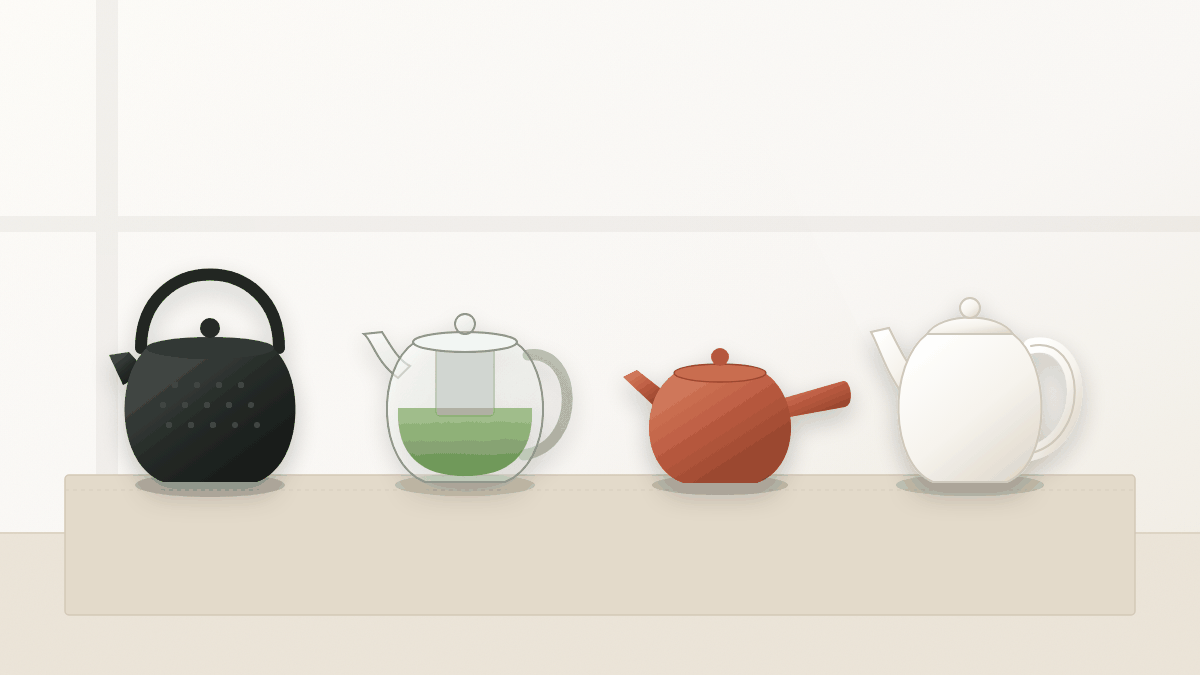
Cast Iron vs. Glass vs. Clay vs. Ceramic: Which Teapot Material Is Best?
Compare thermal conductivity, heat retention, mineral porosity, and tea-type pairing across cast iron, borosilicate glass, Zisha/Tokoname clay, and glazed porcelain.
Enamel-Lined Cast Iron Teapot vs. Raw Tetsubin: Critical Differences
Never confuse a kettle with a teapot: learn the crucial differences in lining chemistry, stovetop safety, iron mineral release, and rust care between enamel-lined tetsubin kyusu and raw tetsubin.
Yixing Zisha Clay vs. Porcelain Teapots: How Material Changes Tea Flavor
Discover the mineral physics of porous Yixing Zisha clay (Zhuni, Zini, Duanni) versus vitrified Dehua porcelain—and why one smooths tannins while the other sharpens aroma.